
2026 Guide: Daily Check-In Apps for Elderly Parents
It’s 10:00 PM on a Tuesday, and your mother hasn’t replied to your text from three hours ago. You don’t want to be overbearing, yet the anxiety loop of waiting for that return notification is already tightening. Finding a reliable daily check in app for elderly parents can break this cycle of worry without compromising their dignity. With approximately 14.7 million Americans aged 65 and older living alone, the need for a compassionate, digital safety net has never been more vital for family harmony.
We all want our parents to enjoy their golden years with total autonomy, but the fear of a fall going unnoticed is a heavy burden to carry. You shouldn’t have to choose between their independence and your mental tranquility. This 2026 guide will show you how automated daily check-ins provide a reliable safety net for aging parents while preserving their independence and your peace of mind. We’ll explore how modern software solutions like Proof of Life monitoring and Night Watch protection offer a discreet, always-on guardian for those you love most.
Key Takeaways
- Learn how to eliminate the “silent emergency” by transitioning from reactive hardware to a proactive, digital safety ecosystem.
- Discover why a daily check in app for elderly parents is more effective than traditional pendants, using server-side monitoring to send alerts even if a phone is powered down.
- Understand the psychological benefits of “Proof of Life” indicators that preserve parental dignity while removing the stigma of wearable medical devices.
- Master the setup of a “Safety Circle” to ensure reliable emergency contacts are notified automatically when a check-in is missed.
- Explore how advanced features like Virtual Chaperone and Night Watch provide a continuous layer of protection for active seniors without being overbearing.
Understanding the Need for Daily Check-In Systems
A daily check-in is more than just a casual phone call; it’s a structured, proactive communication protocol designed to ensure well-being without being intrusive. For seniors living alone, this system acts as a digital heartbeat that connects them to their families. It’s a way to confirm safety every single day, shifting the responsibility from a reactive “hope for the best” mindset to a proactive safety strategy.
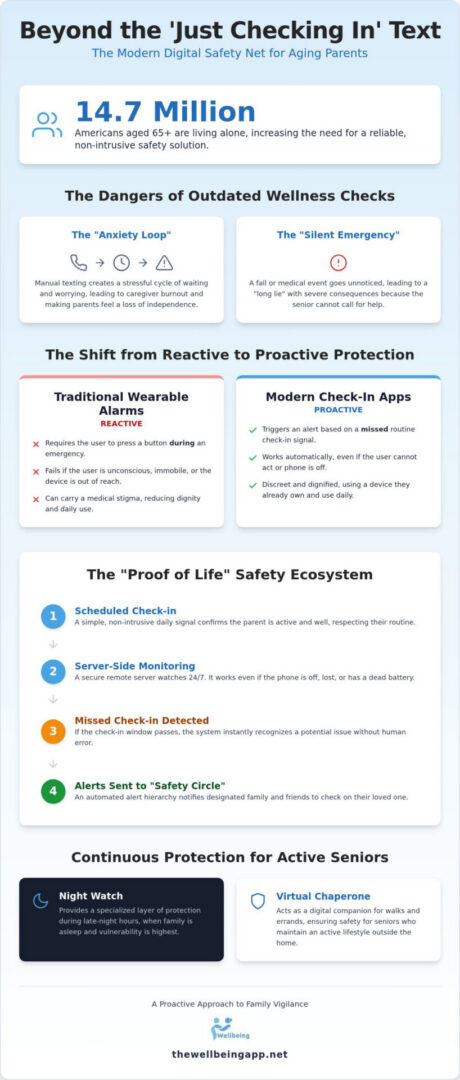
The “Silent Emergency” is perhaps the greatest fear for families. This occurs when a fall or medical event happens, and the senior is unable to reach a phone or call for help. Without a daily check in app for elderly parents, these incidents can go unnoticed for hours or even days. The physical consequences of a “long lie” are severe, but the psychological benefit of a check-in system is just as significant. It reduces caregiver burnout by replacing constant, nagging anxiety with a reliable, automated safety net that functions even when you’re at work or asleep.
The Limitations of Traditional Wellness Checks
Manual texting often creates what we call an “anxiety loop.” You send a message at 9:00 AM. If you don’t see a reply by 9:15 AM, your mind begins to race through worst-case scenarios. For the parent, these constant “just checking in” messages can feel like a loss of independence or a lack of trust. It’s a cycle that breeds stress rather than peace.
We also have to account for notification fatigue. In busy family group chats, a simple “I’m okay” text can easily be buried under photos or other conversations. Life happens, and busy schedules often lead to missed manual check-ins. When the routine breaks, the fear returns. Automated systems remove this human error, ensuring that a “Proof of Life” indicator is registered at the same time every day, regardless of how busy your afternoon becomes.
The Rise of Aging-in-Place Technology
Modern seniors are increasingly choosing aging in place as their preferred way to spend their golden years. With approximately 14.7 million Americans aged 65 and older living alone, the demand for non-intrusive monitoring has surged. This isn’t about surveillance; it’s about empowerment and preserving the user’s mental state through gentle vigilance.
The industry is shifting from reactive medical alerts to proactive monitoring. Traditional hardware requires the user to remember to wear a device and, more importantly, to be able to press a button during a crisis. A software-based daily check in app for elderly parents offers a more dignified approach. It integrates into the devices they already use, providing a digital safety net that respects their privacy while ensuring they are never truly alone.
How Modern Safety Apps Provide Proof of Life
The core of a modern safety ecosystem is the concept of a Proof of Life indicator. This is a non-intrusive safety signal that confirms a senior is active and well without requiring a disruptive phone call or text. Unlike traditional systems that wait for a crisis to occur, a daily check in app for elderly parents establishes a consistent baseline of wellness. It’s a digital heartbeat that provides mental tranquility for the family while respecting the parent’s daily rhythm.
One common concern for families is what happens if a parent’s phone is lost, misplaced, or runs out of battery. This is where server-side monitoring becomes essential. Because the tracking happens on a secure remote server rather than just the local device, the system knows exactly when a check-in is expected. If the window passes without a signal, the server initiates an automated alert hierarchy. This multi-tiered response ensures that the right people are notified at the right time, starting with a gentle nudge to the parent and escalating to emergency contacts if needed.
Automated Alerts vs. Manual Panic Buttons
Traditional panic buttons have a significant limitation: the user must be conscious, mobile, and calm enough to press them. If a fall results in a loss of consciousness or if the device is out of reach on a nightstand, the safety net fails. A missed check-in acts as a proactive fail-safe. It doesn’t require the senior to act during a moment of distress. Instead, the absence of a routine action triggers the support system. This shift from reactive to proactive protection ensures that help is on the way even if the parent cannot call for it themselves.
Beyond the Button: Integrated Safety Features
Safety needs don’t end after the morning check-in. Vulnerability often increases during the late-night hours when family members are asleep and less likely to check their phones. Features like Night Watch provide a specialized layer of protection during these quiet windows. For seniors who maintain an active lifestyle, the Virtual Chaperone acts as a companion for walks or evening errands, providing real-time Location Sharing to their inner circle.
These technological tools do more than just monitor; they empower. By giving seniors the confidence to move freely within their communities, these systems help reduce social isolation and encourage continued engagement with the world. If you want to move beyond basic check-ins and build a more robust layer of protection, consider how a comprehensive digital safety net can support your family’s unique needs.
App-Based Monitoring vs. Wearable Medical Alerts
Traditional medical alerts often rely on specialized, proprietary hardware that feels clinical and stigmatizing. For many seniors, wearing a plastic pendant is a constant reminder of vulnerability rather than a source of strength. This leads to poor compliance. A daily check in app for elderly parents offers a more human-centric alternative. It transforms a standard smartphone into a sophisticated safety tool, allowing the user to maintain their dignity while staying connected to their family’s protective circle.
The Hardware Stigma and Compliance
Research into senior safety habits reveals a troubling trend: medical pendants are frequently left on dressers or charging docks. They aren’t helpful if they aren’t worn. Since smartphone ownership among adults over 50 reached 90% in 2025, using an app feels like a natural extension of daily life. Seniors are already accustomed to checking their phones for messages or news. By integrating safety into this existing habit, we encourage active participation in their own well-being. It’s an empowering shift from being a passive subject of monitoring to being a proactive manager of personal safety.
Technical Resilience of App-Based Systems
Maintenance is another critical differentiator. Proprietary hardware often requires specialized chargers or battery replacements that are easy to overlook. In contrast, charging a smartphone is a universal daily ritual. Modern apps also provide a layer of technical resilience that hardware cannot match through server-side monitoring. If a physical device dies, it becomes silent. When an app-based system detects that a phone has gone offline or a check-in has been missed, the server initiates a fail-safe response.
This constant 24/7 server monitoring acts as a virtual guardian that never sleeps, ensuring your parent is never truly alone even when their phone is out of reach. These systems also leverage multi-contact Emergency Alerts and proprietary Proof of Life indicators. Instead of a single call center representative, an automated hierarchy notifies a curated “Safety Circle” of family and friends. This ensures that those who care most are the first to know, fostering a sense of collective responsibility and communal harmony. The cost-benefit is clear: a software subscription avoids the high upfront costs and restrictive equipment leases of traditional hardware, providing a more flexible and robust Digital Safety Net.
Setting Up a Successful Check-In Routine
Implementing a new system is as much about emotional alignment as it is about technical setup. A daily check in app for elderly parents works best when it integrates seamlessly into their existing morning or evening rituals. Instead of forcing a new habit, look for a natural window of time when your parent is already active, such as when they first make coffee or right before they settle in for the night. This ensures that the check-in feels like a minor, comforting part of their day rather than a chore or a test of their memory.
Establishing this routine requires a collaborative spirit. It’s helpful to spend time “testing” the system together during the first week. Run through a few simulated missed check-ins so everyone understands how the notifications look and feel. This practice builds mutual trust and ensures that if a real alert ever triggers, the response will be calm and disciplined rather than panicked. To begin building your family’s digital safety net, you can set up your Proof of Life monitoring today.
The Conversation: Introducing the App to Your Parent
The way you introduce the technology determines how well it will be received. Avoid framing the app as a tool for supervision or “watching” them. Instead, position it as an instrument of empowerment that protects their independence. Many seniors are more willing to use these tools when they realize the primary motivator is your own peace of mind. By explaining that the system stops you from worrying while you’re at work, you shift the focus from their perceived “frailty” to your shared family harmony.
Privacy is often a central concern for independent seniors. Be clear about what the technology does and doesn’t do. Explain that a daily check in app for elderly parents is not a constant surveillance tool. It doesn’t listen to conversations or watch them through a camera. It simply provides a “Proof of Life” indicator, a quiet signal that says “I’m okay” without the need for a lengthy phone call.
Defining Your Emergency Response Plan
A safety net is only as strong as the people behind it. When setting up the app, you’ll need to curate your “Safety Circle,” the group of trusted individuals who will receive Emergency Alerts. The primary responder, often called the “First Circle,” should be someone who is consistently available and lives relatively close by. However, collective responsibility is key. Including a mix of family members and a trusted local neighbor ensures that someone can always verify safety quickly.
- The First Responder: Usually the adult child or primary caregiver who manages the app settings.
- The Local Contact: A neighbor with a spare key who can perform a physical wellness check if needed.
- The Professional Layer: Knowing when to contact local emergency services if the Safety Circle cannot reach the parent.
Keep this contact information up to date within the app. Life changes, and a safety plan must evolve with it. Reviewing your response protocol every few months ensures that everyone in the circle remains ready to act with empathetic vigilance if an alert ever reaches their phone.
The Wellbeing App: Your Partner in Family Vigilance
The Wellbeing App isn’t just a notification tool; it’s a comprehensive digital safety net designed for the complexities of modern aging. While basic apps offer a simple check-in button, our platform integrates active protection layers that monitor for safety across the entire daily cycle. By combining proprietary Proof of Life indicators with active monitoring, we ensure that your loved ones are never truly alone. This approach transforms the daily check in app for elderly parents from a passive tool into a proactive guardian that acts when your parent cannot.
The Virtual Chaperone is a unique differentiator for seniors who refuse to let age limit their mobility. Whether they are taking a morning walk or visiting a friend across town, this feature provides real-time Location Sharing and active transit monitoring. It offers the freedom of movement they crave with the security you need. Complementing this is Night Watch, the missing link in traditional senior safety. This feature protects during the most vulnerable hours of sleep, ensuring that server-side monitoring remains active even when the world is quiet.
Empowering Seniors through Proactive Safety
Our philosophy is rooted in the concept of mental tranquility. We believe that safety shouldn’t feel like a burden or a loss of agency. The Wellbeing App acts as a compassionate guardian, providing a watchful eye that respects personal boundaries while maintaining constant vigilance. We are deeply committed to preventing missing person incidents by ensuring that every senior has a reliable, automated connection to their family circle. This shared effort fosters social cohesion and strengthens the bonds of responsibility within the family.
Getting Started with a Family Safety Plan
Choosing the right daily check in app for elderly parents is a significant step toward long-term harmony. We offer flexible subscription models, including both monthly and annual plans, to fit your family’s specific needs. These plans include 24/7 server-side monitoring, which ensures alerts are dispatched even if a device is lost or powered down. This technical robustness provides a level of security that hardware-dependent systems simply cannot match.
Onboarding your entire “Safety Circle” is a seamless process. You can invite multiple family members and trusted neighbors to join a unified safety net, ensuring collective responsibility. This structured approach means that if a Proof of Life indicator is missed, the right people are notified instantly through our automated Emergency Alerts. You have the power to turn anxiety into action. Protect your parents independence with The Wellbeing App and reclaim your peace of mind today.
Embracing a Future of Proactive Family Care
Choosing a daily check in app for elderly parents is a profound act of love that balances their desire for independence with your need for reassurance. We’ve seen how modern software creates a non-intrusive safety net; one that monitors for well-being without the clinical stigma of wearable pendants. By establishing a clear response protocol and a trusted Safety Circle, you transform technology into a compassionate guardian for your family. This transition from reactive worry to proactive vigilance ensures that your parents are never truly alone.
The Wellbeing App is dedicated to preserving your mental state through 24/7 Server-Side Monitoring and Automated Proof of Life Indicators. Our mission goes beyond simple tracking; we strive to foster social cohesion and provide the technical robustness required for true safety. You don’t have to carry the burden of worry alone when a digital heartbeat can watch over your loved ones. This collective responsibility strengthens family bonds while providing the mental tranquility you deserve.
Take the first step toward a more harmonious and secure lifestyle today. Start your family safety plan today with The Wellbeing App. Together, we can ensure your parents live safely and confidently in the homes they love.
Frequently Asked Questions
Is a daily check-in app better than a medical alert necklace?
A check-in app is often superior because it eliminates the hardware stigma that causes many seniors to leave medical necklaces on their dressers. By integrating safety into a device they already use, you ensure higher compliance. It’s a proactive approach that doesn’t rely on the user being conscious or mobile enough to press a button during a crisis.
What happens if my parent forgets to check in?
If a check-in is missed, our server-side monitoring automatically triggers a multi-tiered alert hierarchy. First, your parent receives a gentle reminder to check in. If there’s still no response, the system immediately notifies your curated Safety Circle. This fail-safe ensures that a silent emergency never goes unnoticed, even if their phone is misplaced or the battery has died.
Does the app track my parent’s location at all times?
The app is designed to balance protective vigilance with personal privacy. It doesn’t monitor every movement; instead, it focuses on specific Proof of Life indicators. Location Sharing is typically utilized during active transit or in response to a missed check-in. This ensures your parent feels empowered and independent rather than watched, preserving their dignity while maintaining your mental tranquility.
Can I use this app if I live in a different state than my parent?
Distance is never an obstacle, as the app provides comprehensive national coverage for families living in different states. You can manage settings and receive Emergency Alerts from anywhere in the country. This makes it an essential tool for long-distance caregivers who want to maintain a watchful eye on their loved ones without being physically present every day.
What is a “Virtual Chaperone” and how does it help seniors?
The Virtual Chaperone acts as a digital companion for active seniors who enjoy walking or traveling locally. It provides a layer of active protection by monitoring their progress during a journey. If they don’t reach their destination or confirm their safety within the expected window, the system automatically alerts their family. It’s the perfect balance of personal agency and security.
Do I need to buy any special hardware or devices?
You don’t need to purchase any specialized hardware, proprietary devices, or clinical-looking wearables to use this service. The system is entirely software-based and integrates directly with the smartphone your parent already owns. This approach avoids the high upfront costs and equipment leases associated with traditional medical alert systems while providing a more discreet, modern safety net.
How does the “Night Watch” feature protect my parent while they sleep?
Night Watch provides a specialized layer of protection during the late-night and early-morning hours when seniors are most vulnerable. It monitors for well-being while the rest of the world is asleep. If a morning check-in is missed after a Night Watch period, the server-side monitoring ensures that your family is notified immediately, closing the dangerous gap in traditional safety coverage.
Is the app easy for seniors who aren’t tech-savvy to use?
The interface is intentionally simple, making a daily check in app for elderly parents easy to use even for those who aren’t tech-savvy. Most interactions require only a single tap to confirm they’re well. Because the app leverages familiar smartphone habits, it feels like a natural part of their day rather than a complex new technology to master.