
Beyond Reaction: The Life-Saving Benefits of a Proactive Safety System in 2026
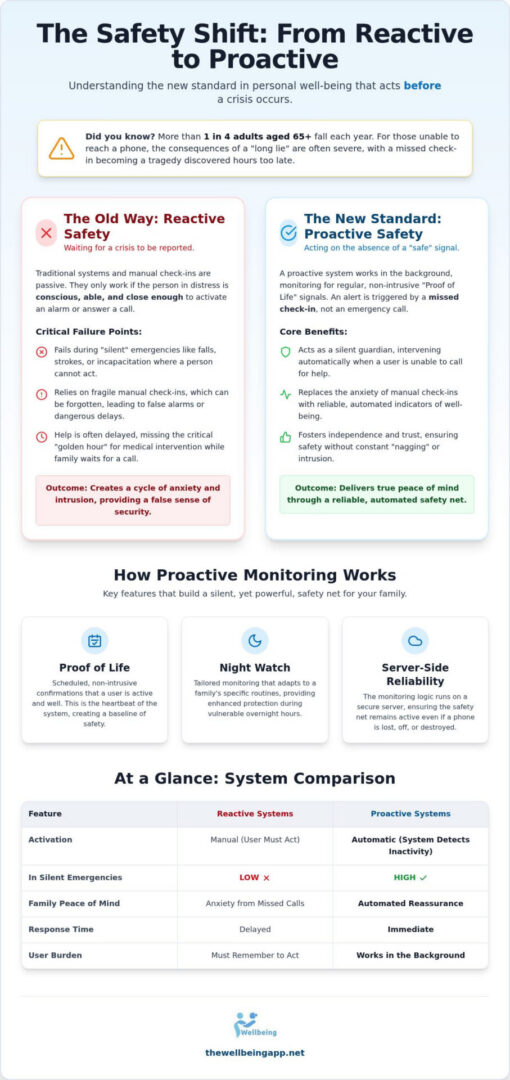
Did you know that more than one in four adults aged 65 and older fall each year; for those who can’t reach a phone, the consequences of a “long lie” are often fatal? It’s a terrifying thought that keeps many families awake at night, wondering if a loved one is safe or simply didn’t hear the ringer. Traditional medical alerts rely on a person being conscious and able to press a button, but the true benefits of a proactive safety system lie in its ability to act when you can’t. By shifting the focus from reaction to prevention, these systems ensure that a missed check-in becomes the signal for help, rather than a tragedy discovered hours too late.
We understand the heavy burden of manual daily check-ins that often get forgotten or the constant anxiety that builds when a phone call goes to voicemail. You deserve total peace of mind without feeling like you’re intruding on someone’s independence. In this article, you’ll discover how moving toward proactive monitoring provides faster intervention and a silent safety net for your family. We’ll explore how automated features like Proof of Life and Night Watch work in the background to protect your mental tranquility. This approach ensures that help is always on the way, even if a button is never pressed.
Key Takeaways
- Understand why modern safety means acting on the absence of a positive signal rather than waiting for a crisis to begin.
- Explore the core benefits of a proactive safety system, which provides faster intervention for silent emergencies like falls or strokes.
- Learn how to replace the anxiety of manual check-ins with automated Proof of Life indicators that work silently in the background.
- Discover how to tailor features like Night Watch and Chaperone to your family’s specific daily routines and solo travel habits.
- Identify the critical reliability gaps in traditional alerts and how server-side monitoring ensures your safety net remains active even if a phone is lost.
What is a Proactive Safety System in a Personal Context?
A proactive safety system isn’t just a tool; it’s a silent commitment to well-being that operates on a fundamental shift in logic. Instead of waiting for a crisis to occur, it monitors for the absence of a “safe” signal. This is the core of proactive behavior, where technology acts in advance of a potential emergency. While traditional systems wait for you to call for help, a proactive system notices when you haven’t confirmed you’re okay. This subtle difference is one of the primary benefits of a proactive safety system, as it removes the burden of action from someone who may be incapacitated or unable to reach their device.
Reactive systems like 911 or traditional panic buttons are vital, but they have a significant flaw: they require a human to initiate the alert. If a senior falls and loses consciousness, or if a solo traveler is in a situation where they can’t reach their phone, the reactive system remains silent. Proactive safety bridges this reliability gap by maintaining empathetic vigilance. It acts as a compassionate guardian, silently checking in so that your loved ones don’t have to worry about the “what ifs.” It replaces the cold, mechanical nature of old-fashioned alerts with a warm layer of protection that values mental tranquility as much as physical safety.
The Shift from Reactive to Proactive Thinking
Think of it like fire safety. A reactive approach is responding only after the smoke appears. By then, the damage is already underway. A proactive approach is like checking the stove before the fire even starts. In a personal safety context, we move away from the “Missing Person” framework, where help only arrives after hours of silence. Instead, we use automated indicators to confirm everything is normal. This shift ensures that an emergency is caught at the earliest possible moment, often before it escalates into a life-threatening event. It’s about preventing the need for a search party by treating a missed check-in as the incident itself.
Proof of Life: The Ultimate Leading Indicator
In the world of personal security, Proof of Life has evolved from a high-stakes negotiation term into a gentle, daily rhythm. In a digital safety ecosystem, it represents a scheduled, non-intrusive confirmation that a user is active and well. These regular check-ins build a baseline of safety that allows everyone to breathe easier. Proof of Life is the primary metric for personal security in 2026, serving as the heartbeat of a truly protective safety net. By utilizing these indicators, families can foster community unity and shared responsibility without being intrusive. It provides a way to stay connected that respects personal agency while ensuring no one is ever truly alone in a moment of need.
The Reliability Gap: Why Manual Check-ins Fail Families
Most families attempt to manage safety through a series of informal “I’m okay” texts or morning phone calls. While these gestures are born from love, they’re inherently fragile. Human error is the greatest weakness in any manual safety plan. When a loved one forgets to send that expected message, it triggers immediate anxiety for the caregiver. Conversely, if an actual emergency occurs, the silence is often dismissed as simple forgetfulness for hours. This delay is where the danger lies, as the “golden hour” for medical intervention slips away while family members wait for a phone to ring.
Relying on manual check-ins often leads to a traumatic last resort: the police wellness check. These visits can be invasive and frightening for seniors, often damaging the sense of trust and autonomy they value so highly. One of the key benefits of a proactive safety system is that it removes the need for such drastic, reactive measures. Just as professional organizations emphasize a proactive approach to managing workplace safety to prevent accidents before they happen, families can use technology to create a buffer of protection. This shift empowers the user by giving them control over their safety without the constant “nagging” dynamic that often strains family relationships.
The Limitations of Traditional Panic Buttons
Traditional medical alerts and panic buttons suffer from a significant “reachability” problem. If a user is unconscious or the device is on the nightstand while they are in the bathroom, the system is useless. There’s also a pervasive “stigma” associated with wearing conspicuous hardware. Many seniors refuse to wear bulky pendants because they feel it marks them as frail. Software-based proactive systems solve both issues. They work silently in the background of a smartphone, providing a discreet safety net that doesn’t rely on a physical button press during a crisis.
Automation as a Tool for Mental Tranquility
True peace of mind comes from knowing that “no news is good news” is a statement backed by data, not just hope. Through consistent server-side monitoring, an automated system ensures that alerts go out even if the user’s phone is destroyed or the battery dies. This level of reliability is why The Digital Safety Net: Why Automated Check-ins are More Reliable Than Manual Texting has become the standard for modern families. By automating the process, caregivers can let go of their constant anxiety, knowing that a watchful protector is always on duty. If you’re ready to move beyond the stress of manual check-ins, you can explore our proactive safety solutions to find the right fit for your family.
Top 5 Benefits of a Proactive Safety System
Shifting from a reactive mindset to a proactive one changes how we experience daily life. In high-stakes industries, the transition has already happened; for instance, the aviation sector relies heavily on proactive safety management principles to identify risks before they lead to accidents. Applying these same standards to personal well-being offers a level of security that traditional panic buttons simply can’t match. Here are the core benefits of a proactive safety system that are redefining personal protection in 2026:
- Immediate Intervention: Your emergency contacts are notified the very second a scheduled check-in is missed, ensuring no one is left waiting for hours.
- Reduced Response Times: By treating silence as an incident, help arrives faster for “silent” emergencies like strokes or falls where the user can’t speak.
- Preservation of Independence: Seniors and vulnerable adults can live alone longer, knowing a digital safety net is watching over them.
- Enhanced Personal Agency: Users feel empowered rather than restricted, as they manage their own safety status through simple, non-intrusive interactions.
- Collective Responsibility: These systems foster a community-based safety net that remains active 24/7, providing a shared sense of security for the whole family.
Faster Response for Vulnerable Adults
In medical emergencies, the “Golden Hour” is the critical window where prompt treatment significantly improves the chances of recovery. Proactive alerts are vital because they don’t wait for a victim to reach a phone. If a user misses their Night Watch check-in, the system automatically triggers an alert. Imagine a scenario where a senior experiences a fall at 2:00 AM; while they might be unable to call for help, the missed automated check-in ensures their family is alerted within minutes. When combined with automated location sharing, first responders can be directed to the exact spot, saving precious time when every second counts.
Empowerment vs. Surveillance
One of the most significant benefits of a proactive safety system is how it balances protection with dignity. Unlike constant GPS tracking, which can feel like “spying,” a proactive system acts as a virtual chaperone. It only steps in when a positive safety signal is missing. This approach respects the user’s privacy by allowing them to control their own check-in schedules. It’s about maintaining personal agency while ensuring that a watchful protector is always in the background. This subtle shift in technology helps families avoid the friction of constant “checking-in” calls, replacing anxiety with a quiet, data-verified confidence that all is well.
How to Implement a Proactive Safety Strategy for Your Family
Moving from a reactive mindset to a protective one requires more than just downloading an app; it involves a thoughtful assessment of your family’s daily rhythms. Every person has different vulnerabilities, whether they are a senior living alone or a young professional commuting late at night. One of the most practical benefits of a proactive safety system is the ability to customize protection based on your unique daily rhythm, ensuring that help is always available without being intrusive. By following a structured implementation plan, you can create a silent safety net that preserves both independence and mental tranquility.
Step 1: Identifying High-Risk Windows
Every safety strategy should begin with an honest evaluation of when a person is most vulnerable. For many seniors, the late-night hours represent a significant risk, making features like Night Watch essential for those who might fall between bedtime and morning. For others, the danger lies in solo travel or walking through unfamiliar areas, where a virtual Chaperone can provide empathetic vigilance during the journey. Identifying high-risk windows is the first step in proactive management because it allows you to apply protection precisely where it’s needed most. This targeted approach ensures that the system remains a helpful guardian rather than a constant interruption.
Once you’ve identified these windows, you can establish a Proof of Life schedule that fits naturally into the user’s routine. This might be a simple check-in after a morning walk or a confirmation before heading to sleep. To make this effective, you must designate a “Safety Circle” of trusted contacts. These individuals are the pillars of your community safety net, and they should be people who are reliable, calm in a crisis, and familiar with the user’s typical habits.
Step 2: Configuring Automated Escalations
A proactive system is only as good as its escalation ladder. This is the automated process that triggers when a check-in is missed. Typically, the system will first send a gentle nudge to the user’s phone. If there is still no response, the alert escalates to the designated Safety Circle. It’s vital to ensure that every emergency contact understands their role when an alert is triggered. They aren’t just receiving a notification; they’re being called to act as a watchful protector when the silence becomes a signal for help.
Before relying on the system fully, take the time to test the escalations. Testing builds trust in the technology and ensures that everyone in the Safety Circle knows what the alerts look or sound like on their own devices. When choosing a platform, always prioritize server-side monitoring. Unlike local phone alerts that fail if a device is destroyed or loses power, server-side systems ensure that the alert goes out from a secure remote location regardless of the phone’s status. To begin building your own protective network, you can get started with our proactive safety app today.
The Wellbeing App: Your Partner in Proactive Vigilance
The Wellbeing App LLC stands as a compassionate guardian in an increasingly disconnected world. While traditional security tools focus on the moment of crisis, our platform is built to prevent the crisis from going unnoticed. We bridge the critical gaps left by reactive systems, transforming your smartphone into a sophisticated instrument of empowerment. By choosing our platform, families can fully realize the benefits of a proactive safety system, moving beyond the limitations of traditional hardware and the anxiety of manual check-ins. Our mission is to foster social cohesion by ensuring that no one is ever truly alone when they are most vulnerable.
Our suite of features, including Night Watch and Chaperone, provides a layer of empathetic vigilance that adapts to your life. Whether you’re a senior enjoying the quiet of your home or a solo traveler navigating a new city, these tools work silently in the background. A vital technical differentiator is our reliance on server-side monitoring. Unlike other apps that fail if a phone is destroyed or the battery dies, our system is hosted on secure remote servers. This means your safety net remains active and your emergency contacts will be notified even if your device is completely offline. It’s a level of robustness that ensures your protection is never interrupted by technical failure.
Proof of Life: More Than Just a Check-in
At the heart of our digital safety net is Proof of Life. This feature isn’t just a simple notification; it’s a technically robust system designed to confirm your well-being through non-intrusive indicators. We’ve carefully balanced technical security with human connection, ensuring that the automated alert dispatch is both reliable and gentle. This approach preserves your personal agency while giving your loved ones the data-verified confidence they need to stay calm. You can learn about our Proof of Life features to see how we’ve redefined the standard for personal monitoring in 2026. It’s about creating a rhythm of safety that feels natural, not restrictive.
A Commitment to Social Cohesion
We believe that safety is a shared effort, not a solo burden that individuals must carry alone. The altruistic mission behind The Wellbeing App LLC is to build a community where we look out for one another with discipline and care. This sense of collective responsibility is one of the greatest benefits of a proactive safety system, as it strengthens the bonds between family members and friends. We aren’t just providing a subscription; we’re inviting you to join a movement dedicated to mental tranquility and mutual protection. Don’t wait for a “what if” scenario to become a reality. You can secure your peace of mind today with The Wellbeing App and experience the difference of having a watchful protector in your pocket.
Embrace a Future of Shared Safety and Mental Tranquility
Choosing to protect your loved ones doesn’t have to mean constant worry or intrusive surveillance. By shifting your focus toward the benefits of a proactive safety system, you replace the anxiety of manual check-ins with the quiet confidence of automated Proof of Life indicators. We’ve explored how server-side monitoring provides a reliable safety net that works even when a phone is lost or powered down. This approach ensures that help is triggered by the absence of a safety signal, providing faster intervention for those who cannot call for help themselves.
Your family’s well-being is a shared responsibility; it’s a commitment that we take seriously as your watchful protector. With 24/7 server-side monitoring and a dedicated focus on empathetic vigilance, we provide the tools you need to foster social cohesion and personal agency. It’s time to let go of the burden of “nagging” and embrace a more harmonious way of looking out for one another across the nation. You deserve a safety strategy that works silently in the background while you focus on what matters most.
Start your journey toward mental tranquility with The Wellbeing App and discover the power of proactive protection. You aren’t just choosing an app; you’re joining a community dedicated to the preservation of peace for every family member.
Frequently Asked Questions
What is the main difference between a proactive and reactive safety system?
The primary difference lies in the trigger for help. A reactive system waits for you to initiate an alert, such as pressing a button or calling 911. In contrast, a proactive system monitors for the absence of a positive safety signal. If you miss a scheduled check-in, the system automatically escalates the situation. This shift ensures that help is on the way even if you’re incapacitated or unable to reach your device.
Is a proactive safety app better than a Life Alert necklace?
One of the key benefits of a proactive safety system over traditional hardware is its ability to function when you can’t. A necklace requires you to be conscious and able to press a button. Our software-based approach uses automated Proof of Life indicators that work silently in the background. It removes the stigma of wearing conspicuous devices while providing a more reliable safety net that doesn’t rely on physical reach.
Can I customize when the app checks in on me?
Yes, personal agency is a central pillar of our service. You can fully customize your check-in schedules to fit your natural daily routine. Whether you want a morning Proof of Life confirmation or a specific Night Watch window for nocturnal safety, the settings are under your control. This flexibility ensures that the system remains a supportive guardian that respects your independence rather than being an intrusive or annoying interruption to your day.
What happens if my phone battery dies or I lose signal?
Our system utilizes server-side monitoring to ensure your safety net remains intact. If your phone battery dies or you enter an area without signal, our remote servers recognize that a scheduled check-in was missed. Because the logic lives on our secure servers rather than just your local device, an alert will still be dispatched to your emergency contacts. This technical robustness provides peace of mind that your protection doesn’t depend on a single point of failure.
Is my location being tracked constantly by a proactive system?
No, we prioritize your privacy and mental tranquility. Unlike continuous location-sharing apps that track every movement, a proactive system typically focuses on your safety status through scheduled indicators. Your location is generally only shared with your designated Safety Circle during an active alert or when you use specific features like Chaperone for solo travel. This approach allows you to maintain your privacy while ensuring first responders can find you quickly if an emergency occurs.
How much does a proactive safety subscription typically cost?
Personal safety subscriptions in 2026 vary based on the level of monitoring and features required. While we don’t list specific pricing here, most proactive platforms offer different tiers, ranging from basic check-in services to premium plans with professional dispatch integration. You should evaluate the specific features like server-side alerts and automated escalations when comparing options. We recommend visiting our main site to view current plans that foster community unity and shared responsibility.
Can I use a proactive safety system for my elderly parents who live in another state?
Absolutely, our services are designed for families living anywhere across the nation. Distance doesn’t diminish the effectiveness of empathetic vigilance. You can be designated as an emergency contact for your parents regardless of your physical location. When they miss a Proof of Life check-in, you’ll receive an automated alert immediately. This allows you to coordinate help or check on them from afar, bridging the gap that distance often creates in modern family caregiving.
Is proactive safety only for seniors or can younger people benefit too?
While seniors are a primary focus, younger individuals find immense value in proactive protection. Solo travelers, late-night commuters, and those living alone use features like Chaperone and Night Watch to ensure they have a silent safety net. The benefits of a proactive safety system extend to anyone who values their independence but wants the security of a watchful protector. It’s an instrument of empowerment for any person navigating the world alone today.