The Best Snug App Alternative: Why The Wellbeing App Offers Superior Safety
Imagine your mother misses her scheduled morning check-in while you are stuck in a high-stakes meeting. A simple text notification tells you she is late, but it does not tell you if she has fallen, if her phone battery died, or if she just forgot. If you have been searching for a snug app alternative, you likely realize that a basic “I’m okay” button is not enough when a real emergency strikes.
We understand the constant, quiet anxiety that comes with a loved one living alone. It is a delicate balance between respecting their independence and fulfilling your duty to keep them safe. You deserve more than a digital nudge; you need a system that acts as a compassionate guardian. This article will show you why moving beyond basic check-ins to a comprehensive safety ecosystem provides the ultimate mental tranquility for your entire family.
We will examine how specialized features like Proof of Life and our Chaperone service transform a passive tool into a watchful protector. You will learn how automated server-side monitoring ensures that help is triggered even if a device is destroyed or turned off. We are going to explore how this proactive approach to well-being creates a fail-safe environment where safety is a shared, effortless reality.
Key Takeaways
- Understand why a modern snug app alternative must evolve beyond simple daily button-presses to a proactive safety ecosystem that adapts to real-world emergency scenarios.
- Discover how Proof of Life technology provides a continuous safety indicator, using automated server-side monitoring to ensure alerts are sent even if a device is powered off.
- Learn how specialized features like Chaperone and Night Watch offer a virtual escort for journeys and dedicated protection during the most vulnerable hours.
- Explore the seamless process of building a safety circle to foster collective responsibility and achieve lasting peace of mind for the whole family.
Why Users Seek a Snug App Alternative in 2026
Senior safety has undergone a profound transformation. We’ve moved past the era of heavy plastic pendants that were often left on nightstands or forgotten in bathroom cabinets. Today, families rely on sophisticated software to bridge the distance between homes. However, as we move through 2026, the standard “check-in” model is showing its age. While a simple daily notification was a meaningful start, many families now realize that “good enough” isn’t sufficient when it’s a parent’s life on the line. This realization is what drives the search for a more robust snug app alternative.
The shift toward empathetic vigilance represents a change in how we view personal security. It isn’t just about technical robustness; it’s about the emotional bond between family members. We want to know our loved ones are safe without making them feel like they’re being monitored. This balance is hard to achieve with apps that only offer a single daily ping. A comprehensive system provides a quiet, invisible net. It catches the user when they can’t reach out for themselves, acting as a compassionate guardian that never sleeps.
Identifying the Gaps in Basic Safety Apps
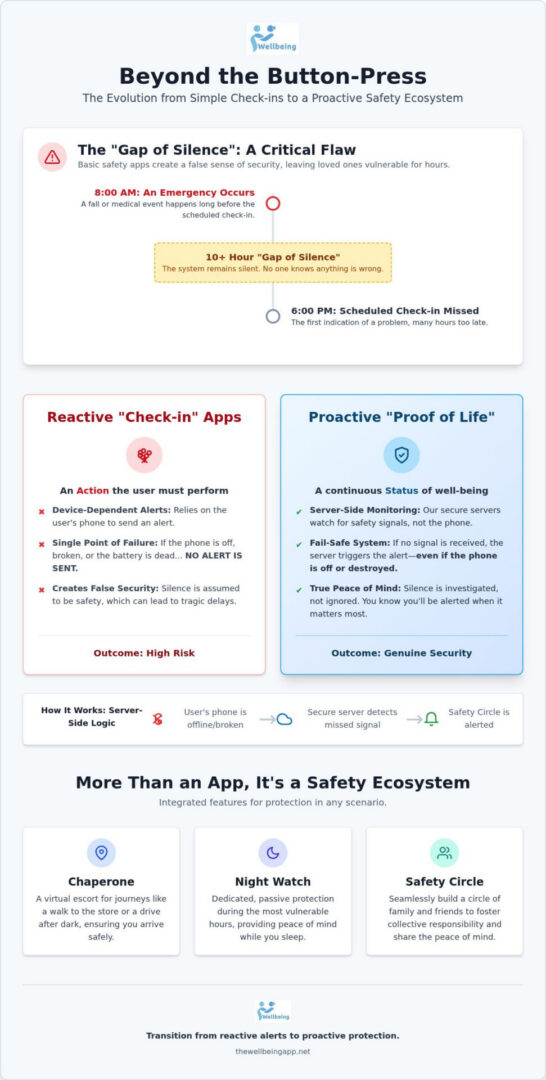
The primary issue with basic models is the “Gap of Silence.” If a loved one is scheduled to check in at 6 PM but suffers a fall at 8 AM, they could lie waiting for help for ten hours or more. A standard personal safety app often lacks the dynamic features needed for an active lifestyle. It doesn’t account for the walk to the grocery store or the drive home after dark. If a senior is incapacitated before their designated button-press, the system stays silent. This creates a false sense of security that can lead to devastating delays in emergency response. For those with non-traditional schedules or active social lives, a once-a-day check is simply too rigid to be reliable.
The Need for a Comprehensive Safety Ecosystem
Modern protection requires more than a reactive alert; it demands a proactive ecosystem. Families are shifting toward platforms that offer a suite of integrated services that adapt to the user’s day. Central to this shift is the importance of automated, server-side monitoring. In a traditional setup, if a phone is crushed during a fall or loses battery, the app might fail to send an alert. A superior snug app alternative uses server-side logic. This means the safety timer lives on a secure, remote server. If the user doesn’t check in, the server triggers the alert automatically, regardless of the phone’s status. Transitioning from reactive alerts to proactive protection is the only way to achieve true mental tranquility for the entire family circle.
Proof of Life vs. Simple Check-ins: A Deep Dive
When we talk about senior safety, the vocabulary we use matters. A simple “check-in” is an action; it is something a person must remember to do. In contrast, Proof of Life is a status. It is a continuous indicator of well-being that exists even when the user isn’t actively engaging with their phone. When families search for a snug app alternative, they are often looking for this shift from active burden to passive protection. One requires a senior to be a diligent operator of technology, while the other allows the technology to act as a watchful protector in the background.
The technical heart of this difference lies in server-side alert dispatching. Most basic safety apps rely on the user’s smartphone to send out an emergency notification. If that phone is crushed in a fall, submerged in water, or simply runs out of battery, the alert may never leave the device. Our system moves the “intelligence” to a secure, remote server. The countdown doesn’t happen on the phone; it happens in the cloud. If the server doesn’t receive a “clear” signal by the designated time, it triggers the alert regardless of the phone’s condition. This ensures that silence is never ignored.
How Proof of Life Indicators Work
The science behind proactive status monitoring is designed to reduce the “false alarm” fatigue that often plagues emergency contacts. If a system pings a family member every time a senior is five minutes late to a button-press, the family eventually starts to ignore the notifications. By integrating more sophisticated automatic check-in features, we can create a more nuanced hierarchy of alerts. The system can distinguish between a device that is simply offline and a missed wellness check, ensuring that when your phone rings, it carries the weight of a genuine need. This harmony between technical robustness and human connection is essential for long-term mental tranquility.
Reliability in High-Stakes Moments
Manual check-ins are frequently the weakest link in any safety plan. Life is busy and seniors are active. They might be in the garden, at a bridge club meeting, or simply taking a nap. When a safety system depends entirely on a human remembering a specific task at a specific time, it’s prone to failure. This is why a snug app alternative must offer a more resilient path. Automated phone calls often prove more reliable than push notifications, which are easily silenced or buried under social media alerts. A ringing phone demands attention and provides a higher level of certainty for everyone involved. You can explore how we facilitate this comprehensive safety circle to keep your family connected. Proof of Life is a non-negotiable standard for solo living.
Exclusive Features: Chaperone and Night Watch
While the Proof of Life indicator provides a foundational layer of safety, daily life often takes us into more dynamic environments. Safety shouldn’t be a static button on a screen. It should be a 24/7 proactive ecosystem that adapts to your movements. When a senior sets out for an evening walk or an unfamiliar trip across town, they shouldn’t have to carry the burden of “what ifs.” This is why a superior snug app alternative must offer specialized services that act as an active, virtual escort. These features move beyond passive tracking to provide protective reassurance during the moments when users feel most vulnerable.
Empowering users with personal agency is at the heart of our mission. We believe that technology should be an instrument of empowerment rather than a tool for surveillance. By integrating real-time Location Sharing with active monitoring, we foster a sense of collective responsibility. Family members aren’t just watching a dot on a map; they are part of a safety circle that is ready to act if the situation changes. This creates an atmosphere of trust that encourages seniors to remain active and independent, knowing a watchful protector is always by their side.
Virtual Chaperone: More Than Just GPS
The Chaperone service is designed for the journeys in between. Unlike standard GPS tracking, which only tells you where someone is, Chaperone provides active monitoring during transit. If a user is walking home alone or navigating an unfamiliar neighborhood, they can activate this virtual escort. The system monitors the journey in real-time. It’s a silent partner that provides immense psychological benefit. If the user deviates from their planned route or stops unexpectedly for a prolonged period, the system triggers an automated escalation. This proactive approach ensures that help is already on the way before a situation becomes a crisis. It’s the difference between being found and being protected.
Night Watch: Guarding the Vulnerable
Nighttime brings a unique set of risks and a specific type of anxiety for those living alone. Night Watch addresses these quiet hours with specialized protection. For family members living far away, the “what if they fall at 2 AM” fear is a constant drain on mental tranquility. Night Watch provides a supportive voice for those who feel anxious after dark. It ensures that even during the most vulnerable hours, the user is never truly alone. This dedicated monitoring provides the ultimate peace of mind, knowing that the “compassionate guardian” is awake and vigilant even when the rest of the world is asleep. Choosing a snug app alternative with these capabilities means choosing a system that values the preservation of your mental state as much as your physical safety.
Comparing the Cost and Value of Safety Subscriptions
When evaluating safety tools, it’s easy to be swayed by a zero-dollar price tag. However, in the world of personal security, “free” often comes with a hidden cost: the lack of a robust, server-side infrastructure. If a system is entirely dependent on a local device, it’s only as reliable as that device’s battery and signal. When you seek a snug app alternative, you’re really looking for a commitment to reliability. You’re choosing a partner that invests in the technical robustness required to send an alert even when a phone is destroyed or offline.
The return on investment for a safety subscription isn’t measured in dollars alone. It’s measured in the reduction of family stress and the preservation of your mental state. The quiet confidence of knowing your loved one is protected allows everyone to live more fully. Professional safety is an investment in community well-being. By moving beyond a basic check-in, you’re fulfilling a vital duty toward your loved ones, ensuring they have the support they need during high-risk moments. This shift from a passive tool to a proactive ecosystem is what creates true mental tranquility.
What Your Subscription Actually Funds
A premium subscription is the engine behind our “never-fail” alert system. It funds continuous server maintenance, ensuring that our Proof of Life monitoring remains uninterrupted. While basic apps might cut corners on technical redundancy, our infrastructure is built to handle dynamic emergency scenarios. This funding also drives the ongoing development of specialized features like Night Watch and Chaperone. We don’t just provide a tool; we provide a dedicated support system for vulnerable users and their families, ensuring that our watchful protector persona is backed by world-class technology. This investment ensures that our response hierarchy is always ready to act when it matters most.
Choosing the Right Plan for Your Family
Every family has unique needs. Some require an individual suite for an active senior who enjoys solo travel, while others benefit from a collective safety circle that connects multiple generations. When evaluating which features matter most, consider the daily routines of your loved ones. Does your mother walk home from the library after dark? Then Chaperone is essential. Does your father live alone in a rural area? Then the server-side Proof of Life indicators are non-negotiable. You can view our comprehensive safety plans to find the perfect fit for your family’s tranquility. Choosing a monthly or annual plan allows you to tailor the level of empathetic vigilance to your specific situation, ensuring that safety is always a shared effort.
Transitioning to The Wellbeing App: A Seamless Switch
Moving from a basic check-in tool to a comprehensive safety ecosystem shouldn’t feel like a technical hurdle. It is a moment of empowerment. When you choose a snug app alternative, you’re choosing to prioritize the mental tranquility of everyone you love. The transition is designed to be intuitive, ensuring that the technology serves your lifestyle rather than dictating it. By following a few simple steps, you can move from a reactive “I’m okay” button to a proactive, watchful protector that stays vigilant even when you can’t.
The first step in this journey is building your safety circle. Invite your family members and trusted friends to join your network. This isn’t just about sharing location; it’s about building a community-centric network of protection. For many seniors, the initial hesitation with new apps comes from a fear of complexity. We recommend a “walk-through” session where a family member helps set the initial parameters. This shared experience reinforces the idea that safety is a collective responsibility. It transforms the app from a piece of software into a shared promise of care.
Setting Up Your Proof of Life Schedule
Customization is the key to harmony. Your Proof of Life schedule should mirror your actual daily routine to avoid unnecessary alerts. If you enjoy a late morning coffee on the porch, set your first check-in for 10 AM. You can easily configure your emergency contacts and alert preferences within the app, ensuring the right people are notified in the right order. We always suggest a “test run” during the first week. Seeing the system work in a controlled environment builds the confidence needed to rely on it during high-stakes moments. This testing phase allows everyone to become familiar with the rhythm of the alerts, reducing anxiety and building trust in the technology.
A Compassionate Guardian for Every User
Our commitment goes beyond providing software. We strive to foster social cohesion by making safety accessible and supportive for every generation. By using technology as an instrument of empowerment, we help seniors maintain their independence while giving their families the gift of peace. The Wellbeing App is the logical conclusion for anyone seeking a snug app alternative that values personal agency. It’s time to move beyond the limitations of basic apps and embrace a system that truly cares. Secure your peace of mind with The Wellbeing App today.
Embrace a Proactive Future for Family Safety
True safety is found in the quiet moments between check-ins. By choosing a system built on proactive protection, you move beyond the limitations of manual alerts. Our automated server-side monitoring ensures that your loved one is never alone; even if their device fails, our server stays vigilant. This structural robustness is the foundation of a reliable safety ecosystem that preserves your family’s mental tranquility.
When you select a snug app alternative, you’re investing in more than just a notification. You’re gaining specialized features like Night Watch and Chaperone that adapt to the dynamic rhythm of a senior’s life. These tools provide real-time virtual escorts and nighttime security, turning a simple app into a compassionate guardian. It’s about fulfilling your duty to protect while empowering your loved ones to live with agency and confidence.
Start your journey toward mental tranquility with The Wellbeing App. Together, we can create a safer, more connected world for the people who matter most.
Frequently Asked Questions
Is The Wellbeing App better than Snug for seniors?
We believe our platform offers a more comprehensive safety ecosystem by moving beyond simple daily check-ins to include active features like Night Watch and Chaperone. While traditional options focus on a single button-press, our platform acts as a watchful protector that monitors your well-being throughout the day. This shift provides the ultimate mental tranquility for families who need more than a basic notification system. As a snug app alternative, we focus on proactive protection rather than reactive pings.
How does the ‘Proof of Life’ feature actually work?
The Proof of Life feature uses automated server-side monitoring to track your status based on a schedule you define. Instead of the countdown living on your phone, it exists on our secure remote servers. If you don’t check in by your designated time, our server triggers an alert automatically to your safety circle. This ensures that even if your device is unavailable or destroyed, your family is still notified of a potential emergency.
Can I use the Chaperone feature for my kids as well as seniors?
Absolutely, the Chaperone feature is an instrument of empowerment for users of all ages, including children and teenagers. Whether a child is walking home from school or a senior is navigating an unfamiliar neighborhood, the virtual escort provides real-time monitoring during the journey. It fosters a sense of collective responsibility within the family, ensuring that every member feels protected during their daily routines and transitions.
What happens if my phone dies or I lose internet connection?
Because our system uses server-side logic, your safety alerts are not dependent on your phone’s battery or immediate internet connection at the time of the alert. If your phone dies or you lose signal before a scheduled check-in, our servers will still recognize that the check-in was missed. This fail-safe mechanism is a key reason families choose us as their snug app alternative, as it ensures help is triggered even if your hardware is incapacitated.
Does The Wellbeing App provide physical security guards?
No, we do not provide physical security personnel or on-site guards. Our service is a technologically sophisticated software platform that facilitates automated monitoring and emergency alerts. We act as a digital guardian that coordinates with your personal safety circle of family and friends. This approach focuses on fostering social cohesion and empowering your existing community to look out for your best interests through reliable technology.
How many emergency contacts can I add to my safety alerts?
You can invite multiple trusted individuals into your safety circle to ensure a reliable response hierarchy. We encourage users to add several emergency contacts to distribute the collective responsibility of monitoring. By including various family members, friends, or neighbors, you create a robust network of protection that ensures someone is always available to respond if an automated alert is triggered by the system.
Is my location data private and secure?
Yes, your location data and personal information are handled with the highest degree of care and technical robustness. We view ourselves as a compassionate guardian, which means your privacy is a central pillar of our mission. Data is only shared with your designated safety circle during active alerts or when using specific features like Chaperone, ensuring you maintain personal agency over your information at all times.
Can I cancel my safety subscription at any time?
Yes, you have full control over your safety subscription and can cancel at any time through your account settings. We believe safety should be a choice that empowers you, not a burden that restricts you. Our goal is to provide mental tranquility, and that includes offering flexible plans that adapt to your family’s changing needs without long-term contracts or complicated exit processes.