
Using Location Sharing to Prevent Missing Persons: A Proactive Safety Guide
What if the silence on the other end of a phone call wasn’t a source of panic, but a signal that everything is exactly as it should be? We all know that hollow feeling of anxiety when a loved one is traveling alone or fails to check in on time. It’s a heavy burden to carry, especially when you’re unsure which digital tools actually offer protection and which are just background noise. You feel a deep duty to protect those you love, yet you want them to move through the world with confidence rather than fear.
This guide explores how using location sharing to prevent missing persons creates a reliable safety net that works silently in the background. You’ll discover how modern technology acts as a compassionate guardian, bridging the gap between silence and safety to provide your family with lasting mental tranquility. We’ll walk through the most effective features, from automated Proof of Life checks to Night Watch monitoring, to ensure you’re never left in the dark when it matters most. By the end, you’ll understand how to achieve faster emergency response times and the harmony that comes from proactive safety management.
Key Takeaways
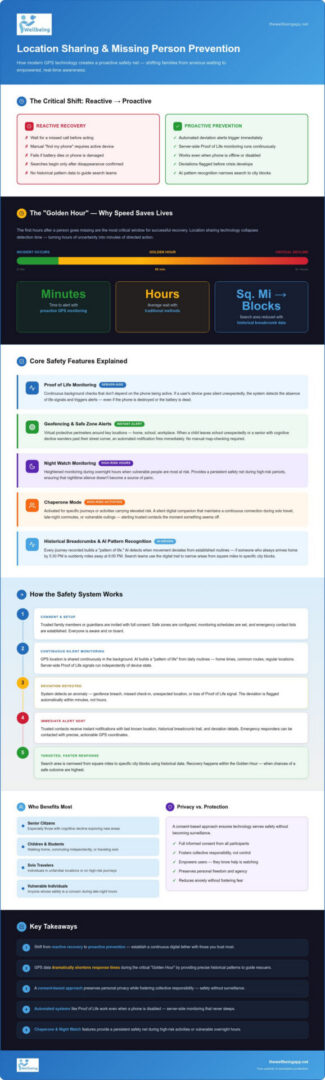
- Shift your focus from reactive recovery to proactive prevention by establishing a continuous digital tether with those you trust most.
- Learn how GPS data can dramatically shorten response times during the critical “Golden Hour” by providing precise historical patterns.
- Discover how a consent-based approach to safety technology preserves personal privacy while fostering a deep sense of collective responsibility.
- Understand the life-saving benefits of using location sharing to prevent missing persons through automated systems that work even if a phone is disabled.
- Explore how specialized features like Chaperone and Proof of Life provide a persistent safety net during high-risk activities or vulnerable hours.
The Role of Real-Time Location Sharing in Modern Personal Safety
Modern safety isn’t just about reacting to a crisis; it’s about building a continuous digital tether between those we love. We often think of GPS as a tool to find lost items, but its true power lies in its ability to maintain a constant, supportive connection. By using location sharing to prevent missing persons, we move away from the frantic search for answers and toward a state of empathetic vigilance. This approach treats safety as a shared community responsibility, where technology acts as a silent, watchful protector in the background.
The shift from reactive recovery to proactive prevention is vital. In missing person cases, the first few hours are the most critical, yet traditional methods often wait until a disappearance is confirmed before any action is taken. Proactive monitoring changes this dynamic. It allows families to identify deviations from normal patterns immediately. This isn’t about control; it’s about providing the mental tranquility that comes from knowing a loved one is exactly where they should be.
Why Traditional Tracking Isn’t Enough
Many people assume that standard “find my phone” tools provide enough security. However, these manual services have significant limitations. They often require the user to be active or the device to be fully functional at the exact moment of the search. If a person is in distress, they might not be able to trigger an alert. Additionally, battery life and signal strength are fragile in emergency scenarios. If the phone is destroyed or the battery dies, the tracking stops. Systems that utilize Proof of Life indicators solve this by maintaining server-side monitoring. These indicators provide a reliable safety signal that doesn’t depend on the phone remaining active during a crisis.
The Psychology of the Digital Safety Net
Living in a state of constant worry for a family member’s safety is exhausting. This “anxiety of silence” can strain relationships and limit personal freedom. A digital safety net is a proactive shield for vulnerable populations that transforms passive data into an active layer of protection. When we use these tools, we aren’t fostering fear; we are fostering empowerment. It allows a student walking home or a senior citizen exploring a new neighborhood to feel a sense of agency. They know that if their routine is interrupted, an automated system will notice. This creates a culture of safety where everyone feels cared for without feeling watched.
How Location Data Transforms the Search for Missing Persons
In the high-stakes world of search and rescue, time is the most precious resource. Experts often refer to the “Golden Hour,” the initial window of time where the chances of a successful recovery are highest. By using location sharing to prevent missing persons, we effectively collapse the time it takes to recognize an emergency. Instead of waiting for a missed phone call to trigger an alarm, modern GPS technology provides immediate, actionable data that can guide responders directly to a specific coordinate.
Establishing a “pattern of life” through historical data is equally transformative. When a person’s movements are recorded over time, it becomes much easier to identify when something is wrong. If a loved one typically arrives home at 5:30 PM but is suddenly miles away in an unfamiliar area at 6:00 PM, the system can flag this deviation. This level of insight ensures that help isn’t just fast; it’s targeted. It’s about creating a world where no one is truly lost because their community is always looking out for them.
Geofencing and Safe Zone Alerts
Geofencing acts as an invisible, protective perimeter around the places that matter most. These virtual boundaries monitor movement in and out of designated “safe zones,” such as a school, a workplace, or a neighborhood. If a child leaves the school grounds unexpectedly or a senior with cognitive decline wanders past their street corner, an automated notification is sent instantly. This proactive layer of security prevents small mistakes from becoming dangerous disappearances. It’s a simple way to maintain enhanced location awareness without needing to constantly check a map manually.
Historical Breadcrumbs and Pattern Recognition
When every second counts, knowing the “last known location” isn’t enough; you need to understand the path that led there. Historical breadcrumbs provide a digital trail that search teams use to narrow down search areas from square miles to specific city blocks. Modern safety applications use AI-driven pattern recognition to understand these routines. If a user’s phone stops sending signals in a known dead zone, the system recognizes it as a routine event. If it stops in a high-risk area, it triggers a different response. This sophisticated monitoring respects the user’s privacy by securely storing data, ensuring it’s only accessible when a genuine safety threat emerges.
Overcoming the ‘Privacy vs. Protection’ Dilemma
When we discuss using location sharing to prevent missing persons, the conversation often stalls at the word “tracking.” For many, this term evokes images of intrusive surveillance or digital stalking, which can create friction within a family. However, the reality of modern safety technology is rooted in a consent-first model. This approach moves away from top-down monitoring and toward a collaborative agreement between trusted individuals. It isn’t about watching someone’s every move; it’s about providing a silent guardian that only speaks up when something is wrong. By reframing the technology as a tool for mutual well-being, families can replace the anxiety of silence with a shared sense of security.
There is a fundamental difference between “always-on” surveillance and proactive monitoring. Traditional tracking often feels like a breach of privacy because it lacks context. In contrast, using location sharing to prevent missing persons through a “check-in” or “proof of life” system empowers the user. They remain in control of their digital footprint, while their loved ones gain the mental tranquility of knowing they are safe. This transparency is what separates a compassionate digital tether from intrusive monitoring, fostering a healthy family dynamic built on trust and empathetic vigilance.
Establishing Boundaries with Loved Ones
Discussing safety with teenagers requires a delicate balance between their need for independence and your duty to protect them. Instead of framing location sharing as a restriction, present it as an instrument of personal agency. Tell them that if you know they are safe, you won’t need to disrupt their evening with constant “where are you” texts. You can also implement conditional sharing, which only activates during specific high-risk hours or activities, such as walking home after a late shift. This setup respects their daily privacy while ensuring a safety net is present when they are most vulnerable.
Technical Safeguards for Your Data
A digital safety net is only as strong as the security protecting it. To maintain harmony and trust, it’s essential to use applications that prioritize end-to-end encryption. This ensures that sensitive location data is only visible to the people you’ve explicitly chosen. Furthermore, server-side monitoring offers a level of security that peer-to-peer tracking cannot match. Because the monitoring happens on a secure server, an alert can still be sent to your emergency contacts even if your phone is lost, stolen, or destroyed. Data security is the foundation of mental tranquility. By choosing tools that respect digital boundaries, you ensure that your protective measures never become a source of stress.
Beyond the Map: Creating a Proactive Safety Protocol
A map is just a picture. To truly protect those you love, you must transform that data into a living safety protocol. Most people treat location apps like a digital mirror; they only look when they’re already worried. But using location sharing to prevent missing persons effectively means building a routine that acts before the worry begins. This proactive stance integrates specific services like a digital Chaperone for high-risk moments, such as walking home after dark or traveling through unfamiliar transit hubs. It’s about creating a community Night Watch where safety is a shared, automated responsibility rather than a burden on one person’s shoulders.
When we move from passive observation to active engagement, we create a environment of empathetic vigilance. This doesn’t mean hovering over a screen. Instead, it means setting up a system that remains silent until it’s needed. By establishing clear triggers for Emergency Alerts, you ensure that if a loved one’s routine is broken, the response is immediate and coordinated. This proactive management is the key to lasting mental tranquility for the whole family.
The 5-Step Proactive Safety Checklist
Building a safety net doesn’t have to be complicated. Follow these steps to ensure your family’s digital tether is secure and functional:
- Step 1: Audit your settings. Check every family device to ensure location permissions are set to “Always” rather than “While Using.”
- Step 2: Define Safe Zones. Mark frequent destinations like schools, offices, and homes to trigger automatic arrival notifications.
- Step 3: Establish a Proof of Life schedule. For vulnerable family members, set specific times for automated check-ins that confirm well-being without manual texting.
- Step 4: Designate emergency contacts. Choose individuals who are authorized to act and ensure they have the app installed.
- Step 5: Review permissions quarterly. Ensure the circle of trust remains current and that all privacy settings still align with each family member’s needs.
Automating Your Peace of Mind
Manual check-ins often fail during real emergencies. When someone is in distress, the last thing they can do is type a text or open an app. This is where server-side monitoring becomes a lifesaver. By using location sharing to prevent missing persons with a Night Watch feature, the monitoring happens on a secure server, not just on the device. If a scheduled Proof of Life check is missed, an alert is sent automatically even if the phone is lost or the battery has died. This removes the constant burden of monitoring from the caregiver, allowing you to rest in the knowledge that silence will be broken by the system if it needs to be. To start building your family’s proactive safety net, set up your automated alerts today.
The Wellbeing App: Your Partner in Persistent Protection
Choosing the right tools for your family’s safety is a deeply personal decision that carries significant weight. The Wellbeing App acts as a compassionate guardian, moving beyond standard GPS maps to offer a sophisticated, always-on safety net. By using location sharing to prevent missing persons, the platform transforms your smartphone into an instrument of empowerment and proactive management. It provides the protective reassurance that your loved ones are never truly alone, regardless of where their journey takes them. This isn’t just about technical monitoring; it’s about fostering social cohesion and ensuring every member of your circle feels secure.
The heart of this persistent protection lies in the Proof of Life feature. This tool serves as the ultimate prevention mechanism by establishing a consistent, healthy rhythm of well-being. Unlike passive tracking, it requires a simple, non-intrusive confirmation from the user at designated times. If that confirmation doesn’t happen, the system initiates a series of Emergency Alerts to your trusted circle. Combined with Night Watch for protection during vulnerable hours and Chaperone for high-risk transit, the app provides a comprehensive shield that operates with empathetic vigilance around the clock.
Why Automated Monitoring Beats Manual Texting
Relying on a “text me when you get there” request is a fragile strategy that often fails when it matters most. In a real emergency, a person may be unable to reach their phone, or they might simply be distracted by their surroundings. The Wellbeing App utilizes server-side monitoring to solve this critical vulnerability. This means the safety logic lives on our secure servers, not just on the local device. If a phone is lost, stolen, or even destroyed, the server recognizes the missed check-in and triggers an alert to your contacts anyway. This automated approach bridges the gap between silence and safety far more effectively than manual check-ins ever could. It prevents a “missing” status from developing by flagging deviations the moment they occur.
Join a Community of Watchful Protectors
Safety is a shared effort that relies on a deep sense of duty toward our loved ones. When you integrate these tools into your daily life, you’re investing in more than just software; you’re investing in lasting mental tranquility. The emotional reward of knowing your child arrived at their destination or your elderly parent is safe at home is immeasurable. Using location sharing to prevent missing persons isn’t about living in fear. It’s about the harmony that comes from proactive safety management and the strength of a community that looks out for its own. It’s time to move from a state of anxiety to a position of empowerment. Secure your family’s safety with The Wellbeing App today.
Embracing a Future of Shared Safety and Mental Tranquility
We have moved beyond simple maps to a world where safety is a living, breathing commitment to those we love. By using location sharing to prevent missing persons, you aren’t just watching a screen; you’re building a foundation of trust and empowerment. This proactive approach ensures that the anxiety of silence is replaced by a reliable, automated safety net that respects personal boundaries while providing essential protection for everyone in your circle.
The Wellbeing App stands as your partner in this mission, offering specialized tools like Advanced Proof of Life indicators and 24/7 Night Watch protection. Because the system utilizes server-side automated alert dispatch, your family’s security doesn’t depend on a single device remaining active or a perfect signal. It’s time to reclaim your peace of mind and foster a culture of collective responsibility. Start your journey toward mental tranquility with The Wellbeing App today. You have the power to create a safer, more connected world for your family, one check-in at a time.
Frequently Asked Questions
How does location sharing actually help prevent someone from going missing?
It creates a digital tether that identifies deviations from routine before a crisis escalates. By using location sharing to prevent missing persons, families can spot if a loved one has stopped in an unusual area or failed to reach a destination. This proactive monitoring allows for immediate intervention, often resolving a situation before it becomes an official missing person case. It’s about closing the gap between a delay and a disappearance.
Is location sharing safe to use with my elderly parents?
Yes, it’s a compassionate tool for maintaining their independence while ensuring their safety. For seniors with cognitive decline, geofencing provides a gentle safety net that alerts you if they wander beyond familiar boundaries. It’s important to frame this as a shared family effort for mental tranquility rather than surveillance. This empowers them to explore their community with the confidence that help is always a silent alert away if they become disoriented.
What happens if the phone’s battery dies or the signal is lost?
Traditional apps might fail, but server-side monitoring ensures protection continues. If a device goes offline, the server recognizes the lack of signal and can trigger an alert based on the last known location. This is why features like Night Watch are essential; the monitoring doesn’t live on the phone itself. Even if the phone is destroyed or the battery dies, your emergency contacts are notified that the digital tether has been broken.
Can location sharing be used to find a person who has already disappeared?
Yes, historical location data is a vital tool for search and rescue teams. It provides a digital breadcrumb trail that narrows the search area significantly, often saving critical hours during the “Golden Hour” of recovery. By reviewing the path taken before the signal was lost, responders can identify specific patterns or high-risk areas. This historical context transforms a needle-in-a-haystack search into a targeted, data-driven operation.
How do I talk to my teenager about using a safety app?
Focus on personal agency and mutual trust rather than control. Explain that using location sharing to prevent missing persons actually gives them more freedom. If you know they are safe, you don’t need to disrupt their social life with constant “check-in” texts or calls. Frame it as a digital Chaperone that only activates when they are in high-risk situations, ensuring their privacy is respected while their safety remains a top priority.
What is the difference between GPS tracking and ‘Proof of Life’ monitoring?
GPS tracking is a passive map, while Proof of Life is an active well-being check. Standard tracking only tells you where a phone is, but it doesn’t confirm if the person is okay. Proof of Life requires a non-intrusive interaction at set intervals. If that interaction is missed, the system automatically dispatches alerts. This moves the focus from finding a device to confirming the actual safety of your loved one.
Does using location sharing apps drain the phone’s battery quickly?
Modern safety applications are designed to be highly efficient, using minimal background power. While real-time sharing does use some energy, the impact on modern smartphones is generally negligible. Developers use intelligent algorithms that only update the location when significant movement is detected. This ensures that the digital tether remains active throughout the day without leaving the user stranded with a dead battery when they need help the most.
Are there privacy risks associated with sharing my real-time location?
Privacy is protected through end-to-end encryption and a consent-first model. You choose exactly who sees your location and for how long. Modern safety platforms prioritize data security as the foundation of mental tranquility, ensuring your movements are never shared with third parties. By establishing a “circle of trust” with family members, you maintain your digital privacy while benefiting from the collective responsibility of a community safety net.