
Best Family Locator App Besides Life360: Proactive Safety in 2026
You see a green dot on a map at 11:00 PM, but your teenager hasn’t walked through the front door yet. Is the app lagging, or is something actually wrong? Seeing a location isn’t the same as knowing someone is safe, and for many families, the constant map-watching only fuels anxiety. If you’re tired of significant battery drain and privacy concerns regarding your data, you’re likely searching for a family locator app that provides a more reliable, respectful, and truly proactive safety solution.
We understand that true peace of mind comes from proactive protection rather than passive tracking. You deserve a watchful protector that acts when you can’t, offering a sense of harmony and mental tranquility. This guide explores the most reliable alternatives that prioritize your family’s well-being through sophisticated indicators and automated alerts. We’ll examine how features like Proof of Life, Chaperone, and Night Watch provide a virtual safety net for late-night commutes and missed check-ins. It’s time to empower your family with a tool that values personal agency and collective responsibility over simple surveillance.
Key Takeaways
- Transition from the stress of passive location tracking to a proactive safety net that provides genuine mental tranquility.
- Discover why the best family locator app besides life360 in 2026 must prioritize battery efficiency and server-side monitoring over simple map-watching.
- Evaluate specialized services like Proof of Life and Night Watch that provide a compassionate guardian for your family’s most vulnerable moments.
- Address the privacy paradox by understanding how to secure your data while maintaining high-stakes emergency alert protocols.
- Shift your family’s perspective from being monitored to being empowered through a shared sense of duty and collective responsibility.
Beyond the Map: Why Families are Moving Away from Life360
For years, family safety meant staring at a glowing dot on a digital map. We’ve been conditioned to believe that as long as the icon stays within a designated “Safe Zone,” everything is fine. This passive approach to security is changing rapidly. Families are no longer satisfied with simple surveillance; they’re seeking the best family locator app besides life360 that offers proactive safety management rather than just a history of where someone has been. True mental tranquility doesn’t come from watching a map; it comes from knowing that if something goes wrong, a system is already in place to help.
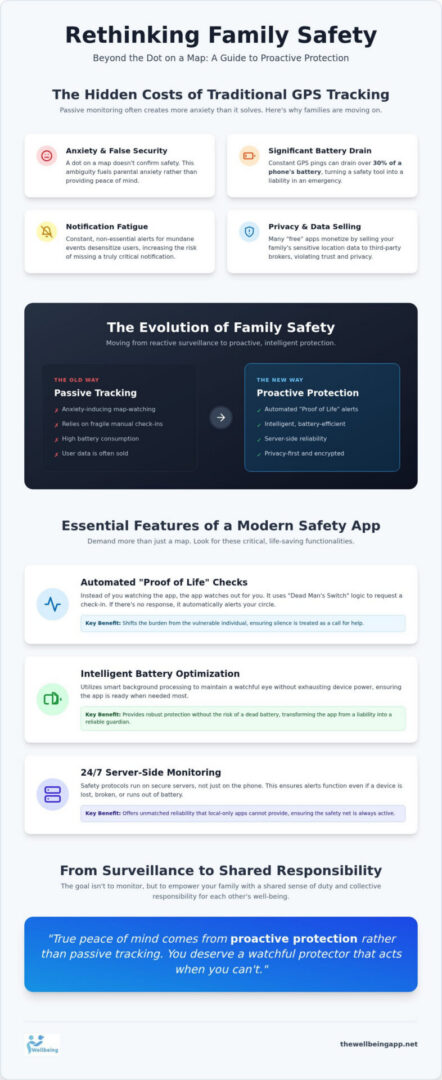
One of the primary drivers of this shift is notification fatigue. When an app pings your phone every time a family member enters or leaves a mundane location, you eventually stop paying attention. This desensitization is dangerous. If every alert is treated as “non-essential,” the one alert that actually matters might be missed. Modern families want a watchful protector that remains silent during the day but acts with urgency the moment an indicator suggests trouble. This requires sophisticated battery optimization, which has become a deal-breaker for users. In 2026, an app that drains 30% of a phone’s battery just to provide passive updates isn’t a safety tool; it’s a liability.
The Problem with Passive GPS Tracking
A dot on a map is a data point, not a status report. It doesn’t tell you if a loved one is in distress, if they’ve been separated from their phone, or if they’re being followed. Relying on occasional location pings creates a false sense of security. To understand the technical side, it’s helpful to look at how device tracking works through GPS and cellular triangulation. While these technologies provide coordinates, they can’t provide context. Manual check-in texts are equally fragile. In a true emergency, a person often cannot reach their phone to send a message. This is why the best family locator app besides life360 must offer automated “Proof of Life” check-ins that trigger alerts if a response isn’t received, ensuring that silence is treated as a call for help.
Privacy and Data Security in 2026
There is a growing consumer backlash against the “free” model of safety apps, where the price of admission is your family’s most intimate location data. Ethical location sharing is now a top priority. Families are moving toward premium tools that prioritize user anonymity and end-to-end encryption. Instead of selling data to third-party brokers, these apps focus on a mission of altruism and collective responsibility. When you choose a service that values privacy, you’re choosing an environment of trust. By moving away from ad-revenue models, these platforms can focus entirely on their role as a compassionate guardian, ensuring your data is used only to preserve your family’s well-being and harmony.
Key Features to Evaluate in a Premium Family Safety App
Choosing a safety partner requires looking beyond the interface. While technical robustness is essential, the human element of security is what transforms a simple tool into a compassionate guardian. The best family locator app besides life360 must balance high-precision location accuracy with the practical reality of battery longevity. High-frequency pings are a liability if they leave a family member with a dead phone in a crisis. Reliable apps in 2026 use intelligent background processing to maintain a watchful eye without exhausting the device’s power.
Cross-platform compatibility is another non-negotiable factor. Modern households often mix iOS and Android devices, and your safety net shouldn’t have holes because of an operating system. A truly effective service provides 24/7 server-side monitoring. This means the safety protocols live on the server, not just the phone. If a device is lost, stolen, or broken, the automated alerts continue to function, ensuring that your loved one is never truly alone. This server-side logic provides a level of reliability that local-only apps can’t match.
Automated Alerts vs. Manual SOS Buttons
Manual SOS buttons are a standard feature, but they have a significant flaw: they require the user to be conscious and capable of reaching their device. In many high-stakes situations, this isn’t possible. This is where Proof of Life automated check-ins become vital. By utilizing “Dead Man’s Switch” logic, the system expects a regular signal of safety. If that signal is missed, the app proactively notifies the family. This approach shifts the burden away from the vulnerable individual and the anxious caregiver, fostering an environment of mental tranquility and trust.
The Chaperone Experience: Virtual Escorts for Night Walks
Safety shouldn’t feel like surveillance; it should feel like empowerment. A Virtual Chaperone provides a proactive safety layer for high-risk activities, such as walking home late at night or commuting through unfamiliar areas. When a user activates this feature, the system maintains heightened vigilance. If they don’t reach their destination within the expected timeframe, the escalation path is immediate. This isn’t just about knowing where someone is; it’s about having a dedicated protector for the journey. For those seeking a more supportive way to manage family safety, these proactive tools offer a level of reassurance that passive tracking simply cannot match. By focusing on personal agency, these features ensure that help is always on the horizon, even if a call for help cannot be made.
Top Family Locator Alternatives: Comparing the Best of 2026
Finding the best family locator app besides life360 requires a shift in perspective. You aren’t just looking for a new map; you’re looking for a partner that understands the nuances of your family’s safety needs. In 2026, the market has matured, offering everything from basic integrated tools to sophisticated platforms designed for comprehensive well-being. Whether you’re coordinating a busy household of teenagers or supporting an aging parent living independently, the right choice depends on the level of proactive protection you require to maintain your mental tranquility.
The Wellbeing App: A Proactive Safety Powerhouse
The Wellbeing App stands out as a leader for families who prioritize well-being over constant surveillance. Its proprietary Proof of Life indicators have revolutionized the category by transforming safety from a passive check to a proactive dialogue. Unlike traditional apps that wait for you to look at a map, this platform expects a regular signal of well-being. If that signal is missed, the system’s server-side monitoring triggers immediate action. This is a critical safety net that works even if a phone is lost or damaged, ensuring the protective loop is never broken.
For families managing senior safety and aging-in-place, this app is particularly effective. It addresses the “privacy paradox” by allowing seniors to maintain their personal agency while providing children with the reassurance that help is always available. The Night Watch feature extends this empathetic vigilance through the overnight hours, offering a compassionate guardian that never sleeps. This altruistic focus on preventing incidents before they escalate makes it a superior choice for those who view safety as a shared responsibility within their community.
Standard OS Tools: When ‘Find My’ is Enough
For many, the built-in tools like Apple Find My or Google Maps provide a sufficient, free alternative for basic location sharing. These services are deeply integrated into the phone’s hardware, offering excellent battery efficiency and reliable accuracy. They’re perfect for casual coordination, such as seeing if a spouse has left the office or checking a friend’s progress toward a meeting. However, they remain fundamentally passive. They don’t offer the automated alerts or emergency dispatch protocols found in premium safety ecosystems.
If your primary concern is simply finding a lost device or seeing a general location, these OS-level tools are excellent. If your concern is the actual safety of a vulnerable loved one, you may find them lacking. They don’t provide the Chaperone experience for late-night walks or the specialized driving logs found in apps like OtoZen. For families with new student drivers, OtoZen remains a popular choice due to its focus on road safety, though it often lacks the all-encompassing well-being features necessary for non-drivers or seniors. Ultimately, the best family locator app besides life360 is the one that provides the specific type of peace you need to feel empowered rather than anxious.
Solving the Privacy Paradox: Secure Data in Family Safety
Privacy is often the biggest hurdle when choosing a safety tool. Many families feel forced to choose between keeping their data private and keeping their children safe. This is the privacy paradox. When searching for the best family locator app besides life360, it’s vital to distinguish between invasive tracking and protective monitoring. Tracking is often about constant, non-essential data collection for the sake of advertising. Monitoring is a disciplined, always-on commitment to well-being. By choosing a subscription-based model, you’re ensuring that the service’s loyalty remains with your family, not with data brokers.
Granular control allows you to decide exactly what is shared and when. You don’t have to sacrifice your personal agency for a sense of security. A compassionate guardian respects boundaries while remaining vigilant. This transparency builds an atmosphere of safety and trust, encouraging users to feel empowered rather than anxious. When the technology is used as a means to a social and emotional end, it fosters harmony within the household.
Server-Side Monitoring: Safety Beyond the Phone
Most apps rely entirely on the device in your pocket. If that phone is destroyed in an accident or the battery dies in a remote area, the safety link is severed. The Wellbeing App utilizes server-side monitoring to solve this technical vulnerability. Because the Proof of Life protocol lives on a secure server, the system knows if a check-in is missed regardless of the phone’s status. The server triggers the emergency alert dispatch even if the hardware is offline. This technical robustness provides a safety net that local-only apps simply cannot replicate, ensuring your loved ones are never truly alone.
Data Sovereignty for Families
Your daily habits and frequent locations are deeply personal data points. Data Sovereignty in the context of family safety means that a household maintains absolute ownership and control over their geolocation history, ensuring that sensitive movements are never commodified or shared without explicit, revocable consent. Finding the best family locator app besides life360 often comes down to who you trust with your most sensitive information. We believe safety is a shared effort, not a product to be sold. Choosing a partner with transparent privacy policies is a duty you owe to your loved ones. To start building a secure safety net without compromising your privacy, get started with The Wellbeing App today. By prioritizing altruism over ad revenue, we preserve your mental state and your data integrity simultaneously.
Choosing The Wellbeing App for Comprehensive Mental Tranquility
True safety should never feel like a burden or a source of constant stress. For many, the transition to a dedicated safety partner is about reframing protection as a tool for empowerment rather than a reaction to anxiety. The Wellbeing App operates on a “Watchful Protector” philosophy. This means our systems remain always on and deeply vigilant, yet they never intrude upon your family’s daily life unless an actual indicator of concern arises. Choosing the best family locator app besides life360 is a decision to prioritize your family’s mental state alongside their physical security.
Our mission is rooted in an altruistic desire to foster social cohesion and protect the vulnerable. By automating the most critical parts of safety management, we help families reclaim their time and emotional energy. Instead of watching a map, you can focus on your relationships, knowing that a compassionate guardian is keeping watch in the background. This approach encourages a sense of harmony and trust, allowing teens to explore their world and seniors to maintain their independence with confidence.
Proof of Life: The Ultimate Safety Indicator
The core of our protective ecosystem is the Proof of Life indicator. Think of this as a constant safety heartbeat that pulses throughout the day. Rather than forcing you to manually check in or constantly peek at a GPS dot, the app utilizes scheduled, automated check-ins tailored to each family member’s unique routine. A teenager walking home from practice might have a different check-in frequency than a senior running errands. This customization ensures the safety net is both robust and respectful. The psychological benefit is profound. When the system is active, you can finally embrace the idea that “no news is good news,” resting in the knowledge that you will be alerted the moment a check-in is missed.
Getting Started with Your Digital Safety Net
Building your family’s proactive safety net is a straightforward process designed to encourage collective responsibility. Onboarding your loved ones involves more than just installing software; it’s an opportunity to discuss shared duties and mutual care. You can begin by setting up your first Night Watch or Chaperone session for high-stakes moments, such as a late-night commute or an evening walk. These features act as a virtual escort, providing empathetic vigilance when it’s needed most. As you integrate these tools into your life, you’ll find that safety becomes a seamless part of your family’s well-being. It is time to move beyond passive tracking and embrace a more sophisticated, caring approach to protection. Experience true mental tranquility with The Wellbeing App and join a community dedicated to proactive safety management.
Embrace a Future of Proactive Family Protection
Safety in 2026 has evolved beyond the simple surveillance of a digital map. True security is found in a compassionate guardian that remains vigilant when you’re occupied. By shifting from passive tracking to proactive monitoring, you eliminate the notification fatigue that often leads to missed emergencies. You also ensure that your family’s most sensitive data remains private through a zero data-selling policy. When evaluating the best family locator app besides life360, the choice ultimately rests on which service provides the deepest sense of mental tranquility and personal agency.
The Wellbeing App offers a sophisticated safety net featuring automated Proof of Life monitoring and a 24/7 Virtual Chaperone service. These tools are designed to foster independence for your teenagers and seniors while providing you with the reassurance that help is always on the horizon. It’s time to replace constant map-watching with a system rooted in collective responsibility and altruism. Secure your family’s peace of mind with The Wellbeing App today. Together, we can create an atmosphere of safety where every family member feels empowered to explore their world with confidence.
Frequently Asked Questions
Is there a better app than Life360 for battery life?
Yes, apps that utilize intelligent background processing and server-side monitoring are generally superior for battery longevity. Life360 is known for frequent GPS pings that can drain power rapidly. The Wellbeing App optimizes these updates to maintain a watchful eye without exhausting the device’s battery. This balance ensures the phone remains functional during a crisis, providing harmony and peace of mind for the entire family.
Can I use a family locator app without my kids feeling spied on?
You can foster independence by shifting the focus from surveillance to personal agency and mutual care. Choosing the best family locator app besides life360 allows you to use features like Proof of Life check-ins, which feel like a safety dialogue rather than a hidden camera. By framing the technology as a shared tool for community unity, you encourage your children to feel empowered rather than anxious.
What is a ‘Proof of Life’ check-in and how does it work?
A Proof of Life check-in is an automated indicator that confirms a user’s well-being at scheduled intervals. The system sends a prompt to the user’s phone, and their response acts as a safety heartbeat. If a response is missed, the server-side monitoring triggers immediate alerts to designated contacts. This proactive safety management ensures that silence is treated as a call for help, preserving the user’s mental tranquility.
Do family locator apps work if the phone is turned off?
Most standard apps fail if the phone is powered down, but server-side monitoring provides a critical safety net. The Wellbeing App’s protocols live on the server, meaning the system knows if a scheduled check-in is missed even if the hardware is offline. While it cannot track a dead phone in real-time, it can proactively notify you the moment the safety signal stops, acting as a compassionate guardian.
What is the most secure alternative to Life360 for privacy?
The most secure alternatives are those with a zero data-selling policy and transparent privacy models. Many “free” apps generate revenue by selling location habits to third-party brokers, which compromises your family’s data sovereignty. The Wellbeing App is the best family locator app besides life360 for those who prioritize privacy, as it relies on a subscription model to ensure your sensitive movements are never commodified or shared with advertisers.
How much does a premium family safety subscription typically cost in 2026?
Premium safety subscriptions in 2026 are typically structured as recurring monthly or annual fees. These costs vary based on the number of monitored devices and the complexity of features like automated alert dispatch and server-side monitoring. Families usually find that these subscriptions provide a much higher level of protective reassurance compared to free apps, as the revenue supports a dedicated mission of altruism and data privacy.
What happens if I miss a scheduled check-in on The Wellbeing App?
If a scheduled check-in is missed, The Wellbeing App immediately activates its automated notification dispatch. The system doesn’t wait for you to notice a problem; it proactively alerts your designated emergency contacts that you haven’t responded. This escalation path is designed to prevent missing person incidents by ensuring that help is dispatched the moment a safety indicator is absent, providing a reliable safety net for everyone involved.
Is The Wellbeing App suitable for monitoring elderly parents living alone?
The platform is specifically designed to support seniors living independently. Features like Night Watch and Chaperone provide a virtual safety net that respects a senior’s personal agency while offering children empathetic vigilance. By using automated alerts instead of constant map-watching, you can ensure your parents are safe without being intrusive. This fosters an atmosphere of trust and harmony for families navigating the challenges of aging-in-place.