
How to Support Senior Independence: A Complete Guide
According to research from AARP, 75% of older adults want to remain in their current homes as they age. Yet for family caregivers, the constant dread of unwitnessed falls or sudden medical emergencies can easily turn loving concern into smothering micromanagement. Learning how to support an independent lifestyle for seniors requires a delicate balance. You want to protect your aging parents without stripping away their hard-earned autonomy or crowding their personal space.
You probably already sense the friction that frequent “just checking in” phone calls can create. True peace of mind does not come from intrusive surveillance or overwhelming your family with complex, expensive equipment. Instead, this complete guide delivers practical strategies, targeted home adaptations, and smart daily safety habits designed to keep your loved ones secure at home. Ahead, you will discover how to establish an unobtrusive safety net that protects family dignity, keeps you informed when it matters most, and preserves genuine independence.
Key Takeaways
- Master how to support an independent lifestyle for seniors by focusing on personal dignity, environmental safety, and proactive routines.
- Implement high-impact, non-invasive home modifications that neutralize fall hazards without turning a home into a clinical setting.
- Establish structured daily schedules and gentle physical movement to sustain joint mobility and cognitive vitality over time.
- Replace intrusive cameras and micromanaging phone calls with dignified digital safety nets that protect privacy while keeping families connected.
- Discover how automated wellness checks and smartphone-based tools like Proof of Life provide guaranteed safety dispatch without requiring bulky hardware.
Understanding Senior Independence: Key Pillars of Aging in Place
Too often, conventional advice treats living alone as a brief waiting period before an inevitable move to a care facility. True autonomy means something entirely different. At its foundation, aging in place centers on remaining in one’s own home safely, comfortably, and independently, regardless of age or physical capability. Retaining daily control over personal routines, such as preparing a favorite breakfast or managing household activities, directly enhances emotional vitality and supports overall longevity. Understanding how to support an independent lifestyle for seniors begins with recognizing that authentic care honors personal dignity. Family support should act as a quiet safety net, never crossing the line into paternalistic micromanagement.
The Core Elements of Sustainable Independent Living
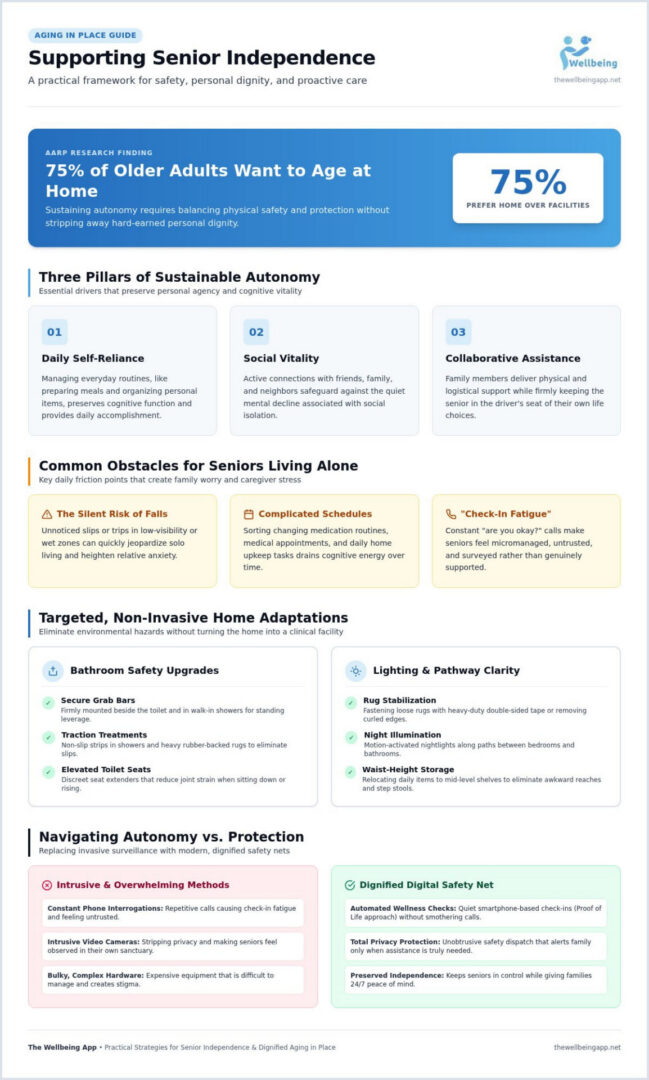
Preserving a senior’s agency requires a practical foundation built around three essential autonomy drivers:
- Daily Self-Reliance: Managing everyday routines like preparing meals and organizing personal belongings preserves cognitive function and provides a daily sense of accomplishment.
- Social Vitality: Active connections with friends, neighbors, and family protect against the quiet mental decline associated with social isolation.
- Collaborative Assistance: Families provide physical or logistical help while keeping the senior in the driver’s seat of their own life choices.
Common Obstacles Facing Seniors Who Live Alone
Sustaining this lifestyle comes with distinct daily hazards that families must navigate thoughtfully:
- The Silent Risk of Falls: Unnoticed trips or slips in low-visibility areas can quickly jeopardize living alone, creating legitimate anxiety for distant relatives.
- Complicated Schedules: Sorting through changing medication regimens and home upkeep tasks can gradually exhaust cognitive energy.
- Check-In Fatigue: Well-meaning relatives often bombard parents with frequent “are you okay?” calls and texts. Over time, this constant surveillance makes seniors feel untrusted rather than cared for.
Mastering how to support an independent lifestyle for seniors isn’t about taking over daily responsibilities. Instead, it requires establishing protective, behind-the-scenes systems that preserve dignity while keeping families connected and reassured.
Step 1: Adapting the Home Environment for Physical Safety and Mobility
Making a house safe doesn’t mean transforming it into a sterile clinic. Seniors deeply cherish the comfort and memories woven into their living spaces. Involving your parent directly in every adjustment protects their dignity while targeting the specific physical obstacles they face daily. Thoughtful, non-invasive adjustments eliminate hazards before accidents happen, aligning closely with the CDC’s older adult fall prevention recommendations to safeguard long-term mobility. Understanding how to support an independent lifestyle for seniors starts by treating the home as a sanctuary of self-reliance, not a place of restriction.
Bathroom Safety and Fall Prevention Upgrades
Bathrooms present the highest accident risk due to smooth tile and wet surfaces. Strategic updates here deliver immediate safety benefits without major renovation expenses:
- Secure Grab Bars: Mount firmly anchored bars beside the toilet and inside walk-in showers to provide reliable leverage during standing transitions.
- Traction Treatments: Apply textured non-slip strips inside the shower and replace loose bath mats with heavy rubber-backed rugs that stay put.
- Elevated Toilet Seats: Install a discreet seat extender to reduce joint strain and maintain balance when sitting down or rising.
Lighting, Pathways, and Structural Decluttering
Clear walkways and bright sightlines build confidence, especially during low-energy mornings or late hours:
- Rug Stabilization: Fasten loose decorative rugs to hard floors using heavy-duty double-sided tape, or lift them entirely to eliminate curled edges.
- Night Illumination: Position plug-in, motion-activated nightlights along common walking paths between the bedroom and bathroom.
- Waist-Height Storage: Relocate daily kitchen tools, pantry essentials, and cookware to mid-level shelves so seniors never need to reach awkwardly or climb step stools.
Physical home modifications create a reliable buffer against falls, yet lasting security also requires a reliable communication bridge. Pairing sensible room updates with easy-to-use smartphone tools like automated safety check-in software ensures prompt support without installing awkward hardware. That blend of physical care and subtle technology is how to support an independent lifestyle for seniors while giving the entire family genuine mental tranquility.
Step 2: Preserving Daily Routines, Social Engagement, and Vitality
Physical modifications make the home safer, but preserving emotional vitality keeps the spirit resilient. Predictable morning and evening rhythms anchor daily life, providing a reliable cognitive framework that sharpens memory and combats disorientation. When older adults maintain ownership over their waking hours, their sense of personal value stays intact. Rather than stepping in to control their calendar, family members should encourage activities that nurture physical strength and spark joy. Knowing how to support an independent lifestyle for seniors means fostering the habits that keep them active participants in their communities, rather than passive observers in their homes.
Low-Impact Movement and Balance Maintenance
Consistent physical activity preserves joint mobility and protects against loss of balance:
- Daily Balance Drills: Practice simple seated leg extensions, gentle ankle rotations, and standing heel-to-toe stretches beside a sturdy counter to reinforce lower-body stability.
- Neighborhood Strolls: Encourage short, brisk daily walks around the block to build cardiovascular endurance and promote healthy sleep patterns.
- Light Resistance Training: Use lightweight resistance bands or light hand weights twice a week to maintain the functional muscle mass needed for basic household tasks.
Combatting Isolation Through Purposeful Connection
Social isolation carries a heavy cognitive toll, yet staying engaged does not require relocating to a congregate facility. Independent seniors can build rewarding networks right from their own neighborhoods:
- Scheduled Social Calls: Set recurring weekly catch-up calls with relatives, former colleagues, or longtime friends to provide meaningful touchpoints throughout the week.
- Community Engagement: Encourage participation in local library book clubs, neighborhood gardening associations, or part-time volunteer programs that provide a clear sense of daily purpose.
- Accessible Video Chats: Configure intuitive tablet or smartphone tools so older adults can easily see and talk with distant grandchildren without dealing with confusing passwords or settings.
Staying connected and physically active fuels the confidence seniors need to navigate each day successfully. When you support an independent lifestyle for seniors through movement and genuine human connection, you protect both their physical health and their emotional well-being.
Step 3: Navigating Autonomy Versus Protection: The Digital Safety Net
Most traditional safety guides force families into an unfair choice: accept unmonitored risk or hire round-the-clock physical supervision. True peace of mind does not require choosing between neglect and total loss of privacy. Instead, modern families are discovering how to support an independent lifestyle for seniors through an ambient digital safety net. This approach respects personal boundaries while maintaining continuous, dependable vigilance. By establishing systems that monitor well-being without watching every move, you protect your parent’s fundamental dignity while removing the gnawing anxiety that keeps you up at night.
The Psychological Cost of Invasive Surveillance
Installing indoor cameras in living rooms or hallways turns a cherished family home into an uncomfortable surveillance zone:
- Loss of Agency: Seniors under constant visual observation feel patronized, often retreating from their normal daily habits simply to avoid being watched.
- Infantilization: Daily “did you take your pills?” phone interrogations erode the natural parent-child relationship, turning loving conversations into frustrating audits.
- Relationship Friction: Constant manual check-ins eventually trigger defensive reactions, causing parents to downplay genuine minor concerns just to avoid further scrutiny.
Hardware Wearables vs. Software Safety Platforms
For decades, bulky emergency pendants were standard advice. In real life, they often fail for a simple human reason: seniors refuse to wear them.
Many older adults leave plastic alarm necklaces sitting on nightstands or hanging in bathrooms. They feel stigmatized wearing a device that announces physical frailty to visitors. These traditional units also introduce battery management headaches and frequent false alarms that cause unnecessary panic. A software-native approach completely changes this dynamic. By running on the smartphone your parent already carries, safety verification blends into daily routines without drawing unwanted attention. An automated system runs quietly in the background, requiring simple daily check-in confirmations and alerting emergency contacts only when a scheduled prompt is missed.
Embracing modern technology means you don’t have to choose between invasive oversight and constant worry. Discover how easy it is to protect your family’s boundaries by setting up automated wellness monitoring software today. It delivers true security that safeguards privacy, honors independence, and restores absolute mental tranquility.
Step 4: Implementing Proactive Monitoring and Automated Daily Check-Ins
Traditional emergency systems rely entirely on a senior pressing a button after disaster strikes. If someone slips, loses consciousness, or cannot reach a wall unit, that passive model fails. Paper contact lists and manual phone trees are equally fragile, creating anxiety when a parent simply steps into the garden without their phone. Proactive check-in software completely reverses this dynamic. Instead of waiting for a crisis, an automated system looks for routine signs of life at agreed-upon hours. Learning how to support an independent lifestyle for seniors reaches its peak when technology handles the vigilance quietly in the background.
How Automated Check-Ins Secure Daily Peace of Mind
Automated check-ins adapt directly to an older adult’s established routine without causing check-in fatigue:
- Custom Schedules: Prompts trigger at predictable times, aligning seamlessly with a morning coffee or an evening wind-down routine.
- Effortless Confirmation: An automated Proof of Life prompt requires only a single tap on a smartphone screen, confirming safety instantly without tedious texting or intrusive phone calls.
- Server-Side Escalation: If a scheduled prompt lapses without confirmation, the system dispatches automated emergency alerts directly to designated family members. Caregivers are notified only when something is genuinely wrong.
Comprehensive Protection with Location Sharing and Night Watch
Vigilance should never confine a senior to their living room. When your parent heads out for neighborhood walks, appointments, or grocery trips, situational Location Sharing offers a safety cushion. Family members can verify their general whereabouts during solo outings without tracking every private movement.
Similarly, vulnerable evening and early morning hours often present heightened hazards. Activating Night Watch provides focused protection while seniors sleep, bridging the dangerous gap between bedtime and dawn. This structured safety net demonstrates exactly how to support an independent lifestyle for seniors while honoring their personal privacy. Discover how The Wellbeing App safeguards senior independence through intuitive, smartphone-based software that keeps families connected, protected, and at ease.
Empowering Autonomy Through Thoughtful Protection
Sustaining genuine autonomy at home requires harmonizing practical room adaptations, vibrant social connections, and dependable safety habits. True peace of mind does not come from hovering or restrictive oversight. Understanding how to support an independent lifestyle for seniors is really about building an unobtrusive daily foundation where personal dignity and proactive protection work hand in hand.
Reliable vigilance no longer requires cumbersome medical pendants or invasive cameras. With 100% hardware-free monitoring on existing smartphones, automated server-side check-ins confirm daily well-being and notify family contacts only if responses cease. Specialized features like Proof of Life, Chaperone, and Night Watch deliver continuous reassurance while honoring your parent’s space and personal agency.
Give your family the gift of watchful, compassionate security without friction. Empower your loved one’s independence with The Wellbeing App today and embrace lasting mental tranquility.
Frequently Asked Questions
How can I tell if my aging parent is still safe living alone?
Look for tangible changes in daily habits and home environment rather than occasional minor slips. Unopened mail, spoiled food in the refrigerator, missed medication doses, or unexplained bruising often indicate emerging physical or cognitive challenges. A sudden neglect of personal hygiene or household upkeep can also signal distress. Watching for these practical patterns lets you assess safety objectively while exploring how to support an independent lifestyle for seniors without making hasty assumptions.
What should we do if an aging parent refuses help or monitoring?
Reframe the discussion around your own peace of mind rather than their physical capabilities. Parents often resist help because they fear losing control over their lives. Explain that a subtle, non-intrusive safety net actually protects their freedom and keeps them out of assisted living. Offer low-friction options, like simple automated mobile check-ins, rather than visible hardware or cameras, allowing them to retain complete control over their personal space.
Why do seniors often refuse to wear traditional emergency medical pendants?
Most seniors resist emergency pendants because the devices carry a heavy social stigma of physical frailty. Wearing a plastic button around the neck makes older adults feel clinical and vulnerable in front of peers or visiting grandchildren. Additionally, pendants frequently trigger false alarms, feel uncomfortable during sleep, and require frequent battery recharging. Because of these irritations, seniors regularly leave them resting on dressers where they cannot help during a fall.
How do automated check-in apps work for seniors who live alone?
Automated safety apps operate proactively by sending scheduled check-in prompts directly to a senior’s existing smartphone. With features like Proof of Life, the user taps their screen once to confirm they are safe and active. The software runs quietly in the background without needing manual texts. If a scheduled confirmation window closes without a response, the platform immediately alerts designated family contacts so help can be dispatched right away.
What are the most dangerous fall risks in a senior’s home?
Bathrooms represent the greatest domestic danger due to slick porcelain, wet tiles, and awkward physical transitions. Other major hazards include unsecured decorative throw rugs that slide underfoot, dim lighting along corridors between bedrooms and bathrooms, and cluttered staircases. Reaching for high cabinet items on unstable step stools also triggers severe balance loss. Addressing these specific physical hotspots immediately creates a much safer environment for independent living.
Can a senior live independently if they experience mild cognitive forgetfulness?
Yes, seniors experiencing normal age-related forgetfulness can safely live alone if their general judgment and basic self-care habits remain intact. Establishing predictable daily routines, pill organizers, and digital reminders helps bridge minor memory lapses. Understanding how to support an independent lifestyle for seniors with mild cognitive shifts means adding subtle safeguards, such as automated daily check-ins, that monitor well-being without making the individual feel incapable.
How does automated safety monitoring protect privacy better than cameras?
Automated safety software verifies daily well-being through scheduled status confirmations rather than visual or auditory surveillance. Unlike indoor cameras, which record private moments, wardrobe changes, and personal visits, software-based systems operate strictly on status indicators. Family members receive alerts only when a scheduled confirmation is missed. This boundary keeps personal living spaces entirely private while still providing loved ones with reliable, round-the-clock peace of mind.