
Virtual Chaperone: The Modern Guide to Proactive Personal Safety in 2026
Imagine walking to your car in a dimly lit parking lot on a Tuesday night in May 2026. You reach for your phone to send a “home soon” text, but you realize the mental burden of remembering to check in is exactly what fuels your anxiety. You aren’t alone in this feeling. With 46% of consumers now prioritizing real-time tracking for personal security, the world is moving toward a more supportive way to stay connected. A virtual chaperone transforms your smartphone from a passive tool into a proactive, vigilant guardian that watches over you when you’re most vulnerable.
We all understand the quiet stress of waiting for a reply that hasn’t arrived. It’s a heavy weight to carry for both you and your family. This guide explores how modern technology provides a continuous safety net, moving beyond simple GPS to offer true peace of mind. You’ll learn how to leverage automated systems like Night Watch and Proof of Life indicators to ensure your well-being is always monitored. We’ll show you how to take control of your safety while maintaining your privacy, creating a reliable circle of care that acts even if you can’t.
Key Takeaways
- Understand the shift from reactive physical security to automated digital monitoring that provides real-time well-being oversight.
- Learn how “Proof of Life” indicators create a reliable safety net by automating the check-in process and removing the burden of manual texting.
- Discover why standard GPS tracking is insufficient and how true awareness focuses on your status rather than just your geographic coordinates.
- Identify high-vulnerability moments in your daily routine where activating a virtual chaperone provides immediate, proactive protection.
- Explore how specialized tools like Night Watch allow you to take control of your safety and protect your peace of mind during late-night hours.
What is a Virtual Chaperone? Redefining Safety for 2026
A virtual chaperone is a sophisticated digital safety service that monitors a user’s well-being in real-time, providing a layer of protection that follows you everywhere. This isn’t just about tracking a dot on a map. It’s about a system that understands your routine and notices when something isn’t right. We’ve seen a massive shift away from the need for physical security personnel toward automated, app-based monitoring. This transition allows for a more discreet, constant form of guardianship that doesn’t intrude on your daily life but stands ready to act. The core purpose is to ensure help is dispatched even if you’re incapacitated and unable to call for it yourself.
It’s vital to distinguish between surveillance and guardianship. While surveillance is often about recording or watching, guardianship is about the compassionate act of checking in. It’s the digital equivalent of a friend waiting by the door until you’re safely inside. This proactive approach is what sets a virtual chaperone apart from standard tools that only react after an incident has already occurred. By focusing on your well-being rather than just your location, the technology creates a protective environment that fosters a sense of unity and care.
The Evolution of Digital Guardianship
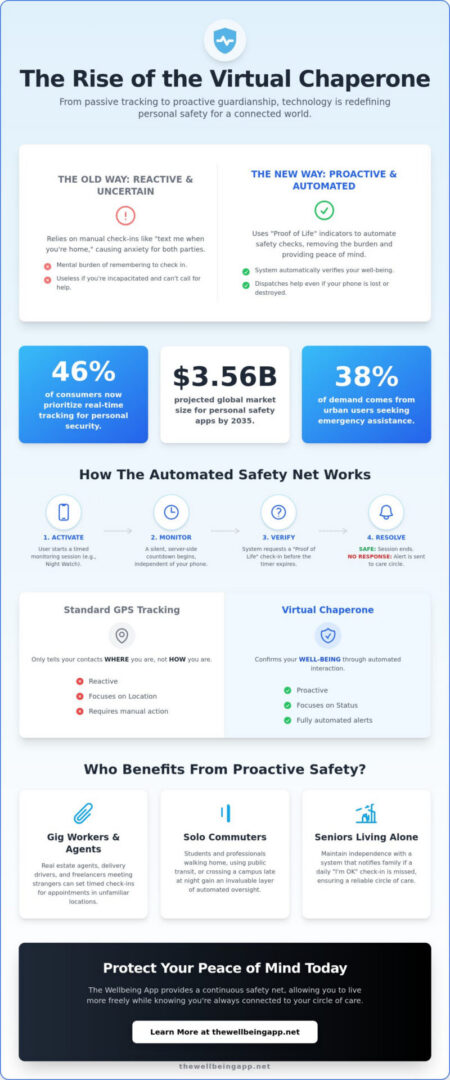
Personal safety has moved from reactive calls to proactive automated alerts. In 2026, the personal safety app has become an essential companion that offers 24/7 vigilant protection. Your smartphone is no longer just a communication device; it’s a security tool that guards your peace of mind. This evolution is reflected in the global market size, which is projected to reach $3.56 billion by 2035. We’ve moved past the era of “call me when you’re home” toward a world where the system knows you’re safe so you don’t have to remember to say it. The metric of success here isn’t just a lack of incidents, but the presence of continuous calm.
Who Needs a Virtual Chaperone Today?
Solo commuters walking home after dark or using public transit are among the most frequent users, especially as 38% of demand now comes from urban users seeking emergency assistance. Real estate agents and gig workers meeting strangers in private settings also rely on this technology to stay connected to a safety net. For instance, a delivery driver entering an unfamiliar apartment building can set a timer that requires a check-in within five minutes. Seniors living alone utilize these services to maintain their independence, knowing that if they don’t provide a “Proof of Life” indicator, their family or community will be notified immediately. This creates a reliable circle of care that respects personal boundaries while ensuring nobody is ever truly alone in a moment of need.
How Virtual Chaperone Technology Works: The Safety Net Mechanism
The true strength of a virtual chaperone lies in its invisible infrastructure. Unlike traditional apps that remain dormant until you press a button, this system operates on a principle of empathetic vigilance. It creates a continuous safety net that doesn’t rely on your ability to reach for a phone during a crisis. Instead, the technology maintains a silent, server-side countdown. If that countdown reaches zero without a confirmation from you, the system acts. This proactive logic ensures that even if your device is lost, stolen, or destroyed, the cloud-based guardian already knows you need assistance.
Proof of Life Indicators: The Core of Protection
At the heart of this system are Proof of Life indicators. These automated check-ins replace the outdated and often forgotten “text me when you get home” routine. While 46% of consumers prioritize real-time tracking, location alone doesn’t confirm well-being. Proof of Life is a recurring digital handshake between user and server. It shifts the burden of safety from the individual to the technology. While many personal safety devices focus on physical hardware, this software-driven approach ensures you’re never truly alone. The app waits for you to confirm your safety at pre-set intervals, acting as a vigilant partner that only raises the alarm when that “handshake” fails to occur.
This protection extends into your most vulnerable hours through the Night Watch feature. While you sleep or transit through quiet areas, the system remains awake. It monitors your status with the same dedication as a community leader looking out for their group. You don’t need to worry about waking up a family member or friend; the automated system handles the observation, providing a consistent level of gravity and care to your personal security.
The Automated Alert Chain
When a check-in is missed, the virtual chaperone initiates a structured escalation process. This isn’t a chaotic broadcast but a purposeful sequence designed to get help where it’s needed. First, the system attempts to reach you through high-volume alerts and notifications. If these go unanswered, it immediately transitions to the alert chain. Your designated emergency contacts receive a notification containing your last known real-time location data and the specific time the check-in was missed. Because the monitoring happens on the server side, the alert goes out even if your phone’s battery has died or the signal has been lost.
This reliability is why user adoption in this sector has grown by over 210% recently. It bridges the gap between technical features and real-world impact. By choosing to take control of your personal safety, you’re not just installing an app; you’re joining a community of care that values peace of mind above all else. When you care enough to know that your loved ones are safe, having an automated system that never blinks is the ultimate reassurance.
Virtual Chaperone vs. Standard GPS Tracking: Why Awareness Trumps Location
Many people assume that sharing their location through a standard smartphone app is a complete safety solution. It isn’t. GPS technology only tells your family where you are; it says nothing about your condition. If you’re unable to reach your phone or press an SOS button, a standard tracker remains silent. This is the fundamental difference between a passive tool and a virtual chaperone. While a tracker waits for you to act, a chaperone acts when you can’t. It moves the needle from simple location data to total awareness of your well-being.
Standard GPS apps are passive observers. They require a user to be conscious and capable of sending an alert. If an incident occurs that prevents you from using your phone, those apps provide no help until someone else notices you’re gone. A virtual chaperone reverses this dynamic. It creates a proactive environment where the system is the one asking if you’re safe. This shift is crucial for the 41% of market growth linked to rising safety concerns among women and seniors who need more than just a dot on a map.
The ‘Missing Person’ Problem
In a typical emergency, the most dangerous factor is the ‘waiting period.’ This is the time between an incident and when someone realizes you’re missing. With standard GPS, that gap can last hours or even days. A virtual chaperone eliminates this delay. By using automated check-ins, the system knows within minutes if a transition hasn’t been completed. This immediate response is a key part of the future of personal safety, where technology anticipates needs rather than just reacting to them. It ensures that the alert chain begins the moment a Proof of Life indicator is missed.
This proactive logic is what saves lives. When the system detects a missed check-in, it doesn’t just wait for a phone call. It pushes notifications to your community of care immediately. This removes the burden from friends and family who might feel guilty for not checking their phones every second. It provides a structured, calm way to manage safety that standard tracking simply cannot match.
Privacy and Personal Empowerment
Privacy is often the biggest hurdle for adoption. Many users, especially the high-engagement millennial demographic, don’t want to be tracked 24/7. Chaperone services offer a more respectful approach through controlled sharing. You only activate the monitoring when you feel vulnerable, such as during a late-night walk or a meeting with a new client. This allows you to take control of your safety without feeling like you’re under a microscope. It’s about empowering the individual, not monitoring the person.
This controlled approach fosters a deep sense of unity and trust. You decide when the “Vigilant Guardian” is needed. Because the monitoring is event-based, it feels like a supportive service rather than an invasive surveillance tool. When you care enough to know your loved ones are safe, this balance between privacy and protection is what truly helps protect your peace of mind.
Practical Scenarios: When to Activate Your Virtual Chaperone
In 2026, personal safety is about more than just having a phone in your hand. It’s about having a system that understands the specific moments when you feel most exposed. Activating your virtual chaperone isn’t an admission of fear; it’s a proactive step toward maintaining your independence. High-vulnerability transitions, such as the short walk from your car to your front door at night, are where this technology shines. By setting a Proof of Life indicator for these brief windows, you ensure that a vigilant guardian is always watching over you. This creates a protective atmosphere that encourages you to move through the world with confidence rather than anxiety.
Consider the variety of everyday situations where this safety net adds immediate value. Whether you’re meeting a stranger for a peer-to-peer sale or working late in an isolated office building, the system remains active. It supports community unity by allowing family members to feel connected to your well-being without being intrusive. You can easily integrate these check-ins into your routine:
- Meeting a new contact for a gig work assignment or marketplace exchange.
- Early morning runs or evening walks when the streets are quiet.
- Late-night shifts where you are the last person to leave the building.
- Navigating unfamiliar neighborhoods during a solo trip or move.
Safe Walks and Commuting
For many, the “last mile” of a commute is the most stressful part of the day. Whether you’re a student leaving a late-night library session or a professional finishing a long shift, the environment changes after dark. You can set a timer that matches your expected arrival time precisely. If you don’t check in by the time you reach your porch, the alert chain begins immediately. This level of care is essential, as 33% of the growth in the safety app market is currently driven by increased smartphone penetration among those with daily urban commutes.
Solo Travel and New Environments
Exploring unfamiliar cities or hiking new trails should be about discovery, not worry. When you’re away from your usual support network, the virtual chaperone maintains your connection to home. The Night Watch feature is particularly valuable when staying in hotels or short-term rentals. It provides a secure layer of protection while you sleep, acting as a silent guardian in an environment you don’t yet trust. This isn’t just about your safety; it’s about the peace of mind of your family back home.
When you care enough to know that your loved ones are safe, you foster a strong sense of unity within your circle. This technology allows you to take control of your personal safety without sacrificing your privacy or freedom. It transforms the burden of “text me when you’re home” into a reliable, automated system that protects your peace of mind around the clock.
Protect Your Peace of Mind with The Wellbeing App
The Wellbeing App stands as the premier national virtual chaperone service, dedicated to transforming how we think about personal security. It’s more than just software; it’s a commitment to your well-being. By focusing on the concept of peace of mind, we provide a supportive environment where technology acts as a compassionate guardian. Our unique features, such as Proof of Life indicators and Night Watch protection, are designed to bridge the gap between technical security and human care. This is the reliable, always-on partner you need to ensure that your safety is never left to chance.
Setting up your safety net is a simple, purposeful process. We’ve built a system that values your time and your privacy, allowing you to move through your day with a sense of empowerment. Whether you’re a parent looking out for a student or a solo professional working late, this service provides the constant oversight that traditional apps lack. It’s a security tool rooted in sincere concern for the vulnerable, positioning us as a guardian rather than just a software provider. With user adoption of personal safety apps growing by over 210% as of May 2026, more people are choosing automated guardianship over passive tracking.
When You Care Enough to Know
Our mission is driven by a strong sense of unity and collective responsibility. We believe that the best way to manage safety is to prevent incidents before they can escalate. This altruistic approach fosters a community where everyone feels connected and protected. The Wellbeing App acts as a compassionate digital partner for the vulnerable, providing the reassurance that help is always on standby. When you care enough to know that your circle is safe, you create an atmosphere of trust that strengthens every relationship.
Getting Started with Your Digital Guardian
Taking the first step toward proactive safety is easy. We offer simple subscription plans tailored for both individuals and families, ensuring that everyone can access a virtual chaperone when they need it most. There is no need for proprietary hardware or expensive devices. Your safety lives on your existing smartphone, making it accessible and ready whenever you are. This is about more than just technology; it’s about making a choice to protect your well-being every single day. Protect your peace of mind and start your virtual chaperone service today.
Step Into a Safer Tomorrow
By 2026, personal safety has evolved beyond the limitations of a simple digital map. It’s no longer enough to just share a location; true security requires a system that understands your well-being in real-time. We’ve seen how a virtual chaperone acts as a vigilant partner, removing the mental burden of manual check-ins through automated “Proof of Life” indicators. This proactive approach ensures that help is always on standby, even if you’re unable to reach for your phone. With adoption rates for these services climbing by over 210% recently, the shift toward compassionate digital guardianship is helping families across the country find lasting calm.
It’s time to take control of your daily transitions and embrace a life free from unnecessary anxiety. Protect Your Peace of Mind with The Wellbeing App. Our platform provides 24/7 automated monitoring and specialized safety features with comprehensive national coverage across the United States. You don’t have to walk alone when a dedicated guardian is always awake and watching over you. Step forward with confidence, knowing that your community of care is always connected.
Frequently Asked Questions
What is the difference between a virtual chaperone and a GPS tracker?
A virtual chaperone is a proactive safety net that monitors your well-being, whereas a GPS tracker is a passive tool that only records your location. While a tracker requires you to call for help, our system initiates the alert if you miss a scheduled check-in. This distinction is vital because 46% of consumers now prioritize real-time well-being indicators over simple geographic coordinates. It shifts the burden of safety from the user to the technology.
Is a virtual chaperone always watching me through my camera?
No, the service does not monitor you through your camera or listen to your private conversations. We focus on guardianship through digital handshakes rather than invasive surveillance. This approach respects your privacy while ensuring you stay connected to your community. You maintain complete control over when the service is active, ensuring you never feel like you’re under constant observation.
What happens if my phone battery dies while the chaperone is active?
If your phone battery dies, the server-side monitoring system treats the lack of connection as a potential emergency. Because the countdown happens on our secure servers, an alert is triggered even if your device is destroyed or powered off. This eliminates the “dead phone” safety gap that leaves users vulnerable in traditional tracking apps. It’s a reliable way to protect your peace of mind.
Can I use a virtual chaperone for my elderly parents who live alone?
Yes, this technology is an excellent tool for seniors who wish to maintain their independence while living alone. By using automated check-ins, family members receive reassurance without needing to call and check in multiple times a day. It fosters a sense of unity and care, ensuring that 41% of the market’s growth remains focused on protecting our most vulnerable loved ones.
How does the ‘Proof of Life’ check-in work?
The Proof of Life check-in is a recurring digital handshake between your device and our secure server. At intervals you select, the app asks for a simple confirmation of your safety. If you don’t provide this indicator within the grace period, the system automatically begins the alert chain to notify your designated emergency contacts. It removes the burden of remembering to send manual texts.
Is a virtual chaperone better than a physical security guard?
Choosing a virtual chaperone offers a discreet and 24/7 alternative that doesn’t require a physical presence in your private space. While physical guards are limited by location and higher costs, an app-based guardian stays with you everywhere. It provides a sophisticated level of protection that is accessible to everyone, focusing on proactive monitoring rather than just a reactive physical response. This allows you to maintain your privacy while staying safe.
Does the app call 911 automatically if I miss a check-in?
The app initiates a structured alert chain that notifies your designated emergency contacts with your last known real-time location. This allows your community of care to assess the situation and coordinate with local authorities if necessary. By involving your trusted circle first, we ensure that help is dispatched with the context and urgency required for your specific situation.
Is my location data private when using a virtual chaperone?
Your location data is kept strictly private and is only shared with your emergency contacts when a Proof of Life indicator is missed or when you choose to activate sharing. We utilize advanced encryption to secure your information, meeting modern data handling standards like the EU’s Digital Services Act. You take control of who sees your data and when they see it.