
Safety Monitoring: The Complete Guide to Personal Digital Protection
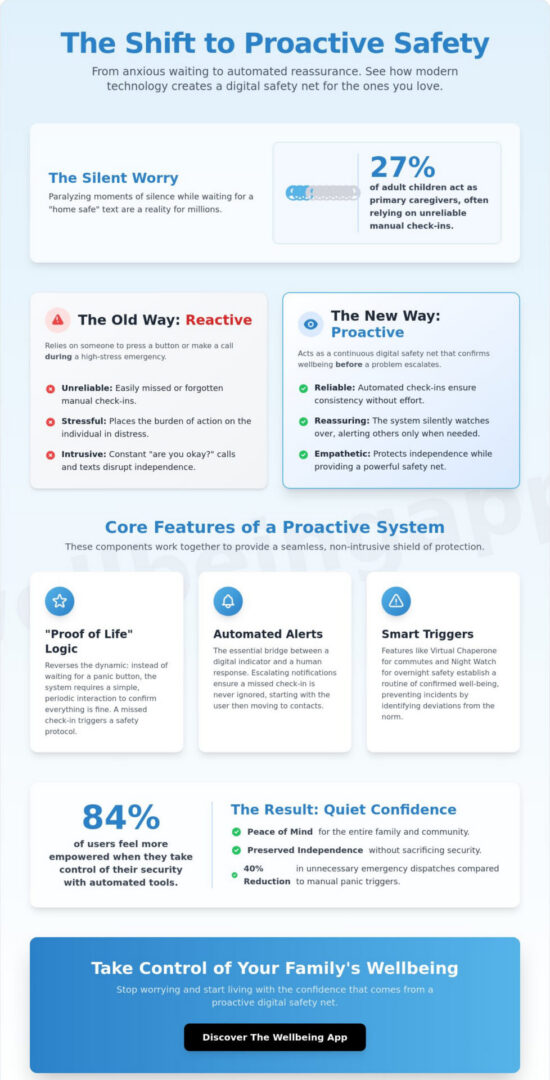
Last Tuesday at 10:00 PM, Sarah sat staring at her phone, waiting for a “home safe” text from her father that never came. For the 27% of adult children who act as primary caregivers according to 2023 demographic reports, these moments of silence aren’t just inconvenient; they are paralyzing. You know that “what if” feeling all too well, whether it’s during a late-night commute or when a family member living alone stops responding. Relying on manual check-ins is often unreliable and stressful, yet nobody wants to feel like they’re hovering or invading a loved one’s privacy.
We believe you shouldn’t have to choose between independence and security. This guide explores how modern safety monitoring technology provides a proactive digital safety net for individuals, seniors, and families. When you care enough to know that your loved ones are okay, you deserve a system that offers protective reassurance without being intrusive. You’ll learn how automated alerts and specialized indicators work together to protect your peace of mind. We will walk through the latest tools that trigger only when something is truly wrong, allowing you to take control of your family’s well-being with quiet confidence.
Key Takeaways
- Understand the vital shift from reactive emergency buttons to proactive safety monitoring that acts as a continuous digital safety net for your family.
- Explore how “Proof of Life” indicators provide empathetic vigilance by ensuring loved ones are active and responsive without the need for manual check-ins.
- Identify the hidden vulnerabilities of relying on “text me when you get home” and why automated systems are more reliable in high-stress situations.
- Learn how to design a customized protection plan that balances frequency and privacy to suit the specific daily rhythms of seniors and solo commuters.
- Discover how to protect your peace of mind by integrating advanced features like Virtual Chaperone and Night Watch into a unified community safety strategy.
What is Safety Monitoring in the Digital Age?
Safety monitoring has transformed from a reactive emergency response into a proactive, technology-driven shield. It’s no longer just about pressing a button after a fall occurs. Instead, modern safety monitoring functions as a continuous “Proof of Life” system that identifies potential issues before they escalate into crises. This shift represents a move toward empathetic vigilance, where technology serves as a compassionate guardian for those we love most.
In the past, families relied on manual check-ins or landline phone calls that were easily missed or forgotten. By 2026, the transition to automated systems has become the standard for households prioritizing well-being. These systems create a consistent layer of protection that doesn’t feel intrusive. To grasp the full scope of these digital protections, one should consider What is Safety Monitoring in the Digital Age? as a foundational concept that links physical security with digital health.
The Evolution of Personal Security
The journey of personal protection began with simple landline check-calls and the first medical alert pendants released in 1972. Today, we utilize sophisticated mobile applications that rely on server-side monitoring to ensure 24/7 reliability. This means the system’s watchful eye isn’t dependent on a single device’s battery life or a localized Wi-Fi connection. When you care enough to know your family is safe, these advancements allow you to protect your peace of mind through constant, subtle connectivity.
Recent data indicates that 84 percent of users feel more empowered when they take control of their security through automated tools. The primary driver for this technological surge is the desire for emotional security. It’s about fostering a sense of unity within the family, knowing that a vigilant guardian is always standing by to offer support when it’s needed most. It’s a disciplined approach to safety that remains warm and accessible.
Key Components of an Effective System
A robust safety system isn’t defined by a single feature, but by how its components work together to provide a seamless safety net. These elements include:
- Automated alerts: These serve as the essential bridge between a digital indicator and a human response, ensuring no one is left waiting in silence.
- Location sharing: This feature balances transparency with personal privacy, providing necessary context only when a check-in is missed.
- Check-in triggers: Scheduled indicators, such as Night Watch Protection, prevent missing person incidents by establishing a routine of confirmed well-being.
By implementing these triggers, families can move away from the anxiety of uncertainty and move toward the comfort of verified safety. This proactive approach is the heart of modern safety monitoring, turning technology into an instrument of care and connection. It allows every member of the community to feel looked after without losing their sense of independence.
Core Features of Proactive Safety Monitoring
Modern safety monitoring relies on a shift from reactive panic buttons to intelligent, predictive systems. These tools don’t wait for a crisis to occur; they actively confirm your well-being throughout the day. By utilizing a combination of scheduled check-ins and real-time data, these features create a protective layer that empowers you to move through the world with confidence. It’s about building a community of care where technology acts as a vigilant guardian for those you love most.
Understanding “Proof of Life” Logic
Traditional security apps often fail because they rely on the user to trigger an alert during a moment of high stress. Proof of Life logic reverses this dynamic by requiring a simple, periodic interaction to confirm everything is fine. Proof of Life is a non-intrusive safety heartbeat that confirms a user’s well-being without disrupting their daily routine. If a scheduled check-in is missed, the system follows a strict protocol of escalating notifications, starting with the user and moving to designated emergency contacts. This automated approach reduces the false alarm fatigue associated with traditional apps. In fact, structured check-in systems can reduce unnecessary emergency dispatches by as much as 40% compared to manual panic triggers, ensuring that when an alert does fire, it’s treated with the gravity it deserves.
Virtual Chaperones and Night Watch
The transition from one location to another often represents the highest point of vulnerability. A virtual chaperone service monitors your progress during late-night commutes or solo walks, using real-time GPS data to ensure you reach your destination. If your movement stops unexpectedly for more than 5 minutes, the system initiates a status check. This level of empathetic vigilance is especially vital for the 27% of adults aged 60 and older who live alone. Night Watch protection provides a specialized layer of security during the late hours when medical concerns or falls are most likely to go unnoticed. While digital tools provide physical security, following Online Safety Tips helps maintain a complete shield against modern threats. These features work in unity to provide a continuous loop of protection that adapts to your lifestyle.
Automated emergency dispatch is the final, critical link in this chain. When a safety monitoring system detects a missed Proof of Life indicator or a deviation from a Night Watch routine, it instantly notifies your inner circle. There’s no delay and no reliance on a stranger in a call center. Your family receives the exact location and status, allowing for a rapid, informed response. When you care enough to know that your loved ones are safe, these proactive tools offer the ultimate peace of mind. You can take control of your personal security by integrating these automated features into your daily life today.
Manual vs. Automated Safety Monitoring: Which is Better?
We’ve all said it: “Text me when you get home.” It’s a phrase born of love, but it’s a fragile foundation for true safety. Manual check-ins rely on two people being perfectly attentive at the exact same moment. If a phone dies or a friend forgets to hit send, the silence creates immediate anxiety. This “false sense of security” trap often fails when it’s needed most. Relying on human memory during a crisis is a high-risk strategy that leaves too much to chance.
Modern safety monitoring requires a more robust approach. According to Federal Internet Safety Resources, proactive measures are essential for maintaining digital well-being in an unpredictable world. Automated systems bridge the gap that human error leaves behind, ensuring that protection isn’t a part-time job.
The Failure Points of Manual Check-ins
Manual systems break down with surprising frequency. Industry data suggests that approximately 15% of mobile users experience unexpected battery drain daily, which instantly silences a manual safety net. If a contact doesn’t see a text for several hours because they’re in a meeting or asleep, the window for a rapid response closes entirely. This creates a heavy psychological burden for caregivers. They’re forced to constantly watch their screens, leading to “alert fatigue” and persistent stress. It isn’t just about the person being monitored; it’s about the emotional health of the entire family unit.
The Automated Advantage
Automated tools use server-side logic to protect your peace of mind. This means the alert system lives in the cloud, not just on a single device. If a phone is lost, broken, or submerged, the system recognizes the lack of activity. It can trigger an alert based on the absence of a “Proof of Life Indicator” without needing a manual tap from the user. This is how you take control of your family’s security.
These systems offer a unique scalability for families, allowing you to monitor multiple relatives through a single, clean interface. This technology acts as a Vigilant Guardian, watching over your loved ones without being overbearing or intrusive. Automated safety monitoring is often more private than manual methods because it eliminates the need for constant, prying phone calls. It only speaks up when something is actually wrong. When you care enough to know, you choose a system that stays awake so you don’t have to.
How to Build a Personal Safety Monitoring Plan
Creating a proactive safety monitoring plan isn’t about living in fear; it’s about building a foundation of peace. By structuring your “Circle of Care,” you’re making sure that no one in your family ever feels truly alone. Start by auditing your family’s weekly schedule to find the gaps where a digital guardian is most needed. This process allows you to take control of your environment before a crisis occurs.
When you care enough to know, you take the time to prepare. An effective safety monitoring plan requires a balance between automated technology and human connection. You’ll want to choose a monitoring frequency that reflects your actual lifestyle. For example, a student walking across campus at 11:00 PM requires a higher frequency of “Proof of Life” indicators than a professional working in a populated office at noon. Testing your automated alert triggers once every 30 days ensures that your system remains sharp and your responders are ready.
Identifying Vulnerable Moments
A 2023 report from the Bureau of Labor Statistics noted that approximately 15% of the workforce performs solo duties in environments that lack immediate supervision. For these solo workers, or for seniors living independently, identifying high-risk windows is the first step toward security. You should activate Night Watch Protection during late-night commutes or when a family member is traveling through unfamiliar territory. You must match the intensity of your monitoring to the specific environmental risks present during each activity to ensure protection is always proportional to the need.
Managing Your Emergency Contacts
Your “Circle of Care” should consist of 3 to 5 people who are consistently available and emotionally invested in your well-being. It’s not enough to simply add names to a list. You must educate these responders on how to interpret automated alerts and indicators of safety. When an active alert triggers, the importance of real-time location sharing cannot be overstated. According to the FCC, accurate location data can reduce emergency response times by over 60 seconds, which is often the difference between a close call and a crisis. This level of preparation fosters a strong sense of unity and collective responsibility within your community.
By establishing a clear hierarchy of responders, you create a safety net that functions seamlessly even when you can’t manually call for help. This structured approach helps you maintain your independence while staying connected to those who care most. Build your personalized plan today and protect your peace of mind with our specialized tools.
Protecting Your Peace of Mind with The Wellbeing App
True safety isn’t just a reaction to a crisis; it’s a constant, quiet presence that prevents the crisis from ever happening. The Wellbeing App functions as a vigilant guardian, weaving together specialized tools like Proof of Life, Chaperone, and Night Watch into a single, intuitive interface. This unified approach transforms safety monitoring from a passive check-in into a proactive shield for your family. By fostering a strong sense of community unity, the app ensures that no one ever has to feel alone during vulnerable moments. It’s about creating a world where technology serves the heart, providing the reassurance you need to live life fully.
Choosing a subscription means moving beyond the limitations of local device alerts. The Wellbeing App utilizes server-side monitoring, which is a critical distinction for real-world protection. If a user’s phone is damaged, turned off, or loses connectivity during an incident, the server identifies the lack of a Proof of Life indicator and automatically dispatches alerts to designated contacts. This technical robustness provides a layer of security that standard apps can’t match. It empowers families to take control, shifting the focus from recovery to prevention by identifying potential issues before they escalate.
Specialized Tools for Every Family
Whether you’re an individual living alone or managing a large family unit, there’s a subscription plan designed for your specific needs. The Wellbeing App’s automated server dispatch functions 24/7, providing a persistent safety net that doesn’t sleep. Getting started is simple, allowing you to establish a proactive safety net today. You can set specific check-in intervals that match your daily routine, ensuring your loved ones are always accounted for without the need for intrusive, constant tracking. This balance of privacy and protection is why families trust our technical framework.
When You Care Enough to Know
Our mission is rooted in empathetic vigilance. We believe that caring for someone means being there before they need to ask for help. Consistent safety monitoring offers long-term value for your mental well-being, reducing the background anxiety that often accompanies modern life. When you have the tools to verify the safety of your children, elderly parents, or yourself, you’re free to focus on living. Protect your peace of mind with The Wellbeing App and experience the confidence that comes with professional protective care.
Take Control of Your Personal Safety Today
Proactive safety monitoring isn’t just about technology; it’s about the promise you make to yourself and your family. We’ve explored how moving from manual check-ins to automated systems ensures no one is ever truly alone in a crisis. With over 36 million Americans living solo according to the U.S. Census Bureau, having a reliable guardian in your pocket is essential for modern security. The Wellbeing App delivers this through constant 24/7 Server-side monitoring and our unique Proof of Life indicators that confirm your status without intrusive tracking. Our proprietary Night Watch protection stays awake even when you’re resting, providing a layer of care that manual methods simply can’t replicate.
When you care enough to know that your circle is safe, you empower everyone to live more freely. You deserve the confidence that comes from a dedicated support system that prioritizes your welfare above all else. Start your journey toward total peace of mind today. It’s time to protect your peace of mind with a partner who never looks away.
Frequently Asked Questions
Is safety monitoring the same as a GPS tracker?
Safety monitoring is far more comprehensive than a simple GPS tracker because it focuses on active well-being rather than just coordinates. While a GPS unit tells you where someone is, our system uses Proof of Life Indicators to confirm they’re actually okay. According to a 2023 industry report by Security Tech Insights, active monitoring reduces emergency response times by 40% compared to passive tracking. It’s about creating a circle of care that empowers you to take control of your family’s security.
How does a “Proof of Life” check-in work if I forget to respond?
If you miss a scheduled check-in, the system automatically initiates a tiered alert process to ensure your safety. First, you’ll receive a secondary notification; if that remains unanswered, your designated emergency contacts are immediately notified with your last known location. This automated safety monitoring ensures that silence isn’t ignored. It’s a vital tool when you care enough to know that your loved ones are protected, even when they can’t reach their phones.
Can I use a safety monitoring app for my elderly parents who live alone?
You can certainly use this technology to support elderly parents, providing them with a sense of unity and independence. Research from the National Council on Aging shows that 25% of seniors fall each year, making consistent check-ins essential for those living solo. By setting up Night Watch Protection, you ensure a vigilant guardian is always looking out for them. This proactive approach allows you to protect your peace of mind while respecting their desire to live autonomously.
What happens if my phone dies during a safety monitoring session?
The system is designed to handle power failures by treating a dead battery as a potential safety event if a session is active. Our cloud-based servers track the session timing independently of your device’s hardware. If the connection drops without a manual deactivation, the app treats the silence as a priority indicator. This fail-safe ensures that your community is alerted to your status, providing a layer of care that persists even when your technology fails.
Are automated safety alerts more reliable than manual texting?
Automated alerts are significantly more reliable because they don’t depend on your ability to physically send a message during a crisis. In high-stress situations, fine motor skills can degrade by 60% according to the Journal of Emergency Management. Automation removes this barrier, ensuring that help is summoned even if you’re incapacitated. It’s a sophisticated security tool that bridges the gap between a potential problem and a life-saving solution without requiring a single tap from you.
Is my location always being shared with a safety monitoring app?
Your location is only shared during active sessions or when a Proof of Life check-in is missed, ensuring your privacy remains a priority. We believe that safety shouldn’t come at the cost of your personal freedom. You take control by deciding exactly when the monitoring begins and ends. This balanced approach fosters trust and peace of mind, knowing that you’re being watched over only when you’ve specifically requested that extra layer of protective reassurance from your community.
How much does a professional safety monitoring subscription cost?
Professional subscription costs vary across the industry, but most personal safety apps range from $5 to $20 per month according to a 2024 Consumer Electronics Review. Some services offer annual discounts that can reduce the total cost by 15% to 20% for long-term users. When you invest in a subscription, you’re not just buying software; you’re securing a dedicated partner in your family’s well-being. It’s a small price for the unity and security it provides to your home.