
Fall Alert App for Seniors Without Hardware: The 2026 Guide to Digital Safety
What if the most powerful tool for your parent’s safety isn’t a plastic button they refuse to wear, but the smartphone they already carry? You’ve likely felt the tension between wanting to protect them and wanting to respect their independence. It’s a common struggle, especially as the fall death rate has climbed to 78.4 per 100,000 in 2026. Choosing a senior check-in app without hardware allows you to bridge that gap. You can provide a life-saving guardian without the high monthly costs or the social stigma of traditional medical necklaces.
When you care enough to know they’re safe, you need a system that doesn’t rely on them remembering to charge a separate device. We’ll show you how to use Proof of Life indicators and automated alerts to build a reliable community of care. This guide explains how to take control of family safety by turning everyday technology into an invisible guardian. You’ll discover how to protect your peace of mind while ensuring your loved ones remain connected and secure in their own homes.
Key Takeaways
- Discover why shifting to smartphone-based safety removes the stigma of aging while providing a more consistent, always-on connection.
- Learn how a senior check-in app without hardware uses internal phone sensors to create a life-saving guardian that’s never left in a drawer.
- Compare the reliability of software-driven monitoring against the hidden costs and charging failures of traditional proprietary devices.
- Explore how “Chaperone” and “Night Watch” features offer supportive protection during daily errands and evening hours.
- Find out how “Proof of Life” indicators allow you to take control and protect your peace of mind when you care enough to know.
The Evolution of Senior Safety: Why Ditching Hardware is the New Standard
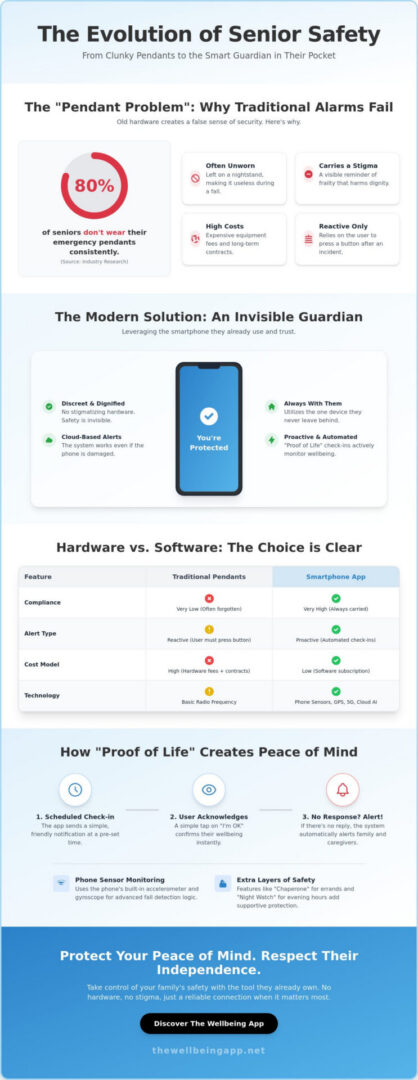
For decades, safety for older adults meant wearing a bulky plastic button around the neck or wrist. These traditional medical alarm systems provided a basic safety net, but they often failed in the moments that mattered most. The “pendant problem” is well-documented in the caregiving community. Industry research indicates that 80% of seniors don’t wear their emergency pendants consistently. These devices frequently end up forgotten on a nightstand or tucked away in a kitchen drawer because they serve as a constant, visible reminder of frailty. When a fall occurs, the life-saving tool is often out of reach.
Transitioning to a senior check-in app without hardware solves this compliance gap by utilizing the technology seniors already carry. By 2026, smartphones have become the primary hub for health and connection. Modern apps leverage built-in accelerometers and gyroscopes to detect movement patterns without requiring a separate, expensive device. This software-driven approach is also far more cost-effective. It eliminates the heavy equipment fees and long-term hardware contracts that typically accompany proprietary buttons. You’re no longer paying for plastic and circuits; you’re investing in a continuous, intelligent connection to your family.
Understanding the Stigma of Traditional Medical Alerts
Dignity is a primary driver of safety. When a senior feels “monitored” by a clinical-looking wearable, they often resist using it. This resistance isn’t just about stubbornness; it’s about maintaining a sense of self. A smartphone feels like a tool for empowerment rather than a badge of disability. It’s a familiar device that keeps them connected to friends, photos, and the world at large. Smartphones bridge the gap between necessary safety and social inclusion by hiding complex security features behind a friendly, everyday interface.
The Rise of the ‘Safety-as-a-Service’ Model in 2026
The industry has shifted from reactive hardware to proactive, software-driven protection. In the past, you had to wait for a senior to press a button. Today, Proof of Life indicators and automated check-ins allow the system to identify potential issues before they become emergencies. With the widespread adoption of 5G and high-precision GPS accuracy in 2026, these apps provide more reliable data than old-fashioned radio-frequency pendants ever could. Caregivers now prefer integrated mobile solutions because they offer real-time updates and peace of mind without the friction of managing extra gadgets. You can finally take control of your family’s safety with a system that respects your loved one’s independence. When you care enough to know they’re okay, the best tool is already in their pocket.
How Fall Alert Apps Work Without Proprietary Hardware
Modern smartphones contain an array of sophisticated sensors that rival specialized medical equipment. Accelerometers track sudden changes in velocity, gyroscopes monitor the device’s orientation in 3D space, and barometers can even detect the minor changes in air pressure that occur when a person’s height changes rapidly during a fall. When you choose a senior check-in app without hardware, you’re tapping into this existing high-tech ecosystem. The real power isn’t just in the sensors; it’s in the intelligent logic used to interpret that data. This intelligence transforms a standard mobile phone into a vigilant guardian that’s always on duty.
Accelerometer-Based Fall Detection vs. Manual Check-ins
A systematic review on fall detection reveals that while wearable sensors are helpful, they often struggle with high false-positive rates or fail to detect slow, controlled falls. This is a significant limitation for seniors who might experience a “slow slide” down a wall or furniture. If the phone is sitting on a nightstand while the senior is across the room, an accelerometer cannot help. This is why the Proof of Life mechanism is so vital. Instead of relying solely on the device to “feel” a fall, the app initiates scheduled check-ins at specific times throughout the day. If a loved one fails to acknowledge a check-in, the system begins an automated escalation process. It notifies the family or emergency contacts immediately. Active monitoring is the gold standard for hardware-free security because it shifts the burden of safety from the senior to an automated, vigilant system.
Cloud-Based Alerts: The Digital Safety Net
The true intelligence of these apps lives in the cloud, not just on the physical device. This server-side monitoring acts as a critical fail-safe for your peace of mind. If a phone is damaged during a fall or the battery runs out, the remote server recognizes the loss of signal or the missed check-in. It then triggers the necessary alerts to your community of care. By integrating real-time GPS and location sharing, the app provides emergency responders with precise coordinates, even if the user is unable to speak or move. This creates a 24/7 digital safety net that operates quietly in the background. You can take control of your family’s safety without needing a physical call center or expensive hardware subscriptions. When you care enough to know they’re safe, you need a system that works even when the hardware fails.
Hardware vs. Software: A Comparison for Senior Independence
Choosing between a physical pendant and a digital solution is about more than technology; it’s about how your loved one lives their life. While traditional hardware companies claim dedicated devices are the gold standard, they often overlook the human element of safety. A device is only effective if it’s actually worn. Research shows seniors often forget or refuse to wear medical buttons, yet over 90% of adults over 65 now use a mobile phone daily. By choosing a senior check-in app without hardware, you integrate safety into a tool they already value and carry. This shift ensures that protection isn’t a burden, but a natural part of their daily routine.
The Reliability Paradox: Is a Phone Enough?
Many families worry about the “phone in the other room” scenario. If your parent falls while their phone is charging in the kitchen, can they get help? This is where automated check-in windows provide a superior safety net. Unlike a passive button that waits for a user to press it, a software system looks for Proof of Life indicators throughout the day. If a scheduled check-in is missed, the community is notified immediately. This proactive approach covers slow-onset emergencies where a senior might be too disoriented to press a button. Additionally, smartphones offer nationwide 5G coverage; many pendants lose signal once the user moves more than 600 feet from their home base station.
Cost and Commitment Breakdown
The financial burden of traditional systems goes beyond the monthly bill. You’ll often encounter hidden costs like equipment activation fees, shipping charges, and replacement costs for lost pendants. A software-based model offers the flexibility active families need. There are no proprietary gadgets to ship back and no hardware to break. When you care enough to know your loved one is safe, you shouldn’t be locked into rigid contracts. Software also improves with age. Regular updates ensure the app utilizes the latest security protocols and feature enhancements automatically. This allows you to take control of the safety plan without worrying about equipment becoming obsolete. You can protect your peace of mind knowing the system grows as your family’s needs change.
Building a Comprehensive Digital Safety Net
Safety is a living, breathing process that should wrap around a senior’s life without restricting it. While many competitors focus on a single daily ping, true security requires a multi-layered approach. A senior check-in app without hardware enables families to build a comprehensive safety net that addresses risks during errands, exercise, and sleep. By integrating these tools into daily activities, you transform a smartphone into a vigilant guardian that provides protective reassurance 24/7. This approach moves beyond reactive buttons and creates a steady, rhythmic connection between loved ones.
Proactive Protection: Beyond the Fall
Most accidents don’t happen on a schedule. This is why the Chaperone feature is essential for active seniors who enjoy their independence. If your loved one is walking home from the grocery store or visiting a new neighborhood, they can activate a temporary window of heightened monitoring. It’s a virtual companion that stays with them until they reach their destination safely. For the quiet hours, Night Watch Protection offers a critical safeguard. Since nearly 60% of people with dementia may wander, having a system that alerts the community if a phone leaves a designated area at 3:00 AM can be life-saving. These features don’t just detect emergencies; they prevent them by ensuring someone is always watching when it matters most.
Implementing the System: A Guide for Caregivers
Introducing a new security tool to a skeptical parent requires empathy and clear communication. Avoid framing the app as a sign of their declining abilities. Instead, explain that you’re using it to protect your peace of mind. When seniors realize the app reduces the need for “just checking in” phone calls that feel like nagging, they’re much more likely to adopt it. Start by scheduling Proof of Life check-ins to match their existing routine, such as right after their morning coffee or before they go to bed. Establish a clear emergency contact hierarchy so everyone in the family knows their role. This structured approach fosters a sense of unity and collective responsibility. You can take control of your family’s safety today by building a digital guardian that respects the dignity of those you love. When you care enough to know they’re safe, the right system makes all the difference.
Protect Your Peace of Mind with The Wellbeing App
Choosing a safety solution shouldn’t feel like a compromise between security and dignity. At The Wellbeing App, we’ve developed a “Vigilant Guardian” approach that prioritizes the emotional well-being of the entire family. Unlike traditional systems that rely on bulky peripherals, our senior check-in app without hardware stays in the background of your loved one’s life. It only steps forward when it’s truly needed. This allows seniors to maintain their independence and sense of self while giving families the reassurance that a protective eye is always open. By joining our community of care, you’re choosing a path of unity and proactive safety over fear-based monitoring.
The ‘Proof of Life’ Advantage
The core of our service is the Proof of Life indicator, a system designed to catch the emergencies that sensors often miss. While fall detection is a vital component of a senior check-in app without hardware, it’s not a complete solution. Consider a scenario where a user experienced a sudden medical episode that left them conscious but unable to move or reach for a phone. Because there was no high-impact fall, a traditional accelerometer wouldn’t have triggered an alert. However, when the user missed their scheduled 10:00 AM Proof of Life check-in, the app immediately initiated an escalation protocol. Their family was notified within minutes, allowing for a rapid response that saved a life. You can take control of your family’s safety today by moving beyond reactive buttons to a system that checks in even when the senior can’t.
Getting Started: When You Care Enough to Know
We believe that protecting your loved ones should be simple and stress-free. Our setup process is designed for ease of use, allowing you to go from downloading the app to your first successful check-in in under five minutes. There are no complicated manuals, no charging docks to install, and no proprietary gadgets to manage. You simply invite your family members to the community, set your preferred check-in windows, and let the app handle the rest. Our subscription options are flexible, offering plans for individuals and larger family groups without the burden of long-term contracts. When you care enough to know they’re safe, you need a partner that is as dedicated to their well-being as you are. Protect your peace of mind. Download The Wellbeing App today and ensure your family remains connected and secure.
Embracing a New Era of Connected Care
Safety in 2026 isn’t about wearing a plastic pendant; it’s about the invisible guardian in your pocket. By choosing a senior check-in app without hardware, you eliminate the stigma and technical friction that often lead to non-compliance. You’ve seen how Proof of Life indicators provide a more reliable safety net than any physical button ever could. This transition allows your loved ones to age with dignity while staying connected to their community of care. It’s about empowerment rather than anxiety.
Taking control of family safety means being proactive, not just reactive. Features like Night Watch and Virtual Chaperone ensure protection during the most vulnerable hours and transitions. When you care enough to know they’re safe, you need a system that works round-the-clock without being intrusive. It’s time to protect your peace of mind and foster a strong sense of unity within your family. You can build a bridge between independence and security with just a few taps on a screen.
Start your hardware-free safety journey with The Wellbeing App today. You have the power to transform a smartphone into a life-saving guardian. We’re here to walk this path with you, ensuring your family stays safe and connected every step of the way.
Frequently Asked Questions
Does a fall alert app work if the phone is in another room?
Yes, the system remains effective even when the phone is charging in a separate room. While physical fall detection requires the device to be on the person, the Proof of Life feature operates on a schedule. If your loved one is in the garden and their phone is in the kitchen, a missed check-in will still trigger an automated alert to your family. This ensures protection doesn’t stop just because the device is out of reach.
Is a fall alert app as reliable as a traditional medical alert button?
A senior check-in app without hardware is often more reliable because it’s used consistently. Industry data from 2026 shows that 80% of seniors don’t wear their traditional pendants regularly, often leaving them on nightstands or in drawers. Since most seniors carry their smartphones for photos and calls, the safety tool is much more likely to be present during an actual emergency. Software updates also ensure the system stays current without you needing to buy new equipment.
What happens if a senior forgets to check in on the app?
The app initiates a structured escalation protocol to ensure nothing is left to chance. First, the system sends a gentle notification to the senior as a reminder. If there is no response within a set window, the app automatically notifies the designated community of care. This proactive approach allows you to take control and investigate the situation immediately rather than waiting for a crisis to occur.
Do these apps require a monthly subscription or a one-time fee?
Most professional safety apps utilize a subscription model to provide 24/7 monitoring and secure cloud services. In the 2026 market, verified prices for these services range from approximately $2.99 for basic plans to $25.00 for premium dispatch options. This subscription ensures your digital safety net is always active and benefits from the latest security enhancements. It’s a flexible way to protect your peace of mind without long-term hardware contracts.
Can the app detect a fall if the phone is in a pocket or a purse?
Yes, the internal sensors are designed to monitor movement from within a pocket or a bag. Accelerometers and gyroscopes track the device’s orientation and velocity in real time to identify the signature patterns of a fall. If the phone is in a purse that gets dropped, the app’s intelligent logic helps distinguish between a falling object and a human emergency. This provides a layer of “invisible” protection that fits into any lifestyle.
How does the app notify family members during an emergency?
The system sends automated alerts through a combination of push notifications, SMS messages, and phone calls. You can set up a specific hierarchy of contacts to ensure the right people are reached in the correct order. This creates a connected community of care that can respond instantly to any Proof of Life indicator. It’s a reliable way to stay informed when you care enough to know your loved one is safe.
Do I need to buy any extra equipment to use The Wellbeing App?
You don’t need to purchase any proprietary devices, charging docks, or wearable necklaces. The Wellbeing App is a senior check-in app without hardware that works entirely on the smartphone your parent already owns. This eliminates the “pendant problem” and ensures that safety feels like a natural part of their daily routine rather than a clinical intrusion. You can start building your safety net in under five minutes using existing technology.
Will using a safety app drain the senior’s phone battery?
Modern safety apps are highly optimized for energy efficiency. By 2026, background monitoring technology uses low-power processing that has a minimal impact on daily battery performance. We suggest a simple habit of charging the phone overnight to ensure the digital guardian is ready for the day ahead. This routine is often easier for seniors to remember than managing the specialized batteries found in traditional medical alert hardware.