
Family Safety Check-In App: 2026 Proactive Protection Guide
It is 11 PM, and your daughter’s commute home is twenty minutes overdue. You check her location, but a static dot on a map doesn’t tell you if she’s safely chatting with a friend or facing a genuine emergency. We’ve all experienced that cold spike of anxiety when a loved one doesn’t answer their phone, leaving us to wonder if we should call again or give them space. You want to protect them without becoming a digital stalker, yet manual “I’m home” texts are often forgotten in the rush of daily life.
Finding a reliable check in app for family safety is about more than just tracking coordinates; it’s about reclaiming your mental tranquility. This 2026 guide reveals how automated technology has evolved to provide a proactive safety net for every generation. You’ll discover how specialized indicators like Proof of Life monitoring move beyond passive GPS to offer a specialized authority on wellbeing. We will explore how proprietary services like Chaperone and Night Watch can safeguard solo commutes and provide peace of mind for seniors, ensuring you’re alerted only when it truly matters.
Key Takeaways
- Understand why manual check-ins often fail and how automated server-side monitoring eliminates the panic caused by forgotten “I’m home” texts.
- Discover how a check in app for family safety uses “Proof of Life” indicators to provide proactive verification of wellbeing without invasive GPS stalking.
- Learn to distinguish between digital filters and true physical security to ensure your safety strategy addresses real-world risks like solo commutes.
- Establish a reliable “Circle of Protection” by identifying high-risk times and designating responsible contacts for your most vulnerable loved ones.
- Explore how specialized features like Chaperone and Night Watch act as a compassionate guardian, offering a reliable safety net for seniors and solo walkers.
Why Manual Check-Ins Often Fail When Families Need Them Most
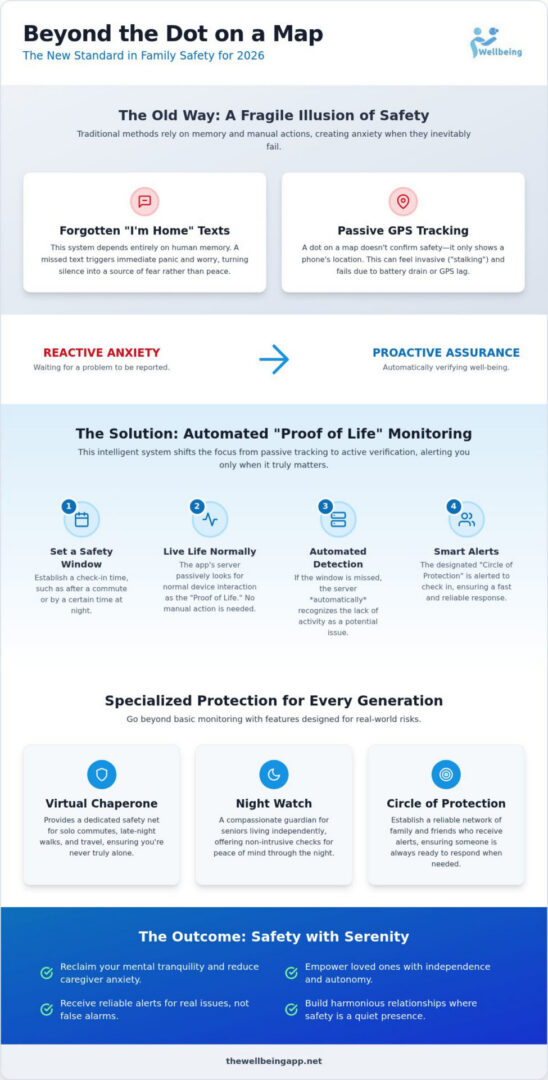
Manual check-ins create a fragile illusion of safety. We rely on a quick “I’m home” text to exhale, but this system depends entirely on human memory and device reliability. When a family member forgets to send that message, the resulting silence doesn’t necessarily mean danger, yet it triggers an immediate wave of panic. This reactive approach forces you to wait for a problem to be reported rather than preventing one from escalating. It’s a heavy burden to carry. Relying on a personal safety app that requires manual input often fails precisely when stress levels are highest. True protection shouldn’t depend on someone remembering to press a button while they are distracted or tired.
The Limitations of Traditional Location Sharing
Many families turn to basic GPS tracking, thinking it solves the problem. However, knowing someone’s coordinates isn’t the same as knowing they are safe. A dot on a map doesn’t reveal if a phone has been dropped, if the battery has died, or if the user is in distress. GPS lag and battery drain often occur at the most critical moments, leaving you with outdated information. Additionally, constant GPS monitoring can feel like “stalking” rather than “safety,” creating tension between parents and teenagers or adult children and seniors. A dedicated check in app for family safety needs to bridge this gap by offering more than just a location; it needs to offer verification.
The Need for Mental Tranquility in Safety Planning
True safety shouldn’t come at the cost of your peace of mind or your loved one’s independence. By moving toward automated verification, you reduce the friction of constant “Are you okay?” interruptions. This shift allows for a more harmonious relationship where safety is a quiet, background presence rather than a source of daily negotiation. Caregiver anxiety is a quiet thief that steals the joy of the present by forcing the mind to dwell on every worst-case scenario.
Building a safety protocol around automated systems like Proof of Life monitoring ensures that the “Circle of Protection” remains intact without constant manual effort. This proactive stance transforms you from a worried bystander into a compassionate guardian. When you use a check in app for family safety that incorporates features like Night Watch or a virtual Chaperone, you aren’t just watching a screen. You are investing in a system that values the mental state of the entire family. It empowers the vulnerable to move freely while giving the protector the quiet confidence that help is always ready.
Understanding Automated “Proof of Life” Indicators in Safety Apps
Traditional safety measures often wait for a crisis to occur before sending an alert. In contrast, the concept of a Proof of Life indicator shifts the focus toward proactive verification. This isn’t just about knowing where someone is on a map; it’s about confirming they are okay through automated server-side monitoring. If a scheduled check-in is missed, the system recognizes the anomaly immediately without needing a human to trigger an alarm. This specialized authority feature ensures that silence is treated as a signal for help rather than a forgotten task. It provides a reliable safety net that preserves the user’s mental state by removing the pressure of constant manual updates.
Agency is a vital part of modern protection. Users choose when and how they want to be monitored, ensuring that technology serves as an instrument of empowerment rather than a passive surveillance tool. While FTC guidance on protecting kids online emphasizes digital boundaries and privacy, physical safety in 2026 requires a more sophisticated approach. By using a check in app for family safety, you establish a system where security and autonomy coexist. The app acts as a watchful protector, stepping in only when the automated logic detects that a safety interval has been breached.
How Automated Check-Ins Work for Seniors
For seniors living independently, maintaining a sense of freedom is essential for well-being. Automated check-ins allow them to set daily intervals that align with their normal routines, such as morning coffee or evening rest. If the Proof of Life indicator isn’t refreshed within the designated window, the system transitions from passive monitoring to active emergency alerts. This reduces the need for invasive wellness checks by local authorities or concerned neighbors, fostering a sense of harmony within the family. It’s a compassionate way to ensure help is available without the user feeling constantly watched.
The Virtual Chaperone: Safety for Solo Commutes
High-risk windows, such as late-night walks or solo commutes, require more intensive vigilance. A virtual Chaperone provides a higher level of engagement than a simple GPS breadcrumb. Unlike standard tracking, this feature monitors the user specifically during their journey, sending real-time alerts to designated contacts if progress stops or a check-in is missed. This proactive management is a core part of being a compassionate guardian for your loved ones. Whether it’s a walk across a dark campus or a commute through a quiet neighborhood, the system remains an always-on partner dedicated to collective responsibility and personal safety.
Physical Safety vs. Digital Monitoring: Which Does Your Family Need?
Protecting your family requires a multi-layered approach that addresses both virtual habits and real-world movements. Many parents mistake digital filters for a complete safety solution, yet an internet block cannot help a teenager walking home after dark. Digital safety is about habits; physical safety is about life. While software that limits screen time is excellent for developing healthy minds, it offers no protection when a family member is physically vulnerable. You need to distinguish between tools that manage behavior and those that preserve wellbeing. A dedicated check in app for family safety fills the gap that digital filters leave behind, acting as a compassionate guardian for the person, not just their data.
When to Use Digital Habit Trackers
Digital monitoring tools are most effective for younger children who are just beginning to explore the online world. These services focus on harmony within the digital space by managing app usage and blocking inappropriate content. Setting healthy boundaries for online exploration is a vital part of modern parenting, ensuring that children aren’t exposed to predatory behavior or harmful media. These tools provide a sense of order and help establish disciplined screen habits from an early age. However, they are passive by nature, focusing on what a child sees rather than where they are or if they are safe in their physical environment.
When a Physical Check-In App is Essential
As family members gain independence, the focus must shift from digital habits to proactive physical protection. For seniors living alone or adults with solo commutes, a check in app for family safety becomes an essential partner in daily life. This is where specialized features like Night Watch provide a safety net that digital trackers simply cannot match. Physical safety requires active, server-side monitoring that looks for signs of life and wellbeing. It’s about ensuring that if a senior misses a morning check-in, or if a solo traveler doesn’t arrive at their destination, a “Circle of Protection” is immediately alerted.
Specialized tools like Proof of Life indicators offer a sense of specialized authority that general tracking apps lack. These features promote community unity and collective responsibility by ensuring that no one is left to face a crisis alone. Whether it is a late-night work commute or an independent senior’s daily routine, these systems provide the mental tranquility that comes from knowing help is always ready. By choosing a system designed for physical security, you empower your loved ones to live freely while maintaining the empathetic vigilance required to keep them safe in the real world.
How to Implement a Reliable Safety Protocol for Vulnerable Family Members
Establishing a safety protocol is about creating a rhythmic flow of protection that doesn’t disrupt the harmony of daily life. It moves your family from a state of passive hope to a state of proactive readiness. To build this safety net effectively, you must focus on the specific windows of time where vulnerability is highest. By integrating a check in app for family safety into your household routine, you transform technology into a compassionate guardian. A well-structured protocol ensures that every member of your Circle of Protection knows exactly when to step in and when to provide space.
- Identify high-risk windows: Pinpoint times such as late-night work commutes, solo exercise routines, or the long hours when a senior relative is home alone.
- Define your Circle of Protection: Choose two or three designated contacts who are reliable and authorized to receive Emergency Alerts.
- Calibrate check-in intervals: Set realistic timing for Proof of Life updates to ensure safety without causing alarm fatigue or unnecessary anxiety.
- Formalize a Response Plan: Decide ahead of time who will call the loved one first and at what point local authorities should be notified if a check-in is missed.
Protecting Seniors Living Independently
For many seniors, the fear of losing independence is just as significant as the fear of a medical emergency. Integrating a check in app for family safety into their Activities of Daily Living (ADLs) allows them to maintain their lifestyle while providing you with mental tranquility. This approach balances the need for privacy with the necessity of empathetic vigilance. Automated server-side monitoring provides a specialized authority on wellbeing, detecting anomalies in daily routines before they escalate into missing person incidents. It’s a gentle way to ensure they are never truly alone, even when living independently.
Safety for Young Adults and Solo Walkers
Young adults often face high-stakes situations during night-time movements or solo commutes across campus. Activating a virtual Chaperone feature during these specific windows provides a higher level of proactive safety management than simple location sharing. This isn’t about monitoring their every move; it’s about ensuring a watchful protector is standing by until they reach their destination. Using high-stakes terminology like Night Watch helps frame these features as serious instruments of empowerment. When a young adult knows their wellbeing is being verified in real-time, they can move through the world with greater confidence and agency.
Ready to establish a proactive safety net for your loved ones? You can start building your Circle of Protection today with automated monitoring that never sleeps.
Empowering Your Loved Ones with The Wellbeing App’s Specialized Protection
The Wellbeing App functions as a compassionate guardian, moving beyond the generic tracking found in standard mobile tools. It creates an environment of trust by shifting the focus from surveillance to proactive support. By choosing a check in app for family safety that prioritizes mental tranquility, you’re investing in the social cohesion of your entire household. This isn’t just about technical robustness; it’s about the emotional reward of knowing your family’s wellbeing is verified by a reliable, always-on partner. When safety becomes a shared effort, every member of the group feels empowered rather than anxious. It’s about knowing someone is always looking out for the group.
Proprietary Features for Peace of Mind
The Proof of Life indicator stands as the gold standard for wellbeing verification in 2026. Unlike passive location sharing, this automated server-side monitoring requires a positive confirmation of safety, ensuring that silence is never ignored. For those who are most vulnerable, the Night Watch feature provides round-the-clock protection during the hours when risk is often highest. These specialized services bridge the gap between technical features and real-world impact by providing automated alerts only when an anomaly is detected. This approach preserves personal agency while maintaining a disciplined, serious stance on safety. It’s a sophisticated way to provide a safety net without the invasiveness of constant GPS stalking.
Getting Started with Your Family Safety Plan
Taking the first step toward proactive safety management is a simple but powerful act of altruism. The Wellbeing App offers flexible subscription models, allowing you to choose between monthly and annual subscription plans that best fit your family’s needs. Once you’ve selected a plan, setting up your first Proof of Life indicator takes only a few moments. This process empowers you to define the rhythm of your own protection, ensuring that the technology serves your specific lifestyle. By establishing these boundaries and intervals, you reinforce the collective responsibility that keeps your community strong and secure. Our system is designed to be an instrument of empowerment for every user.
The preservation of your mental state is our highest priority. When the burden of constant check-ins is lifted, you can focus on the interpersonal connections that matter most. You have the power to transform your family’s safety from a source of anxiety into a source of harmony. It’s your duty to look out for those you love, and we’re here to help you fulfill that mission with specialized authority. Secure your family’s tranquility today with The Wellbeing App and experience the peace of mind that comes from specialized, compassionate protection.
Embrace a Future of Proactive Family Harmony
Real safety is found in the quiet moments between the alerts. It’s the tranquility that comes from knowing your loved ones are protected by a system that values their independence as much as their security. By moving beyond manual texts and passive tracking, you’ve learned how automated verification provides a stronger, more reliable safety net. Choosing a dedicated check in app for family safety ensures that your Circle of Protection is always active, even when life gets busy and messages are forgotten.
Features like Proof of Life monitoring and Night Watch aren’t just technical tools; they’re instruments of empowerment that foster collective responsibility. The Wellbeing App acts as a compassionate guardian, delivering automated missed check-in alerts only when necessary to preserve your peace of mind. You don’t have to carry the burden of anxiety alone when specialized protection is available. It’s time to replace worry with a structured, supportive protocol that respects everyone’s agency.
Join The Wellbeing App and start your proactive safety plan today to secure the mental tranquility your family deserves. Your commitment to their wellbeing is the greatest gift you can provide, and we’re honored to stand as your watchful protector. Move forward with confidence, knowing that help is always ready if the rhythm of safety is ever broken.
Frequently Asked Questions
What is a “Proof of Life” check-in app?
A Proof of Life check-in app is a proactive safety tool that uses automated server-side monitoring to verify a user’s wellbeing at set intervals. Instead of just showing a location, it requires a simple confirmation that you’re okay. If the server doesn’t receive this indicator within the designated window, it triggers a response. This system provides mental tranquility for families by ensuring that silence is treated as a signal for help rather than a forgotten task.
Is a check-in app better than a standard GPS tracker for family safety?
Yes, a check in app for family safety is often superior to standard GPS because it verifies physical wellbeing rather than just coordinates. While GPS tells you where someone is, it can’t confirm if they are in distress or if their phone was simply dropped. Automated check-ins bridge this gap by providing an active safety net. This proactive approach ensures that you’re alerted only when something is truly wrong, reducing unnecessary anxiety and preserving privacy.
How does an automated safety app protect seniors living alone?
These apps protect seniors by integrating wellbeing verification into their daily routines without the need for invasive physical checks. By setting specific intervals for Proof of Life indicators, seniors can maintain their independence while knowing a compassionate guardian is watching over them. If a scheduled check-in is missed, the app automatically dispatches alerts to their Circle of Protection. This creates a sense of harmony and collective responsibility, ensuring that help is always available during critical moments.
What happens if I forget to check in on the app?
If you miss a scheduled check-in, the app’s automated server-side monitoring system immediately identifies the anomaly and triggers emergency alerts to your designated contacts. You’ll typically receive a reminder before the window closes to prevent false alarms. This logic ensures that your safety isn’t dependent on a manual text message, which is often forgotten. It’s a disciplined approach to protection that keeps your family informed without requiring constant, intrusive communication throughout the day.
Can I use a check-in app for night walk protection?
You can use specialized features like the Chaperone to provide enhanced protection during solo commutes or night walks. This tool monitors your progress during high-risk windows and ensures that your designated contacts are notified if you don’t reach your destination safely. It’s an instrument of empowerment for solo walkers, offering a higher level of vigilance than passive location sharing. By using this feature, you can move through your community with the quiet confidence of a watchful protector.
Do safety apps for families invade a person’s privacy?
No, modern safety apps are designed to prioritize personal agency and privacy while maintaining a reliable safety net. Users choose their own check-in intervals and decide who is included in their Circle of Protection. This isn’t about constant surveillance; it’s about establishing a proactive system that only intervenes when a wellbeing indicator is missed. This balance helps families avoid the friction of “GPS stalking” while ensuring that vulnerable members are never truly alone in a crisis.
How do automated emergency alerts reach my designated contacts?
Automated emergency alerts are dispatched directly from the app’s servers to your designated contacts via real-time notifications. This server-side process ensures that alerts are sent even if your phone’s battery dies or the device is damaged. By relying on automated logic rather than manual triggers, the system provides a more robust layer of security. Your Circle of Protection receives clear, high-stakes information, allowing them to act as a compassionate guardian when you are unable to call for help.
What is the “Night Watch” feature in family safety apps?
The Night Watch feature provides specialized, round-the-clock monitoring for vulnerable family members during their most high-risk hours. It’s a core component of a check in app for family safety, focusing on the preservation of a user’s mental state and physical security. This feature is particularly valuable for seniors or individuals living alone, as it ensures that any interruption in their normal wellbeing rhythm is detected immediately. It reinforces the idea that safety is a shared, collective responsibility.