
How to Help Seniors Maintain Independence Safely: The 2026 Caregiver’s Guide
Imagine it is 10:00 PM and your phone hasn’t buzzed with the usual “all-clear” from your mother’s house. That silent gap in communication is where the “what-if” scenarios start to bloom, fueled by the sobering reality that one in four older adults will experience a fall this year. Learning how to help seniors maintain independence safely shouldn’t mean living in a state of constant, low-level panic or overwhelming guilt. You want your loved ones to enjoy the dignity of their own home, yet the fear of a silent emergency often feels like a heavy, invisible weight on your shoulders.
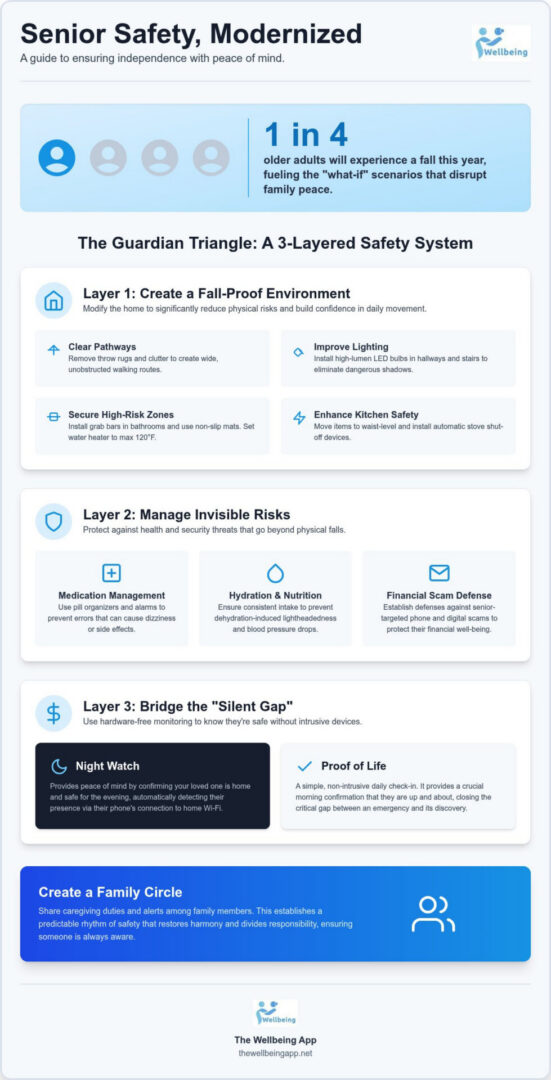
This guide reveals a multi-layered approach to senior safety that combines physical home modifications with modern proactive monitoring to provide total peace of mind. We will explore the “Guardian Triangle” of care, covering everything from the latest 2026 safety tax credits to hardware-free indicators like Proof of Life and Night Watch. You’ll discover how a blend of environmental upgrades and automated alerts can create a watchful, protective net around your family. By the end, you will have a reliable system for emergency notification that restores your mental tranquility while fully respecting their autonomy.
Key Takeaways
- Secure the home by identifying hidden trip hazards and applying the Three-Point Contact rule for safer navigation of stairs and entryways.
- Master how to help seniors maintain independence safely by addressing the “Silent Gap,” the critical time between an emergency and its discovery.
- Protect against more than just falls by managing medication schedules and establishing defenses against senior-targeted financial scams.
- Adopt hardware-free monitoring tools like Night Watch and Proof of Life to ensure continuous safety without the resistance often triggered by wearable devices.
- Create a Family Circle to share caregiving duties and establish a predictable rhythm of safety that brings harmony back to your daily life.
Creating a Fall-Proof Environment: Essential Home Modifications
The home should be a sanctuary of comfort, not a source of constant anxiety for family members. When we look at how to help seniors maintain independence safely, the first step is often a critical assessment of the physical environment. Most homes aren’t designed for the changing needs of older adults, but simple, strategic modifications can drastically reduce the risk of accidents. We focus on creating a space where movement feels secure and predictable, allowing your loved ones to navigate their daily lives with renewed confidence.
A central goal for many families is successful aging in place, which requires more than just a desire to stay home. It involves identifying hidden hazards that often hide in plain sight. Unsecured flooring is a primary culprit; throw rugs might look cozy, but they are notorious for catching toes and causing stumbles. We recommend removing these entirely or securing them with heavy-duty double-sided tape. Similarly, clear wide paths in living rooms and hallways by removing low-profile furniture or clutter that could obstruct a clear walking route.
Lighting is another vital component of a protective home. Aging eyes require significantly more brightness to distinguish between floor levels and spot potential obstacles. You can eliminate dangerous shadows by swapping out standard bulbs for high-lumen LEDs in every hallway and stairwell. To ensure physical stability during transitions, teach your loved one the Three-Point Contact rule. This simple technique involves always having three points of contact with stable surfaces, such as two feet on the floor and one hand firmly on a railing, when using stairs or entering the home.
Bathroom Safety: Securing the High-Risk Zone
The bathroom is often the most dangerous room in the house due to slick surfaces and tight spaces. Installing sturdy grab bars near the toilet and inside the shower provides essential leverage for those with reduced core strength. While non-slip mats are a necessary baseline, you might also consider raised toilet seats to minimize the physical strain on knees and hips. To prevent accidental scalds, ensure water temperature controls are set to a maximum of 120 degrees Fahrenheit, providing a safer environment for daily hygiene routines.
Kitchen Accessibility and Fire Prevention
Kitchen modifications focus on maintaining autonomy while reducing the risk of fire or strain. Reorganize cabinets to move frequently used items to waist-level storage, which eliminates the need for unstable step stools or painful overreaching. To protect against the silent danger of a forgotten burner, install automatic stove shut-off devices that cut power after a period of inactivity. Finally, test smoke and carbon monoxide detectors monthly to ensure they are clearly audible from every room in the house, reinforcing the protective net that helps seniors maintain independence safely.
Managing Health and Security Risks Beyond Physical Hazards
Physical modifications to the home are only one side of the safety coin. To understand how to help seniors maintain independence safely, we must look at the invisible risks that originate from within the body or arrive through the front door and phone lines. Health management and external security are vital pillars of a protective environment. When these areas are neglected, even the most fall-proofed home can become a place of vulnerability. A holistic approach ensures that your loved one is protected from medication errors, dehydration, and the predatory tactics of modern scammers.
Maintaining physical stability relies heavily on consistent nutrition and hydration. Dehydration often leads to sudden drops in blood pressure, causing dizziness that no grab bar can fully prevent. Similarly, cognitive health plays a significant role in safety. For those experiencing early stages of disorientation, the risk of wandering or becoming confused within their own home increases. Beyond the internal health factors, we must also consider the external threat of financial exploitation. Seniors are frequently targeted by sophisticated digital and phone scams. Protecting their independence means guarding their financial well-being just as fiercely as their physical health.
Medication and Health Monitoring Protocols
Medication errors are a leading cause of hospitalizations among older adults. Missing a dose or accidentally doubling up can cause severe side effects, including the type of lightheadedness that leads to accidents. Utilizing home safety checklists from authoritative sources like the CDC can help you identify if medication side effects are increasing a loved one’s risk. We recommend using automated pill dispensers or simple daily organizers to ensure compliance. It’s also helpful to keep a centralized, updated list of all prescriptions and medical contacts in a visible location, such as the refrigerator, for emergency responders to access quickly.
Home Security and Cognitive Safety
Security for seniors involves a delicate balance between protection and privacy. Smart locks and door sensors provide a non-intrusive way to monitor unexpected exits, which is especially important for those prone to wandering. Educating your parents on “stranger danger” in the digital age is equally important. Discussing common scam tactics helps them feel empowered to hang up or delete suspicious emails. Finally, try to maintain a consistent home layout. For someone with cognitive decline, a familiar environment acts as a silent guardian, reducing the risk of disorientation. To add an extra layer of background protection without the need for cameras, you can explore how location sharing and automated alerts provide peace of mind for the whole family.
Bridging the Silent Gap with Proactive Monitoring
The most significant risk for an older adult living alone isn’t just the fall itself, but the “Silent Gap” that follows. This is the dangerous stretch of time between an emergency and its eventual discovery. If a parent falls at 2:00 AM and isn’t found until a neighbor checks in at noon, the health outcomes are significantly worse. Learning how to help seniors maintain independence safely means closing this window of vulnerability. We must move beyond hoping they can call for help and instead implement systems that notice when something is wrong without them having to say a word.
True safety requires a shift from reactive tools to proactive guardianship. When a senior is alone, the silence can be deceptive. A house that looks peaceful from the outside might be hiding a crisis on the inside. By bridging this gap, you ensure that help is dispatched the moment a routine is broken, rather than hours or days later. This approach preserves the dignity of the senior while providing the caregiver with the mental tranquility they deserve.
The Limitations of Traditional Medical Alerts
Many families rely on traditional medical alert buttons, yet these often fail in real-world scenarios. A high percentage of seniors refuse to wear bulky pendants because the devices feel like a “badge of frailty” or a loss of dignity. Even when they agree to use them, the hardware is frequently left on a bedside table or in the bathroom where it’s unreachable during a crisis. Most importantly, reactive buttons are useless if the user is unconscious or in shock. Maintenance issues, such as short battery life and limited signal range, only add more layers of uncertainty to an already stressful situation.
The Value of Proactive Status Monitoring
Proactive monitoring shifts the responsibility of safety from the senior to a virtual guardian. Instead of waiting for a button press, systems like Proof of Life provide a constant, non-intrusive safety net by looking for indicators of well-being. These indicators act as a digital heartbeat, establishing a predictable rhythm of safety without requiring the user to learn new technology. This approach uses server-side monitoring, which means the safety check happens on a secure remote server. If a smartphone is damaged or the battery dies, the system still knows a check-in was missed and alerts the family immediately.
Features like Night Watch offer specific protection during high-risk hours, ensuring that if a parent doesn’t check in as expected, the Family Circle is notified. This method respects their personal agency and privacy while maintaining the compassionate vigilance necessary for true peace of mind. Mastering how to help seniors maintain independence safely requires this shift toward automated, hardware-free solutions that work quietly in the background.
Establishing a Safety Routine: The Power of Daily Check-ins
Safety is not a one-time installation; it’s a daily practice that provides ongoing mental tranquility for everyone involved. When we explore how to help seniors maintain independence safely, we must look beyond physical tools and focus on the power of a predictable rhythm. A structured routine creates a sense of harmony, ensuring that the senior feels watched over rather than watched. By establishing a shared responsibility within the family, you transform safety from a source of stress into a foundation for trust and connection.
One of the most effective ways to manage this is by building a Family Circle. This group of trusted individuals shares the duty of protection, so the weight of worry doesn’t fall on just one person. Instead of intrusive phone calls that can feel like a check-up on a child, you can use technology to automate “I am okay” indicators. These signals respect a parent’s personal agency while providing the watchful reassurance you need. For those living alone, implementing Night Watch protection is particularly vital, as it covers the most vulnerable hours when help might otherwise be far away.
Designing Your Family Check-in Framework
Creating a reliable framework is the best way to ensure no one falls through the cracks. Follow these three steps to build your system:
- Step 1: Identify the most vulnerable times of day. For most seniors, these are the early morning hours and right before bed.
- Step 2: Assign primary and secondary emergency contacts. This ensures that if the first person is busy, the automated notification reaches someone who can respond immediately.
- Step 3: Define clear Escalation Protocols. Everyone in the Family Circle should know exactly what to do if a check-in is missed, whether that’s a phone call, a neighbor visit, or contacting emergency services.
Maintaining Social Connection and Mental Health
Routine check-ins do more than just prevent accidents; they act as a vital defense against the loneliness epidemic that affects many aging adults. When a senior manages their own safety status through a simple digital check-in, it reinforces their sense of personal agency. They aren’t passive recipients of care; they are active participants in their own well-being. This empowerment is a powerful signature of a healthy aging process. Knowing that a compassionate guardian is always on watch allows both the parent and the caregiver to enjoy their day with a clear mind and a sense of shared community. You can easily set up your own Family Circle to start building this rhythm of safety today.
The Digital Guardian: Implementing Modern Safety Solutions
The journey to secure a loved one’s home involves many steps, from physical railings to social check-ins. However, the modern caregiver needs a reliable partner that bridges the gap when they can’t be there in person. The Wellbeing App serves as this compassionate guardian, offering a sophisticated yet simple way to understand how to help seniors maintain independence safely. Unlike traditional systems that rely on bulky pendants, this solution lives on the smartphone they already carry. It removes the stigma of aging by providing safety that works quietly in the background, ensuring that your parent feels empowered rather than monitored.
Eliminating senior resistance is often the biggest hurdle in home care. Many parents view wearable buttons as a badge of frailty, leading them to leave the devices in a drawer where they are useless during a crisis. By choosing a hardware-free approach, you respect their dignity while maintaining a high level of vigilance. Automated Emergency Alerts ensure that if a routine is broken, the Family Circle is notified instantly. This proactive system means no missed check-in goes unnoticed, providing a level of security that reactive hardware simply cannot match.
Core Features of a Modern Safety App
The strength of a digital guardian lies in its specific, high-stakes features designed for real-world scenarios. Proof of Life is the cornerstone of this system, providing automated verification that your parent is active and well. It monitors for indicators of activity, establishing a predictable rhythm of safety without requiring a single intrusive phone call. For the most vulnerable hours, Night Watch offers specialized monitoring. If a senior doesn’t signal their well-being by a set time in the evening or morning, the system triggers an alert, closing the dangerous “Silent Gap” immediately.
For active seniors who still enjoy walks or errands, Chaperone acts as a virtual companion. It uses real-time Location Sharing to ensure they are never truly alone, even when they are out in the community. If they don’t arrive home as expected or need assistance, the Family Circle is ready to respond. These features empower seniors to live on their own terms while providing you with the technical robustness needed for total peace of mind.
Empowering Independence and Peace of Mind
Implementing these modern safety solutions does more than just protect the senior; it preserves the mental tranquility of the caregiver. The constant weight of worry is replaced by a structured, reliable system of indicators and alerts. This lower barrier to entry, combined with a simple subscription-based model, makes it easy for families to start their journey today. You don’t need a professional installer or expensive proprietary hardware to secure your loved one’s future. By integrating these digital tools, you provide a clear path forward that balances personal agency with compassionate vigilance, ensuring your parents can age in place with the dignity they deserve.
Securing a Future of Dignity and Peace of Mind
Protecting a loved one’s autonomy is a journey that combines physical environmental changes with the steady, watchful eye of modern technology. You’ve learned that fall-proofing the home and establishing a Family Circle are essential steps to creating a protective net. However, closing the “Silent Gap” between an emergency and its discovery is what truly restores your mental tranquility. Understanding how to help seniors maintain independence safely means embracing solutions that work in the background without being intrusive or stigmatizing.
The Wellbeing App acts as a compassionate guardian for your family. It offers 24/7 server-side monitoring and automated Proof of Life indicators to ensure no missed check-in goes unnoticed. Because there’s no hardware required and the system works on any smartphone, it eliminates the resistance often found with wearable pendants. You can provide your parents with the protection they deserve while honoring their personal agency. Start your family safety plan today with The Wellbeing App and breathe easier knowing that a reliable safety net is always on watch. Your dedication to their safety is the foundation for their continued freedom.
Frequently Asked Questions
What is the most common cause of injuries for seniors living at home?
Falls are the leading cause of injury related hospitalizations for people 65 and older. According to 2026 data, more than one in four older adults fall each year. These incidents often occur in high risk zones like the bathroom or on unsecured flooring like throw rugs. Proactively addressing these physical hazards is a foundational step when learning how to help seniors maintain independence safely and comfortably.
How can I monitor my elderly parent without being intrusive?
You can use automated, hardware free monitoring that relies on digital indicators rather than cameras or constant phone calls. Systems like Proof of Life establish a predictable rhythm of safety by verifying well being through smartphone activity. This approach respects their personal agency and privacy while providing you with the watchful reassurance you need. It allows them to live their life without feeling like they’re being constantly managed.
What happens if my parent misses a scheduled safety check-in?
If a scheduled check-in is missed, the system immediately triggers an automated notification to your designated Family Circle. This alert ensures that the Silent Gap between an incident and its discovery is closed as quickly as possible. Your family can then follow your pre-established Escalation Protocols, such as calling the parent or checking the house, to ensure their safety and restore the mental tranquility of everyone involved.
Do medical alert systems work if my parent is unconscious?
Most traditional medical alert systems require the user to physically press a button, which is impossible if they are unconscious or in shock. While some high end wearables offer fall detection, they are often left on chargers or bedside tables. Proactive server side monitoring solves this problem by alerting you if a routine check-in is missed, ensuring help is dispatched even when the senior cannot call for it themselves.
What is a Proof of Life check-in and how does it work?
Proof of Life is an automated verification system that confirms a user is active and safe without requiring proprietary hardware. It works by monitoring for specific digital indicators on a smartphone at set intervals. If these indicators aren’t detected, the system recognizes the break in routine and alerts the caregiver. This hardware free approach is a modern way to understand how to help seniors maintain independence safely without the stigma of pendants.
How do I talk to my parent about installing a safety app?
Focus the conversation on empowerment and the preservation of their independence rather than their vulnerabilities. Explain that a smartphone based app replaces the need for intrusive check-up calls or badges of frailty like medical alert necklaces. Emphasize that this technology is a shared tool for family harmony, giving them the freedom to live alone while providing you with the mental tranquility of knowing they are okay.
Is there a way to ensure my parent is safe at night without being there?
Night Watch features provide specialized monitoring during the most vulnerable nighttime hours when help is hardest to reach. You can set specific check-in times for the evening or early morning to ensure they’ve settled in or woken up safely. If the system doesn’t receive a signal during these windows, it alerts the Family Circle immediately, providing a compassionate guardian that stays awake even when you are asleep.
Does The Wellbeing App require any special hardware or wearable devices?
No, the app is entirely hardware free and runs on any standard smartphone. This eliminates the common maintenance issues associated with traditional systems, such as battery life, range limitations, or the senior simply forgetting to wear the device. By utilizing the technology they already carry, you lower the barrier to entry and reduce the resistance many seniors feel toward traditional, stigmatizing safety hardware that often goes unused.