
Life Alert Alternatives Without Hardware: The 2026 Guide to App-Based Safety
The most effective way to protect your independence in 2026 isn’t a plastic pendant you might forget to charge; it’s the smartphone you already carry everywhere. If you have ever felt the frustration of a bulky medical alert button or the anxiety of a long-term contract, you’re not alone. Many people are now searching for a life alert alternative without hardware that feels discreet and modern rather than clinical. You deserve a safety solution that respects your lifestyle while providing the empathetic vigilance your family expects.
In this guide, you will discover how to secure 24/7 emergency protection and true peace of mind using only your mobile device. With global identity fraud climbing over $50 billion in 2024, the security industry has pivoted toward sophisticated, app-based solutions that are more reliable than a simple button. We will explore how the latest advancements in passive liveness detection and automated check-ins provide a seamless safety net that doesn’t require manual action. From Proof of Life indicators to specialized Night Watch protection, you’ll learn how to leverage smart technology to stay connected to your community without the stigma or expensive upfront costs.
Key Takeaways
- Discover why the “help button” era is ending and how software-based systems eliminate the stigma and charging hassles of traditional medical alerts.
- Learn how to choose a life alert alternative without hardware that utilizes the smartphone you already carry for seamless, 24/7 emergency protection.
- Understand the logic behind Proof of Life indicators, which provide automated check-ins to ensure you are safe without ever needing to press a manual button.
- Explore how specialized features like Chaperone and Night Watch create a digital safety net for vulnerable transitions and around-the-clock vigilance.
- Identify the cost-saving benefits of app-based subscriptions that remove expensive hardware fees while protecting your peace of mind.
Why the ‘Help Button’ Era is Fading in 2026
For decades, the image of senior safety was a plastic pendant hanging from a neck or a bulky bracelet. By 2026, that image has shifted toward the sleek, powerful device already tucked into your pocket. A life alert alternative without hardware is essentially a software-based safety system that uses smartphone sensors and automated logic to provide protection. It’s a more integrated approach that respects your dignity while ensuring you are never truly alone. Smartphones are updated constantly, they have built-in GPS, and they are almost never left behind. This “always-on” nature makes them a superior tool for reliability compared to a single-purpose button that might be left on a nightstand or forgotten in a bathroom.
Many people hesitate to wear traditional buttons because of the “stigma barrier.” These devices often end up forgotten in a drawer because they feel like a constant reminder of vulnerability. Nobody wants to feel like a patient in their own home. Beyond the social aspect, maintenance fatigue is a significant risk that many families overlook. If a user forgets to charge a proprietary pendant or the battery dies without a clear warning, the safety net disappears completely. By leveraging the smartphone you already use and charge daily, you eliminate the risk of a dead battery during a moment of need.
The Problem with Traditional Hardware
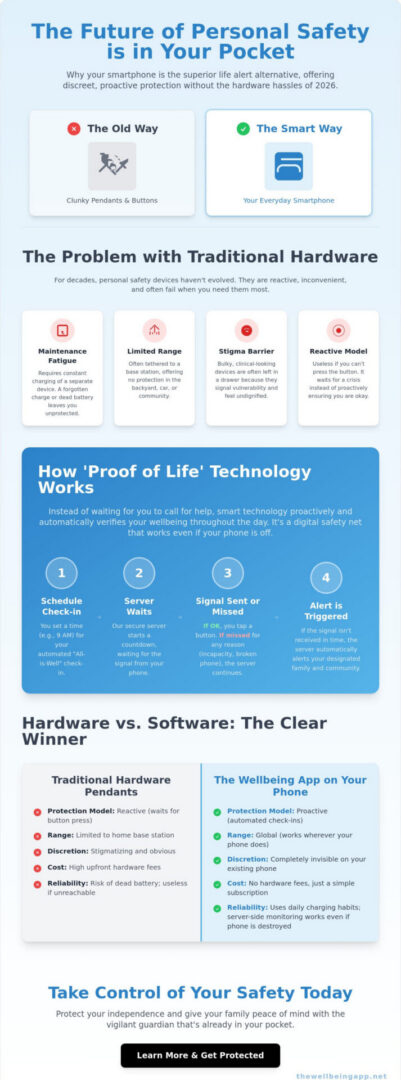
The classic Personal Emergency Response System (PERS) relies on a reactive model that hasn’t changed much in thirty years. The phrase “I’ve fallen and I can’t reach my button” highlights a major failure point; if you can’t reach the hardware, it can’t help you. These systems often come with heavy upfront equipment fees and are tethered to a base station with limited range. If you leave the house or even step into the backyard, you might lose your connection to help. Subscription-only models for software alternatives remove the barrier of expensive proprietary equipment. You aren’t paying for plastic; you’re paying for the sophisticated logic that keeps you safe wherever you go.
The Rise of the Virtual Chaperone
We are seeing a transition from reactive buttons to proactive status monitoring. Modern technology allows for a sense of vigilant guardianship that doesn’t feel intrusive or clinical. Instead of waiting for a crisis to happen, software looks for indicators that everything is normal. Hardware-free safety is a proactive, sensor-based monitoring system that uses automated logic to verify a user’s well-being without requiring physical intervention. This proactive approach is what makes a life alert alternative without hardware so effective. It leverages your existing habits to keep you connected to your family and community, allowing you to take control of your safety while maintaining your independence. When you care enough to know that your loved ones are safe, this digital safety net provides the reassurance everyone needs.
How ‘Proof of Life’ Technology Replaces Physical Buttons
The core innovation of a life alert alternative without hardware lies in its ability to be proactive rather than reactive. Traditional systems wait for you to press a button, but what happens if you can’t reach it? Proof of Life Indicators solve this by using automated check-ins that verify your status throughout the day. These indicators are digital signals sent from your smartphone to a secure monitoring server. The logic of this digital safety net is simple: if you don’t check in at your scheduled time, the system automatically checks on you. This shift from manual to automated monitoring provides a level of empathetic vigilance that a plastic pendant simply cannot match.
One of the most critical components of this 2026 technology is server-side monitoring. Unlike older apps that relied solely on the phone’s internal battery, modern safety tools manage the countdown on a remote server. If your phone is destroyed in an accident or loses signal in a dead zone, the safety net remains intact. Because the server is waiting for your “all-is-well” signal, it will trigger an alert to your loved ones or emergency contacts if that signal is missed. You can easily customize these check-in intervals to align with your specific daily routine, ensuring the system is active when you need it most and quiet when you don’t. When you take control of your personal safety through these smart settings, you protect your peace of mind without feeling tethered to a base station.
Automated Check-ins vs. Manual Alerts
Automated check-ins are designed to prevent the “silent emergency,” a situation where a user is incapacitated and unable to call for help. While a standard GPS tracker only shows your location, a proactive monitoring system confirms your actual well-being. This distinction is vital for those focused on aging in place, where safety must be balanced with independence. By using intelligent status updates, these apps also reduce “alarm fatigue” for family members. Instead of constant, worrying calls to check in, they receive calm confirmation that everything is fine. This creates a sense of unity and care that strengthens the family bond rather than straining it with anxiety.
Sensors and Intelligence
By 2026, the best safety apps use subtle interaction data as a secondary indicator of safety. If the phone detects normal movement or screen interaction, it can intelligently adjust check-in prompts to be less intrusive. Features like Night Watch protection offer specialized monitoring during high-risk late-night hours when you are most vulnerable. Proof of Life technology ensures an alert is sent even if the user is unconscious. This level of sophisticated, always-on protection transforms your smartphone into a vigilant guardian that is always looking out for your best interests.
Hardware vs. Software: Evaluating Your Safety Net
Choosing between a physical device and a digital application often comes down to how you live your daily life. Traditional systems frequently lock users into proprietary hardware that requires significant upfront equipment fees and shipping costs. In contrast, a life alert alternative without hardware typically operates on a transparent, monthly subscription model. This financial flexibility means you aren’t stuck with an expensive plastic brick if your needs change. Beyond the cost, there is the matter of versatility. A wearable button is a single-use tool meant only for a crisis, but an app-based system offers multi-functional features like a Virtual Chaperone for walks to the car or public transit commutes.
Reliability is another area where the two models diverge sharply. While hardware advocates point to battery life, they often ignore the “compliance gap.” A pendant is only useful if it’s actually worn, yet many people leave them on a nightstand or in the bathroom. Smartphone safety apps for seniors solve this because the phone is already an essential part of your routine. You’re already in the habit of charging it and keeping it nearby. This natural integration removes the psychological burden and the “old person” stigma that often leads people to hide or “forget” their medical alert devices.
When Software is the Better Choice
Active seniors, solo travelers, and night workers find that software-based safety fits their lifestyle far better than a clinical-looking pendant. If you’re out in the community, you want a tool that feels modern and discreet. Integrated Location Sharing allows family members to see your status without needing a separate tracking device. For those who occasionally forget their wearables, Proof of Life logic provides a more reliable safety net because it doesn’t require you to remember to put anything on in the morning. It simply works in the background of the device you already use for everything else.
Addressing the Connectivity Concern
A common myth is that safety apps only function when connected to Wi-Fi. In reality, modern safety tools utilize nationwide cellular networks and server-side redundancy to ensure you’re never truly disconnected. While a Bluetooth pendant might lose its connection just thirty feet from its base station, a cellular-based life alert alternative without hardware covers you whether you’re in your garden or a different state. Specialized features like Night Watch act as a persistent background guardian, ensuring that the system’s “Vigilant Guardian” logic remains active even during your most vulnerable hours.
Choosing a Hardware-Free Alternative: 5 Must-Have Features
When you select a life alert alternative without hardware, you are choosing a system that prioritizes intelligent logic over physical bulk. By 2026, the standard for personal safety has shifted toward features that integrate into your digital life without friction. A high-quality app does more than just track your location; it acts as a compassionate partner that understands your daily habits. To ensure you have a reliable safety net, look for these five essential features:
- Automated Proof of Life Checks: This is the foundation of any hardware-free system. It removes the burden of remembering to wear or press a button by verifying your status at intervals you choose.
- Virtual Chaperone Capabilities: Safety isn’t just for medical crises. A chaperone feature provides real-time monitoring during transitions, such as walking to your car in a dark parking lot or navigating public transit alone.
- Server-Side Fail-safes: True protection requires logic that lives outside your device. If your phone battery dies or the device is damaged during an event, the server must automatically trigger an alert because it missed your “all-is-well” signal.
- Tiered Emergency Contacts: You should have the power to notify your immediate community first. This allows family or neighbors to check on you before professional services are dispatched, fostering a sense of unity and care.
- Battery Efficiency: Advanced safety apps are optimized to protect you without draining your smartphone. They run quietly in the background, ensuring you stay connected throughout the day and night.
This comprehensive approach makes a life alert alternative without hardware a more versatile tool for personal empowerment. It transforms your phone from a simple communication device into a sophisticated security tool that adapts to your specific needs. When you are ready to take control of your personal safety, these features provide the robust protection your family expects.
The Importance of ‘Night Watch’ Protection
Nighttime is often the most vulnerable period for adults living alone because the rest of the world is asleep. Night Watch protection provides empathetic vigilance during these quiet hours by maintaining a persistent background watch. You can set specific parameters that match your sleep schedule, ensuring that if something goes wrong while you are resting, your circle of care is notified immediately. It’s about having a vigilant guardian that never sleeps, even when you do.
Real-Time Location Sharing and Privacy
Effective safety requires a delicate balance between persistent monitoring and user privacy. Modern emergency alerts use precise GPS data to guide responders to your exact location, even down to a specific room in a house. This level of detail is a central pillar of the “unity” factor, connecting your family through a single digital platform. You maintain control over who sees your data, ensuring your privacy is respected while your well-being is protected. When you care enough to know your loved ones are safe, this shared connection offers the ultimate peace of mind.
The Wellbeing App: Your Vigilant Guardian Without the Pendant
The Wellbeing App represents the pinnacle of modern safety technology. It delivers the ultimate peace of mind through the smartphone you already own and trust. By choosing this life alert alternative without hardware, you’re opting for a system that values your independence as much as your security. Our proprietary Proof of Life indicator is the sophisticated answer to the outdated hardware button. It creates a seamless, automated check-in process that respects your privacy while ensuring you’re never truly alone. You don’t need a base station or a pendant to feel secure; you just need the smart logic already in your pocket.
The Chaperone service extends this protection to every part of your day. Whether you’re walking to your car after a late shift or navigating a new city on vacation, you have a digital companion watching over you. This isn’t just about medical emergencies; it’s about everyday safety and confidence. With subscription simplicity, there’s no equipment to buy and no long-term contracts to sign. You get pure, high-tech protection that starts the moment you download the app. This is the future of safety, where technology serves as a silent, reliable partner in your well-being.
Protecting Your Peace of Mind
Our “Vigilant Guardian” philosophy is rooted in the belief that safety is a collective responsibility. We care enough to know you’re okay, which is why our features are designed to be proactive. The Night Watch feature is a central part of this mission, securing vulnerable users 24/7 by monitoring for status indicators during high-risk hours. Imagine a scenario where an active senior misses their morning check-in because of a sudden medical event. While a traditional button would sit uselessly on a nightstand, our automated alerts notify the circle of care immediately. This level of empathetic vigilance has already transformed lives, providing families with the reassurance they need to stay connected and unified.
Getting Started with Hardware-Free Safety
Joining our community is a simple and straightforward process. You can move from the initial download to having active Proof of Life indicators running in just minutes. There’s no waiting for a technician or a base station to arrive in the mail. When you choose a life alert alternative without hardware, you’re choosing a solution that grows with you. You can select the right plan for individual needs or opt for family-wide protection that keeps everyone connected. It’s time to move past the limitations of the past and embrace a more empowered lifestyle. Take control of your safety today with The Wellbeing App and experience the freedom of modern, app-based protection.
Take Control of Your Safety with Modern Confidence
The era of relying on a single, fragile button is behind us. By choosing a life alert alternative without hardware, you embrace a future where your safety is as mobile and sophisticated as you are. We have explored how automated Proof of Life technology and 24/7 Night Watch protection create a digital safety net that never sleeps. This shift isn’t just about better tech; it’s about preserving your dignity and unity with your family without the burden of expensive, clinical equipment. You deserve a solution that fits your lifestyle while providing the round-the-clock care your loved ones expect.
When you care enough to know that help is always a heartbeat away, the right software makes all the difference. It’s time to step into a more secure and empowered way of living. Your smartphone is already your most trusted tool, and now it can be your most vigilant guardian. Take the next step toward true independence and lasting security for your entire community today.
Protect your peace of mind; start your hardware-free safety plan today
Frequently Asked Questions
Is a safety app as reliable as a Life Alert button?
Safety apps are often more reliable than physical buttons because they eliminate the risk of a user forgetting to wear the hardware. A life alert alternative without hardware relies on the smartphone you already charge and carry daily. Since your phone stays with you, the safety net is always active. Automated check-ins also ensure that help is summoned even if you can’t physically reach for your device to press a button during a medical event.
What happens if my phone dies or I lose signal?
Your protection remains active through server-side monitoring even if your phone loses power or signal. The system manages the countdown on a remote server rather than just on your device. If the server doesn’t receive your scheduled “all-is-well” signal, it automatically triggers your emergency alerts to your circle of care. This fail-safe logic ensures that a dead battery or a cellular dead zone doesn’t leave you vulnerable during a crisis.
Do I need to keep the app open for the emergency alerts to work?
No, you don’t need to keep the app visible on your screen for monitoring to remain active. The Wellbeing App is designed to run quietly in the background using persistent status indicators. This ensures that features like Night Watch and Chaperone are always looking out for you without draining your battery or interrupting your daily tasks. You can simply set your preferences and trust the vigilant guardian to stay active while you use your phone normally.
How much does a hardware-free Life Alert alternative cost per month?
Monthly costs for a life alert alternative without hardware typically range from $4.99 per month to approximately $19.99 for an annual plan. Market data from 2026 shows that some premium safety tools offer 24-hour access for as little as $0.99, while specialized video-based monitoring often sits at the $4.99 monthly mark. These subscription-only models are significantly more affordable than traditional systems because they eliminate upfront equipment fees and the ongoing maintenance costs of proprietary hardware.
Can I use ‘Proof of Life’ checks for someone with early-stage dementia?
Proof of Life indicators are an excellent supportive tool for those managing early-stage dementia. These automated check-ins allow family members to verify a loved one’s status without the frustration of clinical medical devices that may be confusing or stigmatizing. It fosters a sense of unity and care by providing a non-intrusive safety net. This technology helps individuals maintain their independence while giving their community the peace of mind they need to stay connected.
Does the app call 911 directly or notify my family first?
Most app-based safety systems utilize tiered alerts that notify your family or community contacts first. This approach prevents unnecessary professional dispatches for minor issues while ensuring your circle of care is immediately informed. If your primary contacts don’t respond or if you trigger a high-level emergency alert, the system can then escalate to professional monitoring services. This tiered structure ensures that those who care most are the first to know when you need help.
Is my location being tracked all the time by the safety app?
You maintain complete control over your location sharing settings within the app. While the system uses GPS data to guide responders during an emergency, you decide when and with whom your location is shared during daily use. This balance respects your personal privacy while ensuring that precise location data is available if a Proof of Life check is missed. It’s about empowering you to stay safe on your own terms without feeling constantly watched.
Can I use a virtual chaperone service while traveling internationally?
Virtual chaperone services work wherever your smartphone has a cellular or data connection. Unlike hardware pendants that are tethered to a base station in your home, app-based safety travels with you across borders. This makes it an ideal companion for international travel or transit in unfamiliar cities. You can activate a Chaperone session while walking back to your hotel, knowing that your vigilant guardian is monitoring your journey in real-time regardless of your location.