
Lone Worker Safety App: The Complete Guide to Proactive Protection in 2026
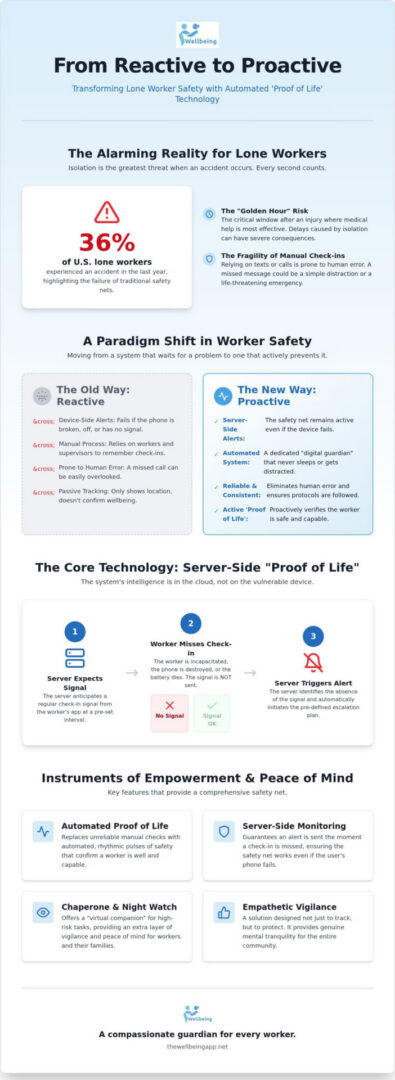
Imagine a technician working late in a remote utility substation. They slip, lose consciousness, and their phone slides across the floor, its battery slowly draining to zero. In this silent moment, the traditional safety net of manual check-ins fails because the person who needs help cannot ask for it. It’s a scenario that keeps employers and families awake at night. You likely already know that 36% of lone workers in the U.S. experienced an accident in the last year, yet the tools we rely on often feel fragile. We understand the heavy weight of this responsibility and the constant, quiet anxiety of wondering if a missed text is just a distraction or a genuine emergency.
This guide explores how a modern lone worker safety app transforms that uncertainty into true mental tranquility by shifting from reactive tracking to proactive protection. You’ll learn how automated Proof of Life protocols and Chaperone features provide a virtual guardian that remains vigilant even if a phone dies or a signal is lost. We’ll show you how server-side monitoring ensures that help is summoned the moment a check-in is missed, offering an instrument of empowerment for those working in high-risk environments and providing the peace of mind your community deserves.
Key Takeaways
- Learn why a modern lone worker safety app serves as a proactive digital guardian, replacing the friction of manual check-ins with automated, reliable software.
- Understand the critical advantage of server-side monitoring, which ensures that Proof of Life indicators remain active even if a device loses power or signal.
- Discover how to evaluate safety solutions based on their ability to provide empathetic vigilance rather than just passive tracking.
- Gain a clear framework for establishing automated safety protocols and escalation plans that protect both the worker and their family’s peace of mind.
- See how tools like Chaperone and Night Watch act as instruments of empowerment, offering virtual companionship during high-risk tasks.
What is a Lone Worker Safety App and Why is it Essential?
To understand the scope of the problem, we first have to ask: What is a Lone Worker in the modern age? It isn’t just someone on a high-rise construction site or a remote oil rig. Traditionally, businesses relied on manual wellness checks where a manager might text an employee every few hours. These systems are inherently fragile. A worker might forget to respond, or a supervisor might get distracted by a meeting, leading to dangerous delays. A modern lone worker safety app replaces this unreliable human element with a proactive digital guardian. It shifts the burden of safety from the individual to a dedicated system that never sleeps. In 2026, with the rise of the gig economy and remote-first roles, this technology is no longer a luxury. It’s a fundamental pillar of workplace well-being.
The Risks of Working Alone in 2026
The profile of the at-risk worker has changed significantly. It now includes healthcare professionals visiting private homes, utility technicians in remote fields, and even teleworkers in quiet home offices. The primary challenge remains the “Golden Hour,” the critical window following an injury where medical intervention is most effective. According to 2026 workplace safety reports, 36% of lone workers in the U.S. experienced an accident in the previous year. If an incident occurs, every minute of silence increases the risk. Automated apps shorten the response gap by triggering alerts the moment a check-in is missed. Whether it’s a sudden medical emergency, a fall in a warehouse, or a social risk during a sensitive client meeting, the danger isn’t just the event itself. The real threat is the isolation that prevents help from arriving.
Beyond GPS: The Evolution of Personal Safety Technology
Many people assume that simple location sharing is enough for security. However, a GPS coordinate is only useful if someone is actively watching the screen at the exact moment of a crisis. If a worker becomes incapacitated, a passive tracker does nothing to call for help. The evolution of the lone worker safety app focuses on server-side monitoring and specialized Proof of Life indicators. These systems require the worker to verify their safety at set intervals. If they don’t, the server initiates an escalation plan immediately, even if the user’s phone has been destroyed or the battery has died. This proactive approach provides deep mental tranquility. Families and employers can rest easy, knowing that a watchful protector is always standing by, ready to act when the worker cannot.
The Core Technology: How Proof of Life Monitoring Works
At the heart of a truly effective lone worker safety app lies a technology that prioritizes active verification over passive tracking. Many traditional systems wait for a disaster to happen before they react, but modern protection is about anticipating the silence. Proof of Life is a proactive verification of a user’s status by a remote server. This mechanism requires the individual to interact with the app at predetermined times, creating a rhythmic pulse of safety that confirms they are well and capable. It’s a simple premise that transforms a smartphone into a compassionate guardian, ensuring that a worker’s well-being is never left to chance.
Understanding Server-Side vs. Device-Side Alerts
The fatal flaw in many basic safety tools is their reliance on the device itself to send the distress signal. If a worker’s phone is crushed in an accident or loses signal in a concrete basement, a device-side app becomes silent and useless. Server-side monitoring changes the equation by moving the intelligence to the cloud. In this setup, the server expects a signal. If that signal doesn’t arrive, the server assumes help is needed and triggers an alert. It acts as a digital dead man’s switch. This approach aligns with the spirit of OSHA’s General Duty Clause, which requires employers to account for their staff at regular intervals. By using server-side logic, you ensure that the safety net remains intact even if the hardware fails.
You can tailor these check-in intervals to match the specific risk level of any task. A nurse conducting a high-risk home visit might set a fifteen-minute pulse, while a teleworker might only need a check-in every few hours. This flexibility ensures that the safety protocol never feels like a burden. When a check-in is missed, the automated escalation plan takes over. The system knows exactly who to notify, whether it’s a supervisor, a family member, or an emergency contact, ensuring that no one is left alone in their time of need. It’s about creating a reliable bridge between the worker and their support network.
Eliminating False Alarms with Intelligent Verification
One of the biggest hurdles to adopting safety tech is the “crying wolf” effect of false alarms. Accelerometer-based “Man Down” sensors often trigger if a phone is simply dropped or moved too quickly, leading to frustration and eventually, the app being disabled. Scheduled check-ins eliminate this friction. Instead of guessing based on movement, the lone worker safety app asks for a simple, intentional confirmation. This creates a supportive habit rather than a chore. It builds a sense of community responsibility, where safety is a shared effort. To see how these proactive tools can bring harmony to your team, you might consider exploring the automated safety features available today.
Comparing Lone Worker Solutions: Finding the Right Fit
Selecting the ideal lone worker safety app requires a balance between technical robustness and the emotional well-being of the user. Industrial B2B solutions often lean heavily into rigid compliance, while community-oriented platforms focus on the human experience of safety. When you evaluate the cost, it’s helpful to look beyond the monthly subscription. The true metric is the “price of silence,” the devastating cost of an emergency where no one knew help was needed. According to National Safety Council research, the integration of monitoring technology is a key factor in preventing lone worker incidents from becoming fatalities.
A comprehensive feature checklist should include more than just a panic button. You should look for GPS breadcrumbing, which creates a trail of a worker’s path, and automated timers that require active check-ins. One of the most supportive features is a Chaperone service. This provides a sense of virtual companionship during transit or high-risk encounters, ensuring that the worker never feels truly alone even when they’re out of sight. These tools don’t just track coordinates; they foster a sense of harmony and security for the entire team.
Key Features for Different Lone Worker Roles
Different environments demand tailored layers of protection. A home-based consultant working late might find that Night Watch protection offers the necessary reassurance for their mental tranquility. In contrast, a field technician navigating remote sites relies on constant Location Sharing to ensure emergency teams can find them quickly. The goal is to provide a safety net that fits the rhythm of the workday without becoming an obstacle. When the technology matches the role, it stops being a requirement and starts being a reliable partner.
Privacy and Agency: Balancing Safety with Autonomy
The “Big Brother” concern is a natural reaction to any monitoring software, but modern safety tools are designed to be an instrument of empowerment. By giving users the ability to toggle their status and monitoring levels based on their current task, these apps respect personal agency. We don’t view safety as a form of surveillance. Instead, it’s a shared commitment to collective responsibility, where the technology serves as a watchful protector that only steps in when the user’s well-being is at stake. This approach transforms the lone worker safety app from a passive tracker into a proactive tool for personal management.
Establishing a Lone Worker Safety Protocol
Implementing a lone worker safety app is a powerful first step, but the true strength of your protection lies in the protocol you build around it. A protocol isn’t just a list of rules. It is a shared promise between workers, their families, and their employers. By establishing a structured routine, you transform a digital tool into a reliable safety net that fosters deep mental tranquility for everyone involved. This process begins with clear communication and ends with a culture of empathetic vigilance where no one is left behind.
Setting Up Your Escalation Path
Choosing your “guardians” is the most critical decision in this process. These are the individuals who will receive the automated alerts if a Proof of Life check-in is missed. We recommend selecting at least two reliable contacts who understand the urgency of these notifications. Your escalation plan should clearly define what information is shared, such as real-time GPS coordinates and the time of the last successful verification. Running a “safe” emergency drill once a month ensures that your guardians know exactly how to respond. It turns potential anxiety into a disciplined, effective action plan. When everyone knows their role, the system operates with a sense of harmony and purpose.
Consistency is the heartbeat of safety. For a lone worker safety app to be effective, it must become a natural part of the workday. Training should focus on the app as an instrument of empowerment rather than a burden. When workers see the system as a watchful protector that has their back, they are more likely to engage with it consistently. Regularly reviewing safety data allows you to refine these habits, identifying high-risk times or locations where protocols might need to be tightened for better protection.
Best Practices for High-Risk Situations
Certain tasks carry a higher emotional and physical weight. For these moments, you should utilize specialized features like Chaperone. This service acts as a virtual companion when walking to a vehicle in a dark parking lot or entering an unfamiliar job site. It provides a sense of security that allows workers to focus on their tasks without fear. For those working non-traditional hours, Night Watch provides continuous monitoring. It ensures that even during sleep or late-night shifts, a safety net is always active and ready to alert your loved ones if something goes wrong. To begin building your own custom safety net, you can explore our proactive safety tools and start protecting your community today.
The Wellbeing App: A Compassionate Guardian for Every Worker
The Wellbeing App isn’t just another lone worker safety app; it’s a commitment to a philosophy we call “empathetic vigilance.” While many platforms focus solely on the technical aspects of tracking, we prioritize the human element of safety. We believe that true protection is rooted in the concept of mental tranquility. It is the quiet confidence that comes from knowing you’re never truly alone, even when working out of sight. By positioning ourselves as a compassionate guardian, we provide more than just a software solution. We offer a partnership that values the vulnerable and empowers the individual to work without fear.
Our Proof of Life indicators serve as the heartbeat of this system. They provide 24/7 server-side monitoring that acts as a constant, invisible safety net. This ensures that even if your phone loses power or signal, the alert triggers automatically. Beyond standard check-ins, we offer specialized features like Chaperone and Night Watch. Chaperone provides virtual companionship during high-risk transit or when entering new environments. Night Watch offers dedicated protection for those working non-traditional hours or staying in remote locations. These aren’t just features; they’re instruments of empowerment designed for every scenario you might face in the modern workforce.
Subscription Plans Built for Individuals and Families
We’ve designed our monthly and annual plans to be accessible for both individuals and families. We understand that safety is a shared effort. Unlike free alternatives that often rely on unreliable, device-side triggers, our service focuses on the robustness of server-side logic. This approach fosters social cohesion by involving your trusted circle in your safety journey. By designating your own “guardians,” you appeal to the deep sense of duty we all feel toward our loved ones. It transforms safety from a personal concern into a collective responsibility that strengthens community bonds and ensures help is always within reach.
Embracing the Future of Personal Security
The transition from being a passive user of safety tools to a proactive manager of your own well-being is a powerful shift. The Wellbeing App acts as the watchful protector for the modern age, helping you navigate the complexities of a remote-first world with grace and security. We’re dedicated to fostering a society where safety is proactive and compassionate. It’s time to move beyond anxiety and embrace a future where you feel empowered in every task. Secure your peace of mind with The Wellbeing App today and join a community that puts your well-being first.
Secure Your Future with Empathetic Vigilance
True protection for those working out of sight requires a shift from passive tracking to proactive verification. By choosing a lone worker safety app that prioritizes server-side monitoring, you ensure that help is summoned even if a device loses signal or power. This guide has explored how customizable Proof of Life check-ins and specialized features like Night Watch transform a simple tool into an instrument of empowerment. These protocols don’t just meet basic safety requirements; they provide a foundation of mental tranquility for workers and the families who wait for them to return home.
We believe that safety is a collective responsibility, and no one should have to face high-risk tasks alone. Whether you’re navigating remote job sites or working late in a home office, having a watchful protector by your side makes all the difference. It’s time to replace quiet anxiety with the warmth of a supportive community and reliable technology that never sleeps. Start your journey toward mental tranquility with The Wellbeing App today. You deserve the peace of mind that comes from knowing you’re always protected, no matter where your work takes you.
Frequently Asked Questions
What is the difference between a lone worker app and a standard GPS tracker?
A lone worker safety app provides proactive, scheduled verification rather than just passive location tracking. While a GPS tracker only shows where you are, a safety app requires you to confirm you’re okay at regular intervals. If you don’t respond, the system triggers an alarm automatically. This active monitoring ensures that help is sent even if nobody is watching a map, offering an instrument of empowerment for the user.
Will the app still alert my contacts if my phone battery dies?
Yes, the server-side monitoring ensures that alerts are sent even if your phone loses power or signal. Because the verification happens on a remote server, the system expects a Proof of Life signal from you at a specific time. If that signal doesn’t arrive because your battery died or you lost connection, the server assumes an emergency and notifies your guardians immediately. This creates a constant, uninterrupted safety net.
Is a lone worker safety app only for dangerous jobs like construction?
No, these apps are designed for anyone working out of sight, including healthcare professionals, home-based consultants, and real estate agents. In 2026, many workers identify as lone workers and face risks like medical emergencies or social hazards. Whether you’re visiting a new client or working late in a quiet office, the lone worker safety app provides virtual companionship and mental tranquility for you and your family.
How does the ‘Proof of Life’ check-in feature actually work?
The Proof of Life feature is a scheduled, active check-in requirement that acts as a digital pulse. You set a specific interval, such as every thirty minutes, and the app prompts you for a simple confirmation. If you don’t respond within a grace period, the server initiates an automated escalation plan. This proactive verification ensures that silence is never ignored, providing deep reassurance for your most vulnerable moments.
Can I use a lone worker app for my elderly parents who live alone?
Yes, the technology is highly effective for protecting vulnerable family members who value their independence. By setting up automated check-ins, you can ensure they’re safe without the intrusion of constant phone calls. If they miss a verification, you’ll be notified instantly with their last known location. It’s a compassionate way to foster social cohesion and fulfill your duty of care toward those you love most.
What happens if I accidentally miss a check-in but I am actually safe?
The lone worker safety app typically provides a warning notification and a short grace period before any alerts are sent. You’ll receive a push notification or an audible reminder to confirm your status. If you simply forgot, you can check in quickly to reset the timer. This intelligent verification process helps eliminate false alarms while ensuring that genuine silence is treated with the gravity and urgency it deserves.
Does the app respect my privacy when I am not working?
Yes, modern safety tools are built to respect personal agency and autonomy. You have the power to toggle monitoring on or off based on your current task or schedule. The app doesn’t act as a passive surveillance tool. Instead, it serves as a watchful protector that you activate when you feel you need an extra layer of security, ensuring your privacy remains a top priority during your personal time.
How much does a lone worker safety app subscription typically cost in 2026?
Industry pricing for these services often follows a monthly or annual subscription model based on the level of monitoring required. Some providers offer tiered plans that include basic location sharing, while premium options add server-side alerts and features like Chaperone or Night Watch. While we don’t quote specific prices, most solutions are designed to be an affordable investment in your mental tranquility and proactive personal safety management.