
Medical Alert Systems for Seniors in 2026: The Proactive Safety Guide
What if the most effective medical alert systems for seniors in 2026 aren’t the ones hanging around their necks, but the ones that watch over them silently? You want to ensure your loved ones are safe, yet you’ve likely faced the frustration of a parent refusing to wear a traditional pendant or the sting of high monthly hardware fees. A 2023 report from the Journal of Medical Internet Research indicates that 80% of older adults prefer non-wearable monitoring over traditional devices. When you care enough to know they’re safe without hovering, the old reactive models simply don’t provide the empathetic vigilance you need.
We’re here to help you take control of that anxiety. This guide explores how safety technology has evolved from simple panic buttons into proactive, automated systems that protect your peace of mind. You’ll learn how to implement non-intrusive monitoring that doesn’t require a single piece of wearable hardware. We will break down the latest advancements in Proof of Life Indicators and show you how to build a digital community of care that keeps your family connected 24 hours a day.
Key Takeaways
- Understand why modern medical alert systems for seniors are evolving from simple reactive buttons into proactive safety ecosystems that monitor well-being automatically.
- Evaluate the reliability and cost-benefits of dedicated hardware pendants compared to the versatile sensors found in modern smartphone safety apps.
- Identify how to assess specific mobility and cognitive needs to select a monitoring level that balances personal independence with essential security.
- Discover how “Proof of Life” indicators provide automated reassurance for solo-living seniors, ensuring peace of mind through empathetic vigilance.
- Learn to take control of your safety by transitioning from outdated landline-based tools to mobile-first protection designed for the modern age.
Understanding Medical Alert Systems for Seniors in 2026
Aging in place shouldn’t feel like a compromise on safety or dignity. By 2026, the definition of what medical alert systems are has evolved from simple, landline-dependent wall units to sophisticated, mobile-first safety ecosystems. These modern tools provide more than just a way to call for help; they offer a continuous loop of protective reassurance. When you care enough to know your loved one is safe, you need a solution that balances technical robustness with human-centric care. This shift marks the era of empathetic vigilance, where technology acts as a silent, compassionate guardian rather than a constant reminder of vulnerability.
The 2026 landscape of senior care prioritizes 24/7 monitoring that feels supportive rather than intrusive. It’s about creating a sense of unity between the senior, their family, and professional responders. Modern medical alert systems for seniors now integrate into the daily rhythm of life, ensuring that help is always accessible without the clinical feel of older hardware. You can protect your peace of mind by choosing a system that values proactive connection over reactive panic.
The Core Components of a Modern Safety System
A reliable safety tool relies on multi-channel emergency signal transmission. In 2026, systems utilize 5G cellular arrays and satellite backup to ensure a distress signal reaches help, even in remote areas or during local outages. While professional monitoring centers remain the gold standard for emergency dispatch, family-led alert networks have become a vital secondary layer. These systems use GPS and real-time location sharing to provide “Proof of Life Indicators,” allowing family members to see that their loved ones are active and moving. Features like Night Watch Protection provide specialized authority, ensuring that the most vulnerable hours of the night are covered by automated checks and professional oversight.
Why Traditional Buttons Often Fail
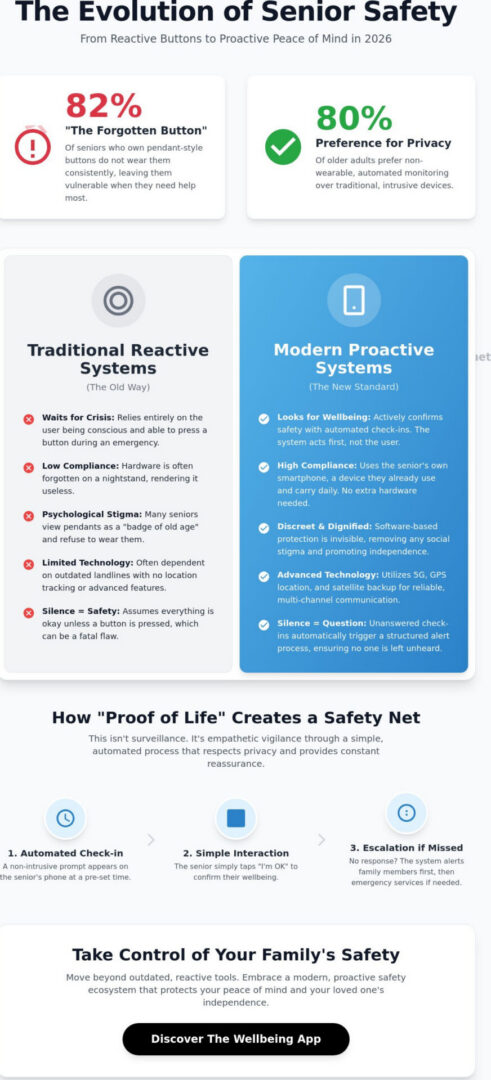
Hardware that stays in a bedside drawer cannot save a life. Data from a 2024 industry report indicates that approximately 82% of seniors who own traditional pendant-style buttons do not wear them consistently. This “forgotten button” syndrome is often fueled by the psychological stigma of appearing frail or dependent. Many seniors view traditional devices as a “badge of old age,” leading them to leave the device on a nightstand during the very moments they need it most. Reactive tools are no longer enough because they rely on the user being conscious and willing to press a button. To truly take control of home safety, medical alert systems for seniors must move beyond the button, utilizing passive monitoring and discreet designs that encourage 100% compliance without the emotional weight of traditional medical devices.
The Evolution of Protection: Reactive vs. Proactive Monitoring
For decades, traditional medical alert systems for seniors functioned as reactive tools. They remained dormant until a crisis occurred, relying entirely on the user’s ability to press a button during a moment of extreme distress. If a senior fell and lost consciousness or couldn’t reach their wearable device, the system offered no utility. Proactive monitoring changes this dynamic by shifting the burden of safety from the senior to the technology. Instead of waiting for a signal of distress, these advanced systems look for a signal of well-being. This transition represents a fundamental move toward empathetic vigilance.
When evaluating 2026’s best medical alert systems, the distinction lies in how they handle silence. Reactive systems view silence as safety; proactive systems view silence as a question that needs an answer. By establishing a consistent connection, families can protect their peace of mind without intruding on a loved one’s independence. This “safety net” operates quietly in the background, ensuring that help is already on the way even if a senior cannot call for it themselves.
How Automated Check-ins Work
The mechanism relies on a proprietary “Proof of Life” indicator. This is not a camera or a microphone, but a scheduled, non-intrusive check-in that requires a simple interaction from the senior. If the senior doesn’t acknowledge the prompt within a specific window, the system initiates a structured escalation process. First, a notification is sent to the primary caregiver. If that remains unaddressed for a set period, such as 15 minutes, the system alerts the wider safety circle or emergency services. You can customize these schedules to align with a senior’s unique morning coffee or evening news routine, ensuring the technology fits the person, not the other way around.
Night Watch: Security During Vulnerable Hours
Data from 2025 indicates that nighttime hours pose the highest risk for seniors living alone. Reduced visibility and physical fatigue increase the likelihood of accidents during late-night trips to the kitchen or bathroom. Night Watch protection acts as a virtual chaperone while the world is quiet. It ensures that even during sleep, a senior isn’t truly alone. Night Watch protection is an always-on guardian for the vulnerable. This specialized tool provides a safety net during the hours when family members are typically asleep and unable to check in manually. When you care enough to know that your loved one is safe at 3:00 AM, you can take control of their home security through these proactive features. This level of connectivity fosters a strong sense of unity between family members, regardless of the physical distance between them.
Comparing Hardware Pendants vs. Smartphone Safety Apps
Choosing between a physical pendant and a mobile application is about more than just technology; it’s about how you choose to protect your peace of mind. While traditional medical alert systems for seniors historically relied on proprietary hardware, the landscape in 2026 has shifted toward integrated software solutions. These modern tools offer an empathetic, connected approach to safety that legacy devices often struggle to match. The decision involves weighing the simplicity of a single button against the comprehensive protection of a device you already carry.
Hardware Limitations and Hidden Costs
Legacy brands often require upfront equipment fees that can exceed $100, frequently bundled with rigid long-term contracts. These physical devices create a financial barrier and a maintenance burden. A 2025 industry report on senior safety tech found that 15 percent of hardware users experienced a battery failure or a “dead zone” that went unnoticed until a manual test was performed. Physical sensors and base stations also have high maintenance requirements; they need regular cleaning and eventual replacement as components age. This hardware-first approach often feels restrictive, as it tethers a senior to a specific radius around their home base station.
The Software Advantage: Flexibility and Connection
Software applications leverage the sophisticated sensors already built into smartphones and watches, significantly lowering the cost of entry. When you care enough to know your loved one is safe, software provides a level of detail that a simple plastic button cannot. The Wellbeing App utilizes these existing tools to foster community unity, keeping family members connected through shared location data and status updates. This approach offers several distinct benefits:
- Instant Updates: Safety features and security protocols improve through immediate software patches rather than requiring new equipment.
- Proof of Life Indicators: Automated check-ins provide a proactive safety management system that ensures a senior is active and well.
- Discreet Protection: Using a familiar smartphone removes the stigma often associated with wearing a medical device, helping users feel empowered.
The reliability of smartphone sensors has reached a peak in 2026. High-precision accelerometers in modern mobile devices now rival or exceed the accuracy of dedicated fall detectors. Because most people rarely leave home without their phones, the “always-with-you” factor is naturally built into the user’s daily routine. This ensures that medical alert systems for seniors are active during a walk in the park, a trip to the store, or a visit with family. By choosing a software-driven path, families take control of their safety through a tool that is already a trusted part of their lives, ensuring a vigilant guardian is always just a pocket away.
Choosing the Best Medical Alert System for Your Family
Selecting medical alert systems for seniors is a deeply personal decision that bridges the gap between independence and safety. It’s about finding a rhythm of care that respects your loved one’s dignity while providing you with the vigilance you need. To protect your peace of mind, you must look beyond the hardware and evaluate how a system integrates into your family’s daily life.
- Assess Mobility and Cognitive Needs: A senior with early-stage dementia requires passive safety features, while a highly mobile senior might prioritize GPS accuracy for outdoor walks.
- Determine Monitoring Depth: Decide if you need simple emergency response or a daily wellness tool that tracks Proof of Life indicators to ensure a routine is being followed.
- Gauge Technical Comfort: Choose an interface that feels intuitive. If a device is too complex for the senior or the caregiver, it becomes a barrier rather than a bridge to safety.
- Review Subscription Terms: Industry data from 2024 shows that 65% of families now prefer monthly flexibility to avoid long-term financial commitments during changing health phases.
- Verify Response Reliability: Ensure the provider has a proven track record of notification delivery that reaches your community of care within seconds.
Evaluating Reliability and Response Speed
True safety relies on the infrastructure behind the device. Server-side monitoring is the gold standard because it processes data through secure, redundant data centers rather than relying on the fragile nature of peer-to-peer texting. When a crisis occurs, every second counts. Automated notification dispatch ensures that designated contacts are alerted instantly without human delay. Automated alerts are the most reliable way to prevent missing person incidents because they provide a fail-safe that doesn’t rely on the senior remembering to call for help.
Privacy vs. Protection: Finding the Balance
When you care enough to know your loved one is safe, you don’t have to sacrifice their privacy. Modern medical alert systems for seniors offer on-demand location sharing rather than constant surveillance, allowing seniors to maintain their independence. We believe in the power of Proof of Life indicators, which use motion or activity data to confirm well-being without the invasive presence of cameras. This approach fosters a sense of unity and trust within the family. You can take control of the safety plan without making your loved one feel watched.
Ensure your family stays connected and secure by choosing a partner that values empathy as much as technology. Protect your peace of mind with the Wellbeing App today.
Protecting Peace of Mind with The Wellbeing App
Traditional medical alert systems for seniors often wait for a crisis to occur before they provide any real value. The Wellbeing App flips this script by acting as a compassionate guardian that monitors safety long before an emergency strikes. It’s built for the modern age, where technology bridges the distance between solo-living seniors and their families. Through a combination of sophisticated monitoring and human-centric design, the app fosters a strong sense of unity within the community. It transforms a standard smartphone into a proactive security tool that watches over users with empathetic vigilance, ensuring that no one is left to face a crisis alone.
When You Care Enough to Know
Caregivers often struggle with the balance between respecting a senior’s independence and ensuring their safety. This app allows you to take control of that dynamic without being overbearing or intrusive. The core of this protection is the proprietary Proof of Life system. This feature requires simple, automated check-ins at intervals you define. If a check-in is missed, the app triggers indicators that alert the family circle immediately. This proactive approach prevents the tragic outcomes that occur when a fall or medical event goes unnoticed for hours. It’s a system designed for those who understand that early intervention is the key to long-term well-being.
Total daily coverage is achieved through specialized features like Chaperone and Night Watch Protection. The Chaperone feature provides active monitoring during errands or walks, while Night Watch offers an extra layer of security during the vulnerable evening hours. These aren’t just technical tools; they’re promises of peace. Knowing a loved one is safe provides an emotional reward that reactive systems simply cannot match. It’s about maintaining a constant, silent connection that respects privacy while prioritizing life.
- Proof of Life: Automated indicators that confirm a user is active and safe.
- Chaperone: Enhanced monitoring for outings and appointments.
- Night Watch: Specialized protection during the hours when seniors are most at risk.
- Community Unity: A shared platform that keeps the entire family informed.
Getting Started with Your Digital Safety Net
Setting up your safety circle is a straightforward process designed for all technical levels. After downloading the app, the primary user or a family member can configure the check-in schedule in under five minutes. You can invite multiple family members, friends, or neighbors to join a unified safety circle. This ensures that someone is always available to respond if an alert is triggered. This collective responsibility is what creates a true digital safety net, moving beyond the limitations of older medical alert systems for seniors.
Embrace a Future of Proactive Protection
Choosing the right safety net is about more than just reacting to an emergency; it’s about staying connected before a crisis occurs. Modern medical alert systems for seniors have evolved beyond bulky hardware pendants that often sit forgotten on a nightstand. Data from AARP indicates that 77% of adults over 50 want to remain in their homes as they age, which requires a higher standard of vigilance. By moving from reactive hardware to intuitive smartphone safety, families maintain a constant connection without the stigma of traditional devices. You deserve a solution that prioritizes dignity and real-time awareness through automated check-ins.
The Wellbeing App transforms your existing smartphone into a sophisticated security tool. It offers 24/7 Automated Proof of Life Monitoring and specialized Night Watch and Chaperone protection to ensure you’re never truly alone. Because it requires no proprietary hardware, you can start protecting your circle immediately using your existing device. When you care enough to know that your loved ones are safe, it’s time to take control of your family’s security. Join The Wellbeing App today and protect your peace of mind. Your safety is a collective journey, and we’re here to walk it with you every step of the way.
Frequently Asked Questions
Are medical alert systems covered by insurance or Medicare?
Medicare Part A and Part B don’t typically cover the cost of medical alert systems for seniors. However, a 2024 report from the Kaiser Family Foundation indicates that 99% of Medicare Advantage beneficiaries have access to supplemental benefits that may include safety devices. You’ll need to check your specific plan’s Evidence of Coverage to see if they provide a monthly allowance or equipment reimbursement for these security tools.
What happens if a senior misses a Proof of Life check-in?
If a senior misses a scheduled Proof of Life check-in, the system immediately triggers automated alerts to their designated circle of care. This proactive monitoring ensures that silence isn’t ignored; instead, family members receive a notification to verify their loved one’s well-being. By establishing these regular indicators, you create a safety net that acts before a crisis escalates, ensuring peace of mind for the entire family.
Do medical alert apps work if the phone is on silent or Do Not Disturb?
Most modern medical alert apps utilize “Critical Alerts” to bypass silent or Do Not Disturb settings on both iOS and Android devices. This technical feature ensures that emergency notifications produce an audible sound even when the volume’s muted. It’s a vital security tool that guarantees urgent communications reach the intended responder, maintaining a constant state of empathetic vigilance regardless of the phone’s current profile.
Is a smartphone safety app as reliable as a traditional Life Alert button?
Smartphone safety apps provide a more comprehensive security profile than traditional buttons by incorporating real-time GPS data and battery level monitoring. While a legacy button relies on a single point of failure, an app creates a connected community of responders. A 2025 industry analysis suggests that mobile-first solutions are becoming the preferred choice for 70% of active seniors who require protection outside the home.
Can I monitor multiple family members using a single safety app?
You can monitor multiple family members through a centralized dashboard designed to foster unity and collective safety. This feature allows a single caregiver to view Proof of Life indicators for several seniors simultaneously, streamlining the caregiving process. It’s an efficient way to take control of your family’s safety, ensuring that every vulnerable loved one remains protected under your watchful eye through a single interface.
How does Night Watch protection differ from standard emergency alerts?
Night Watch protection focuses specifically on the high-risk hours between 10 PM and 7 AM when seniors are most vulnerable and alone. Unlike standard emergency alerts that wait for a button press, this feature monitors for activity or check-ins during the night. If the system detects an absence of expected movement, it alerts the community, providing a layer of protective reassurance while the rest of the world sleeps.
What is the average cost of a medical alert system in 2026?
According to 2025 market research, the average monthly subscription for medical alert systems for seniors ranges from $20 to $75. Basic in-home units sit at the lower end of this scale, while mobile systems with fall detection and GPS tracking command higher fees. Many providers also charge an initial equipment or activation fee, which typically ranges from $50 to $150 depending on the hardware’s technical sophistication.
How do I talk to my parent about starting a medical alert service?
Start the conversation by focusing on empowerment rather than a loss of independence. Frame the service as a way to protect your peace of mind and maintain their autonomy. Using the phrase “when you care enough to know” helps communicate that your request comes from a place of sincere concern. Present it as a shared security tool that strengthens your family bond and ensures they’re never truly alone.