
Non-Medical Transport Guide: Ensuring Safety and Reliability in 2026
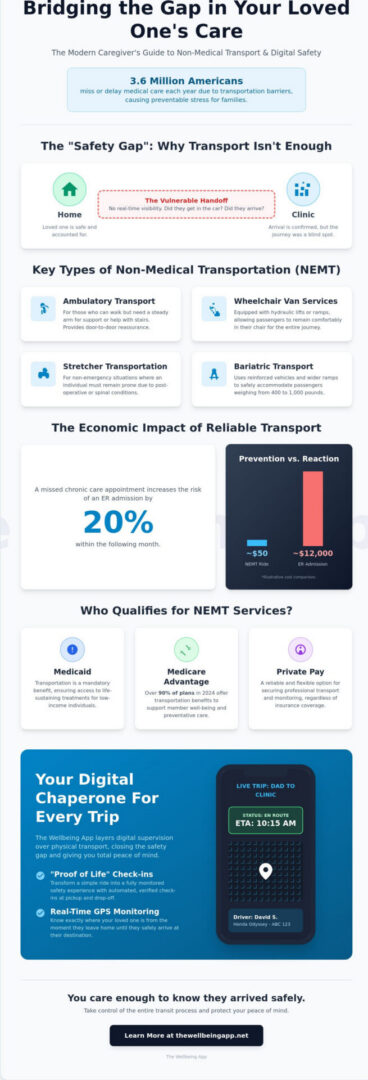
It is 10:15 AM on a rainy Tuesday. Your father is supposed to be at his specialist appointment, but the non medical transport driver hasn’t arrived. You are stuck in a meeting, miles away, feeling that familiar knot of anxiety as you wonder if he is waiting alone or if the ride was canceled without notice. According to a 2023 report from the Transit Cooperative Research Program, nearly 3.6 million Americans delay medical care annually due to transportation barriers, often leaving families in this exact state of worry.
It is natural to feel protective when a loved one’s well-being is in someone else’s hands. You deserve to feel connected to your family, even when you can’t be physically present. This guide will help you take control by mastering the essentials of transportation services while layering in digital safety monitoring for total peace of mind. When you care enough to know exactly where your loved one is, technology becomes your most reliable guardian. We will explore the 2026 standards for driver reliability, explain insurance coverage, and provide a clear strategy for monitoring every ride in real-time. You can finally protect your peace of mind and ensure every passenger arrives safely.
Key Takeaways
- Learn to distinguish between standard ride-sharing and specialized non medical transport to ensure your loved ones receive the specific level of care they require.
- Identify the critical “Safety Gap” that occurs during the handoff between home and clinic, and discover why physical transport alone is not a complete security solution.
- Master a professional caregiver’s checklist for vetting provider safety records and scheduling buffers to eliminate the stress of transit delays.
- Explore how to integrate “Proof of Life” check-ins into any travel schedule, transforming a simple ride into a fully monitored safety experience.
- Take control of the transit process by layering digital supervision over physical services, allowing you to protect your peace of mind when you care enough to know they arrived safely.
Understanding Non-Medical Transport (NEMT): More Than Just a Ride
Your peace of mind relies on the assurance that your loved ones reach their medical destinations safely and with dignity. In the modern healthcare environment, non medical transport serves as a vital security tool for families who need to bridge the gap between home and clinical care. It isn’t a mere taxi service; it’s a specialized care solution designed for individuals who don’t require emergency intervention but cannot travel independently due to physical or cognitive limitations.
While emergency ambulances focus on life-saving stabilization during a crisis, Patient transport services within the NEMT sector provide a calm, scheduled alternative for routine health needs. This distinction is critical for maintaining a sense of unity and safety within the family. By utilizing trained drivers and vehicles equipped for wheelchairs or stretchers, NEMT ensures that the journey itself doesn’t become a source of physical strain or anxiety. This service acts as a vigilant guardian for senior independence, allowing older adults to age in place while staying connected to their essential medical providers.
Addressing the Social Determinants of Health (SDOH) is a central pillar of this service. According to data from the American Hospital Association, approximately 3.6 million Americans miss or delay medical care every year because they lack reliable transportation. When we eliminate these transit barriers, we empower patients to take control of their health outcomes before a minor issue escalates into a hospital stay.
Who Qualifies for NEMT Services?
Eligibility for NEMT often depends on the specific insurance framework protecting the patient. Medicaid has recognized transportation as a mandatory benefit since 1966, ensuring that low-income individuals can reach life-sustaining treatments. While traditional Medicare Part B rarely covers these costs, over 90% of Medicare Advantage plans in 2024 now offer some form of transportation benefit to support member well-being. For those without these specific benefits, private pay options provide a reliable way to secure professional monitoring during transit. Common scenarios that necessitate this support include regular dialysis sessions, six-week physical therapy cycles, or oncology appointments where the patient’s post-treatment fatigue makes driving unsafe.
The Economic and Health Impact of Reliable Transport
The cost of a missed appointment extends far beyond a simple scheduling conflict. When a patient misses a chronic care visit, the likelihood of an emergency room admission increases by 20% within the following month. Non medical transport serves as a proactive healthcare intervention that reduces the risk of emergency complications by ensuring consistent access to preventative care. Investing in scheduled transport is a logical choice for both families and the healthcare system. It’s much more cost-effective to fund a $50 round-trip ride than to manage a $12,000 hospital admission that could’ve been avoided through routine monitoring and early intervention.
The 5 Primary Types of Non-Medical Transportation
Protecting the well-being of your loved ones begins with choosing the right mode of travel. In 2026, non medical transport services have evolved into specialized categories to ensure every person remains connected to their community safely. Understanding these options allows you to act as a vigilant guardian for those in your care.
- Ambulatory Transport: This service supports passengers who can walk but require a steady arm or help managing stairs. It provides an extra layer of reassurance during the transition from door to door, ensuring the individual never feels vulnerable.
- Wheelchair Van Services: These specialized vehicles feature hydraulic lifts or side-entry ramps. They’re designed so the passenger never has to leave their chair, maintaining their dignity and comfort throughout the journey.
- Stretcher Transportation: For individuals who must remain prone due to spinal issues or post-operative requirements, these vans offer a secure, horizontal environment. This isn’t for emergencies, but for safe, supervised movement.
- Bariatric Transport: Providers use reinforced equipment and wider ramps to accommodate passengers weighing between 400 and 1,000 pounds. This specialized gear ensures safety for both the passenger and the care team.
- Courier Services: Beyond moving people, non medical transport includes the secure movement of life-sustaining prescriptions or medical equipment. This ensures the home environment remains a place of healing.
When you care enough to know the specific capabilities of a provider, you ensure that every trip reinforces a sense of security rather than anxiety. This proactive approach is the foundation of modern caregiving.
Matching the Service to the Mobility Need
Assessing physical requirements is a vital step in being a compassionate guardian. You should verify that vehicles meet 1990 Americans with Disabilities Act (ADA) standards. Ask if drivers hold current certifications in CPR or First Aid. When you take control of the booking process, inquire about specific fleet indicators like GPS tracking or real-time monitoring. This helps you protect your peace of mind by knowing exactly who is providing the care and how the passenger is being supported.
The Logistics of Group vs. Individual Transport
Shared senior shuttles offer a sense of unity and lower costs, yet they often involve 30 to 60-minute pickup windows. Private car services eliminate these wait times and provide direct routes, which is essential for complex medical needs requiring multi-stop coordination. Reliable providers in 2026 now use automated alerts to keep families informed of every arrival and departure. Choosing between these options depends on the passenger’s stamina and the necessity of a strict schedule to maintain their health indicators.
Addressing the Safety Gap: The Vulnerable Handoff
The most dangerous moment in any journey isn’t always the highway; it’s the transition. We define the “Safety Gap” as the critical window between a senior leaving their front door and successfully checking in at a clinic lobby. While non medical transport services provide the vehicle, the physical ride is only one piece of the security puzzle. A 2024 industry analysis found that 15% of transport-related incidents occur during these handoff periods, where a passenger is left unattended or misdirected at a complex facility entrance.
Common risks like missed pickups or drop-offs at the wrong hospital wing create more than just a logistical headache. They create a crisis of confidence. When a senior is left at a side entrance instead of the main lobby, they face physical exhaustion and confusion. For the caregiver, the emotional toll is heavy. Without the ability to monitor a trip in real-time, family members often experience a state of high stress that persists until they receive a confirmation of arrival. When you care enough to know, surface-level transport isn’t enough. You need a solution that bridges this gap with protective reassurance and empathetic vigilance.
The Psychology of Vulnerable Travel
Seniors often face intense anxiety when traveling with strangers, especially when mobility issues are present. This “traveler’s dread” can lead to agitation or a refusal to attend future appointments. We use the concept of “Vigilant Reassurance” to describe a remote support system that empowers the passenger through the knowledge that they’re never truly alone. Digital visibility reduces the risk of missing person incidents by ensuring that a passenger’s location is never a mystery during the transition from the vehicle to the medical suite. This sense of community and connection helps seniors take control of their independence without feeling exposed or forgotten.
Why Traditional GPS Tracking Isn’t Enough
Standard GPS shows you where a car is, but it doesn’t tell you if your loved one is safe. There’s a fundamental difference between vehicle tracking and human well-being. Standard location sharing apps often fail because they lack automated alerts or specialized “Proof of Life” check-ins. If a non medical transport vehicle stops for ten minutes, a basic map won’t tell you if it’s a traffic jam or a medical emergency. You need indicators that confirm the person is active and secure during longer transport windows. Relying on a blue dot on a map is a passive strategy; true safety requires a proactive, vigilant guardian approach that flags irregularities before they become emergencies.
How to Setup a Secure Transport Plan: A Caregiver’s Checklist
- Step 1: Vet the Provider’s Safety Standards. Verify that the company maintains a 100% compliance rate with driver background checks and specialized training. Don’t settle for verbal promises; ask for digital proof of their latest safety audit.
- Step 2: Build a 30-Minute Buffer. Schedule the ride with a 30-minute arrival window. This eliminates the stress of rushing and allows the driver to assist your loved one with the care and patience they deserve.
- Step 3: Activate Your Virtual Chaperone. Before the driver pulls into the driveway, turn on your monitoring tools. This allows you to track the journey in real-time and receive automated alerts if the vehicle deviates from the expected route.
- Step 4: Set a “Proof of Life” Schedule. Establish a specific check-in routine for the return trip. This ensures the transition from the clinic back to the home is seamless and that your loved one is never left waiting in a vulnerable state.
- Step 5: Verify Arrival Simultaneously. Confirm the patient has entered the facility by checking with the clinic staff and your safety app at the same time. This dual-verification method provides the ultimate peace of mind.
Vetting Your NEMT Provider
Safety starts with the people behind the wheel. Look for certifications in CPR, First Aid, and Defensive Driving as non-negotiable standards. These aren’t optional extras; they’re essential indicators of a driver’s ability to handle an emergency with calm authority. Confirm the provider carries a minimum of $1 million in professional liability insurance. Look for 2025 reviews that specifically highlight driver empathy and punctuality, as these human elements are what truly protect your peace of mind.
Coordinating with the Medical Facility
Direct coordination with the clinic prevents confusion during the handoff. Call the facility 24 hours before the appointment to confirm they allow non medical transport drop-offs at a specific “Safe Handoff” point. This is usually the main lobby or a designated patient discharge area where staff are present. Since 40% of medical appointments in 2025 ran over their scheduled time, establish a clear protocol for the return trip. Ensure the driver knows to wait for a direct confirmation from you before they leave the facility.
The Wellbeing App: Your Digital Chaperone for Every Trip
Professional drivers handle the steering wheel, but they don’t always manage the passenger’s personal safety once the trip begins. The Wellbeing App fills this security void by acting as a dedicated digital chaperone for every journey. It integrates “Proof of Life” indicators directly into the transport schedule. This ensures that a simple ride doesn’t turn into a stressful search. By requiring scheduled check-ins, the app confirms the passenger is safe at every milestone.
The Virtual Chaperone feature provides real-time monitoring while your loved one is in transit. It tracks the status of the passenger rather than just the location of the vehicle. If a check-in is missed, the system triggers automated alerts to designated contacts. Every second counts during a non medical transport delay or a medical episode. This proactive system means you aren’t waiting for a phone call that might never come. It’s a layer of security that traditional transport companies simply don’t offer.
Night Watch Protection for Late-Night Appointments
Late-night medical needs present unique challenges. Dialysis treatments often conclude after 10:00 PM; emergency room discharges can happen in the early hours of the morning. These dark hours are when vulnerable adults are most at risk. Night Watch Protection provides continuous server-side monitoring for these specific scenarios. It’s an always-on guardian that stays vigilant while family members rest.
- The system tracks progress through automated server-side checks that don’t rely on manual pings.
- Family members receive real-time status updates without needing to stay awake to watch a map.
- It reduces the emotional and physical burden on caregivers by managing the safety watch automatically.
Protecting Your Peace of Mind
Safety shouldn’t be a reaction to a crisis. It should be a proactive standard. By using a subscription safety net, you move away from constant worry and toward empowered protection. This tool fosters community and family unity by keeping everyone connected to the passenger’s status. When you care enough to know, you choose a system that prioritizes empathetic vigilance over passive tracking. You deserve to know that your family member is safe without hovering over them constantly.
This approach changes the dynamic of non medical transport for the better. It empowers the passenger and provides the family with a sense of calm. You can finally stop wondering if the ride arrived or if your loved one made it inside the clinic safely. Take control of your loved one’s safety with The Wellbeing App today.
Take Control of Every Journey in 2026
Ensuring safety during non medical transport requires a proactive approach that goes beyond simply scheduling a vehicle. With the U.S. Census Bureau projecting that over 65 million Americans will be aged 65 or older by 2026, the demand for reliable transit has never been higher. You’ve learned that the “vulnerable handoff” is the most critical moment of any trip. It’s the transition point where coordination gaps frequently happen. By implementing a secure transport plan and utilizing the five primary types of NEMT, you bridge the distance between isolation and community with confidence.
You shouldn’t have to worry when you aren’t there to witness the drop-off yourself. The Wellbeing App acts as a vigilant guardian for your family, offering specialized tools like Automated Proof of Life Indicators and 24/7 Night Watch Protection. When you care enough to know they’ve arrived safely, our Real-time Virtual Chaperone services provide the empathetic vigilance you deserve. Protect your peace of mind with The Wellbeing App’s safety monitoring.
Taking these steps today creates a foundation of trust and security for the future. You’re not just managing a schedule; you’re fostering a sense of unity and well-being for those who matter most. Stay connected and stay confident.
Frequently Asked Questions
Does Medicare pay for non-medical transport?
Medicare Part A and B don’t typically pay for non medical transport because these services are often categorized as a convenience rather than a medical necessity. However, the Kaiser Family Foundation reported that 99% of Medicare Advantage plans in 2024 offered some form of transportation benefit for doctor appointments. It’s important to check your specific plan’s Summary of Benefits to see if these monitoring services are included. Protecting your peace of mind starts with understanding your coverage options.
What is the difference between NEMT and paratransit?
NEMT provides personalized, door-to-door care, while paratransit is a public service mandated by the Americans with Disabilities Act for individuals living within 0.75 miles of a bus or rail route. Paratransit often requires a 24 hour booking window and involves shared rides with multiple stops. NEMT offers a higher level of empathetic vigilance, ensuring a dedicated driver focuses solely on your loved one’s well-being and specific physical requirements during the journey.
How do I book a non-medical transport ride for a senior?
You can book a ride by contacting a local provider directly or using a specialized scheduling app. Most agencies require at least 48 hours of notice to guarantee a vehicle with the necessary safety indicators. When you care enough to know they’re safe, always verify the driver’s credentials and the company’s insurance policy during the booking process. This simple step helps you take control of their daily journey and ensures they remain connected to their community.
Are NEMT drivers trained to handle medical emergencies?
NEMT drivers are trained in basic safety protocols like CPR and First Aid, but they aren’t qualified to provide intensive medical treatment. Most reputable companies require their staff to complete a 4 to 8 hour certification course in defensive driving and passenger assistance. If a serious health event occurs, drivers are instructed to pull over and contact 911 immediately. This ensures professional medical responders can take over quickly while the driver maintains a calm environment.
Can I track a non-medical transport ride in real-time?
Most modern providers allow you to track rides in real-time using integrated GPS systems. Research from 2023 shows that 85% of transport fleets now utilize real-time tracking software to improve transparency. Our system goes further by providing Proof of Life Indicators, so you stay connected to your loved one’s progress throughout the day. Having this visibility offers a deep sense of unity and ensures you’re never left wondering about their location or safety.
What happens if the transport driver doesn’t show up?
If a driver fails to arrive within 15 minutes of the scheduled time, you should contact the company’s dispatch center immediately. While the industry maintains a 94% on-time performance rate, delays can happen due to traffic or mechanical issues. We recommend having a secondary contact or a Night Watch Protection style backup plan in place. This proactive approach ensures your peace of mind remains intact even when schedules shift unexpectedly during the day.
Is a safety app necessary if the transport company has GPS?
Yes, a dedicated safety app provides an essential layer of independent monitoring that company GPS systems might lack. A 2022 safety study confirmed that third-party monitoring tools can reduce emergency response times by 4 minutes on average. By using a separate tool, you act as a vigilant guardian for your family. It allows you to set automated alerts and verify that the transport provider is meeting their safety commitments to your loved ones.
How much does private non-medical transport cost on average?
Private non medical transport costs typically depend on the distance traveled and the level of assistance required. According to the 2023 Genworth Cost of Care Survey, a one-way trip generally ranges between $30 and $60 in most urban areas. Some providers also charge a base pickup fee plus a per-mile rate for longer trips. Investing in these services ensures your family member receives the care they deserve while maintaining their independence and connection to their medical providers.