
Preventing Wandering in Dementia Patients: The 2026 Guide to Safety Apps
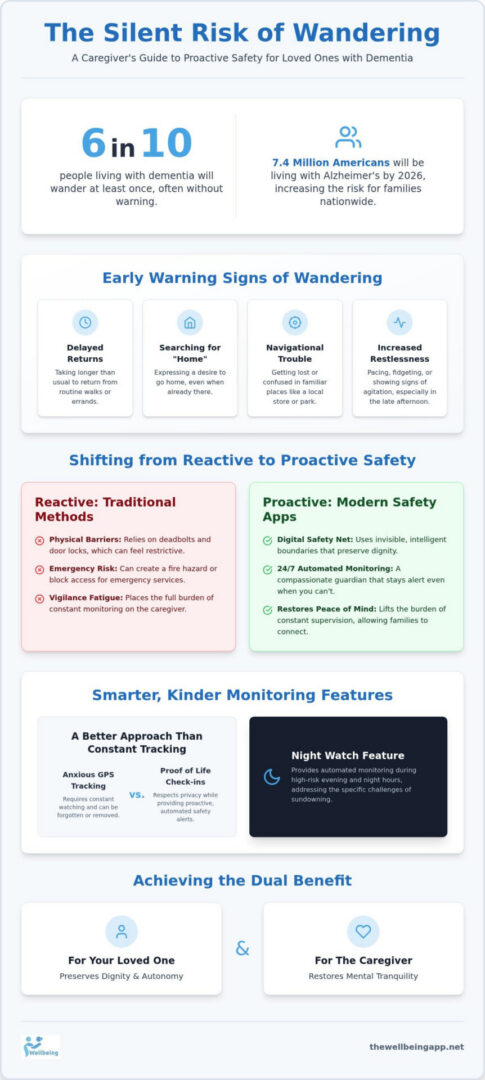
Did you know that 6 in 10 people living with dementia will wander at least once, often leaving their safe haven without a word? In 2026, with an estimated 7.4 million Americans living with Alzheimer’s, the fear of a loved one slipping out the front door unnoticed is a constant, heavy weight on your heart. You want to protect their dignity and privacy, yet the anxiety of a midnight disappearance keeps you in a state of hyper-vigilance. Finding a reliable preventing wandering in dementia patients app is about more than just technology; it’s about reclaiming your family’s mental tranquility.
We understand the guilt that comes with monitoring a parent and the fear that they’ll simply forget to wear a traditional GPS tracker. This guide will show you how modern safety applications and automated check-ins provide a proactive shield that works 24/7. We’ll explore how server-side monitoring and features like Proof of Life or Night Watch offer a watchful protector that stays alert even when you can’t. By the end of this article, you’ll know how to implement a reliable alert system that ensures safety and autonomy for your loved one while finally giving you the peace of mind you deserve.
Key Takeaways
- Discover why a digital safety net is a more compassionate and effective alternative to traditional physical locks for managing wandering behaviors.
- Learn how to choose the right preventing wandering in dementia patients app by prioritizing automated monitoring over passive hardware that can be easily forgotten or removed.
- Contrast the anxiety of constant GPS tracking with Proof of Life check-ins that respect a senior’s dignity while maintaining a proactive safety shield.
- Identify how specialized features like Night Watch address the unique risks of sundowning to provide mental tranquility for the entire household.
- Master the setup of a family-centric alert system that ensures your loved one is never truly alone, even when you are physically apart.
Understanding the Wandering Risk in Dementia Care
Wandering is a navigational disorientation that affects 60% of dementia patients. It’s often one of the most stressful behavioral symptoms of cognitive decline, signaling a stage where the brain struggles to map internal needs to the physical environment. When a loved one loses their sense of place, they aren’t simply taking a walk; they are often responding to an internal drive that their mind can no longer regulate. This disorientation carries high-stakes risks, including extreme weather exposure, traffic accidents, and severe dehydration. These incidents can happen in a matter of minutes, turning a quiet afternoon into a critical search operation.
To effectively manage these risks, we must first look at Understanding the Wandering Risk in Dementia Care through the lens of the patient’s experience. Wandering is rarely aimless. It’s usually a search for something familiar, a desire to go home to a version of the past that no longer exists, or simply a manifestation of physical restlessness. Without a reliable preventing wandering in dementia patients app, these moments of confusion can quickly escalate into emergencies. Technology acts as a compassionate guardian, bridging the gap between a senior’s need for movement and their requirement for constant safety.
The Emotional Impact on Family Caregivers
Caring for a senior prone to wandering creates a state of constant, high-alert anxiety known as vigilance fatigue. You’re always listening for the click of a door or the sound of footsteps in the hallway at odd hours. This exhaustion is often paired with a deep sense of guilt. You don’t want to turn your home into a restricted environment, yet the fear of what might happen if they slip away is paralyzing. The primary goal of any safety system should be to restore mental tranquility for the caregiver while preserving the senior’s dignity and personal agency.
Early Warning Signs of Wandering Behavior
Recognizing the transition from active to at-risk is vital for proactive safety management. You might notice subtle shifts in their routine before a major incident occurs. If these signs appear, it’s time to consider how a preventing wandering in dementia patients app can provide a necessary safety net.
- Delayed returns: Returning from routine walks significantly later than usual without a clear explanation of where they’ve been.
- Searching for home: Expressing a repetitive desire to go home while they are already sitting in their own living room.
- Navigational trouble: Showing sudden difficulty navigating familiar environments, like the local grocery store or a neighbor’s yard.
- Increased restlessness: Pacing or fidgeting more frequently, especially during the late afternoon hours as sundowning symptoms begin to emerge.
Identifying these indicators allows you to move from a state of reactive panic to one of proactive protection. When safety becomes a shared effort supported by automated alerts, the burden of constant supervision is lifted, allowing families to focus on connection rather than just monitoring.
How Safety Apps Provide a Proactive Protective Shield
Traditional safety measures often rely on physical barriers like deadbolts or childproof door handles. While these have their place, they can inadvertently create a sense of confinement or even pose a risk during emergencies like fires. The modern alternative is a digital safety net. By utilizing a preventing wandering in dementia patients app, families can replace restrictive hardware with invisible, intelligent boundaries. This shift ensures that seniors maintain their personal agency while remaining under a protective gaze that never sleeps.
One of the most critical challenges in dementia care is sundowning, where confusion and restlessness peak as the sun sets. Standard tracking tools often fail here because they require the caregiver to be awake and actively watching a map. A dedicated preventing wandering in dementia patients app addresses this through features like Night Watch, which provide automated monitoring during those high-risk hours. If a senior moves when they should be resting, the system intervenes immediately. This level of empathetic vigilance fills the inevitable gaps in human supervision, allowing caregivers to rest with the knowledge that a compassionate guardian is on duty.
The Shift from Reactive to Proactive Monitoring
Waiting until a loved one is already missing to take action is a fundamental failure of traditional safety models. A proactive approach focuses on identifying potential issues before the senior even leaves the house. Automated check-ins serve as early indicators of well-being. If a check-in is missed, the alert dispatch happens instantly. Because this monitoring is server-side, the protection remains active even if the senior’s phone is turned off or loses its battery. This reliability is the foundation of Setting Up a Comprehensive Wandering Prevention Plan that actually works in real-world scenarios.
Building a Community Safety Circle
Safety shouldn’t be a solitary burden for one family member. Modern apps allow you to distribute monitoring across a wider circle of trusted individuals. When an automated alert is triggered, it doesn’t just ping one person; it notifies an entire community of care. This collective responsibility ensures that the right people are informed exactly when they are needed most. It transforms the concept of monitoring from invasive surveillance into a shared act of love. If you’re looking for a way to balance safety with dignity, exploring the features of The Wellbeing App can help you foster that essential sense of mental tranquility for everyone involved.
Comparing GPS Tracking vs. Automated Proof of Life Check-ins
Many families assume that constant GPS tracking is the only way to keep a loved one safe. While knowing a person’s exact coordinates is helpful in a crisis, it’s often a reactive solution that only triggers once someone is already missing. Relying solely on GPS can feel like digital stalking, which may lead to resistance or agitation in seniors who value their independence. A preventing wandering in dementia patients app should do more than just map a location; it should verify well-being through behavioral indicators. This is where the concept of automated check-ins provides a more dignified and proactive alternative.
Choosing the right technology involves balancing safety with the psychological needs of the senior. Medical experts at the Mayo Clinic emphasize that How Safety Apps Provide a Proactive Protective Shield depends heavily on how well the person with dementia accepts the intervention. When we move away from “always-on” surveillance and toward a check-in model, we preserve the user’s mental state. This approach shifts the focus from where they are to how they are, creating a more harmonious environment for both the caregiver and the senior.
Why Constant GPS Tracking Can Fail
GPS hardware is notorious for the “forgotten device” problem. If a senior leaves their watch or tracker on the nightstand, the safety net is gone. Even when the device is carried, signal dead zones in large buildings or urban canyons can render real-time tracking useless. There’s also the issue of battery life. Constant GPS pings drain a phone’s power rapidly, often leaving the device dead exactly when you need it most. A preventing wandering in dementia patients app that relies on server-side monitoring rather than constant hardware pings avoids these technical pitfalls, ensuring the alert system remains active even if the physical device encounters a problem.
The Proof of Life Advantage
The Proof of Life feature represents a shift toward empathetic vigilance. Instead of passive tracking, it uses scheduled check-ins to verify cognitive presence and physical safety. This creates a “silent alarm” effect. If the senior doesn’t acknowledge a check-in, the system doesn’t wait for them to cross a geofence; it knows immediately that something is wrong. This proactive dispatch of alerts provides a critical window of time to intervene before a wandering incident escalates. It maintains a delicate balance, offering the senior a sense of personal agency while giving the family the mental tranquility of a 24/7 watchful protector. By focusing on these behavioral indicators, families can foster a community-centric approach to safety that feels supportive rather than invasive.
Setting Up a Comprehensive Wandering Prevention Plan
Establishing a reliable protocol requires more than just hiding keys or adding extra deadbolts. It’s about creating a structured environment where physical safety and digital communication work in harmony. While earlier sections discussed the risks of wandering, this stage focuses on the practical integration of a preventing wandering in dementia patients app into your daily life. A successful plan balances the senior’s need for movement with a family’s requirement for 24/7 protective vigilance.
The first step in your digital setup is defining your chaperone circle. This isn’t just a list of phone numbers; it’s a dedicated team with specific roles. One person might be responsible for responding to daytime check-ins, while another handles the Night Watch alerts. By distributing this duty, you prevent vigilance fatigue and ensure that a missed check-in is never ignored. This collective responsibility is what transforms a simple tool into a compassionate guardian for your entire household.
To initiate your first automated trigger, open the app settings and select a Proof of Life window that aligns with a morning routine, such as 8:30 AM. Give your loved one a 15 minute grace period to respond before the system dispatches an alert to your designated circle. This subtle interaction verifies cognitive presence without the need for invasive surveillance.
Defining the Monitoring Schedule
Your monitoring rhythm should mirror the senior’s Activities of Daily Living (ADLs). Schedule check-ins around meals or medication times to make the interaction feel like a natural part of their day. It’s vital to increase the frequency of these prompts during the late afternoon as sundowning confusion often peaks. By adjusting the sensitivity of the preventing wandering in dementia patients app during these high-risk windows, you maintain a proactive shield without causing unnecessary agitation or distress.
Emergency Response Protocols
Preparation is the key to mental tranquility. Establish a clear hierarchy of alerts so the system knows exactly who to contact first, second, and third. You should also keep a digital safety profile updated with a current photograph and a list of familiar locations they might visit if disoriented. If an emergency occurs, use the real-time location data to guide your circle directly to their side. To start building your family’s protective network, explore the features of The Wellbeing App and bring harmony back to your caregiving journey.
Proactive Protection with The Wellbeing App Features
Selecting the right preventing wandering in dementia patients app is a decision rooted in love and the desire for mental tranquility. The Wellbeing App is designed not as a surveillance tool, but as a compassionate guardian that bridges the gap between safety and senior dignity. By focusing on behavioral indicators rather than constant GPS stalking, it provides a protective shield that respects a loved one’s personal agency. This approach fosters an atmosphere of trust, allowing families to move away from the anxiety of “what if” and toward a state of empowerment.
The core of this protection lies in the Proof of Life feature. This non-invasive daily safety check requires a simple interaction from the senior at scheduled intervals, verifying both their cognitive presence and physical well-being. It serves as a respectful alternative to always-on tracking, ensuring they feel supported rather than watched. For seniors who still enjoy the freedom of a morning stroll, the Chaperone service acts as a virtual companion. It provides real-time location sharing and emergency alerts, giving them the confidence to maintain their routine while ensuring you are notified the moment they need assistance.
Nighttime often brings the greatest risks due to sundowning and sleep-related disorientation. The Night Watch service is specifically engineered to protect seniors during these vulnerable hours. It monitors for movement or missed check-ins when the rest of the world is asleep, providing a dedicated safety net that never rests. This specialized feature addresses the night-specific risks that standard tracking apps often overlook, ensuring that a midnight exit is caught before it becomes a crisis.
Mental Tranquility for Caregivers
Vigilance fatigue is a heavy burden for any family member to carry. The Wellbeing App lifts this weight by using automated alerts that reduce the need for constant phone-checking. Our server-side monitoring ensures that the system remains active even if the senior’s phone is turned off or the battery fails. We watch when you can’t, providing a reliable dispatch of alerts to your entire family circle. This collective responsibility creates a sense of unity, transforming safety from a solitary chore into a shared commitment to a loved one’s well-being.
Empowering Senior Autonomy
The ultimate goal of a preventing wandering in dementia patients app is to allow seniors to stay in their own homes longer. By providing a digital safety net, we help preserve the familiar environments that are so crucial for cognitive health. The app’s interface is designed with a high degree of social responsibility, utilizing large visual cues and simple interactions that are accessible even as cognitive abilities shift. It’s an instrument of proactive safety management that empowers seniors to age in place with grace. Protect your loved one with The Wellbeing App today and rediscover the harmony in your home.
Embracing a Future of Proactive Safety and Connection
Protecting a loved one with dementia is a journey that requires both a compassionate heart and the right technological tools. By shifting your approach from reactive GPS tracking to proactive behavioral monitoring, you provide a safety net that respects their dignity while ensuring they remain secure. We’ve explored how a dedicated preventing wandering in dementia patients app can bridge the gap between senior autonomy and the constant protection your family deserves. This transition allows you to focus on meaningful connection rather than the exhaustion of perpetual vigilance.
It’s time to replace constant anxiety with lasting mental tranquility. The Wellbeing App provides 24/7 automated server-side monitoring that remains active even if a phone is powered down. With specialized features like Proof of Life and Night Watch, you gain a watchful protector that addresses the unique risks of sundowning without the burden of expensive hardware. Our subscription-based service is designed to foster family unity and collective responsibility in caregiving. Secure your family’s peace of mind with The Wellbeing App and take the first step toward a more harmonious home today. You are a dedicated guardian; let us help you carry the watch.
Frequently Asked Questions
How can an app help if a dementia patient forgets their phone?
If a senior leaves their phone at home, the server-side monitoring system acts as an invisible safety net. Unlike standard trackers that require a device to move, this preventing wandering in dementia patients app monitors for missed check-ins. If the scheduled Proof of Life interaction doesn’t occur because the phone was left behind, the system automatically dispatches alerts to the family circle. This ensures that you’re notified of a potential issue even without active GPS data.
Is GPS tracking for dementia patients legal and ethical?
Using technology to protect a vulnerable senior is generally considered ethical when it prioritizes dignity and personal agency. The legal landscape in 2026 emphasizes the importance of using non-invasive monitoring whenever possible. Choosing a preventing wandering in dementia patients app that utilizes behavioral check-ins rather than constant surveillance helps maintain this ethical balance. It’s always best to discuss these safety measures with the senior and their legal representative to ensure everyone feels empowered and respected.
What is a “Proof of Life” check-in and how does it work?
A Proof of Life check-in is a scheduled behavioral indicator designed to verify a senior’s well-being without constant surveillance. At specific times throughout the day, the senior interacts with a simple prompt on their phone. If they don’t acknowledge the check-in within a set window, the server-side system triggers an alert. This proactive method identifies potential wandering incidents or medical distress before they escalate, providing a much-needed window for early intervention.
Can these apps alert neighbors or professional caregivers?
Yes, these platforms are designed to foster a community-centric approach to safety. You can designate a wide circle of trusted individuals, including neighbors, family members, or professional caregivers, to receive automated alerts. When a check-in is missed or an emergency is triggered, the system notifies everyone in the chaperone circle simultaneously. This shared responsibility ensures that the person closest to the senior can respond immediately, significantly reducing the time it takes to provide assistance.
How does “Night Watch” help with sundowning wandering?
Night Watch provides specialized monitoring during the vulnerable late-night and early-morning hours when sundowning symptoms are most prevalent. It establishes a heightened state of empathetic vigilance while the rest of the household is asleep. If the senior becomes restless or attempts to leave their safe environment during these hours, the app identifies the deviation from their normal rest pattern. This automated protection allows caregivers to sleep soundly, knowing a compassionate guardian is watching.
Are safety apps better than wearable medical alert buttons?
Safety apps offer a distinct advantage because they don’t rely on proprietary hardware that a senior might forget to wear. Many dementia patients find watches or pendants uncomfortable and may remove them, rendering the safety system useless. A software-based approach uses the phone they already carry and focuses on behavioral indicators. This makes the system more reliable for long-term care, as it monitors cognitive presence rather than just physical movement.
What should I do immediately if the app alerts me that my loved one is wandering?
If you receive an alert, your first step should be to check the real-time Location Sharing feature to determine their current position. Contact the members of your chaperone circle to see who is closest to the senior’s last known location. If they aren’t found immediately, follow your pre-defined emergency protocol and share the senior’s digital safety profile with local authorities. Having this information ready ensures a coordinated and rapid response during those critical first minutes.
Is location sharing active all the time or only during emergencies?
Location sharing can be configured to meet your family’s specific needs for privacy and safety. While some families prefer always-on visibility, others choose to have location data become active only when a Proof of Life check-in is missed. This flexibility allows you to maintain a balance between independent walks and proactive protection. The system remains ready to provide coordinates the moment an alert is dispatched, ensuring you have the data needed for a swift recovery.