Remote Wellness Check for Seniors: A Complete Guide to Modern Safety 2026
What if the secret to keeping your aging parents safe isn’t another daily phone call that feels like an interrogation? Families often struggle to balance the need for a remote wellness check for seniors with the desire to avoid the high cost of in-home caregivers. You likely worry about a sudden fall or a medical emergency, yet you don’t want to strain your relationship by constantly checking in. This tension often turns caregiving into a source of anxiety rather than a source of comfort.
In this guide, you’ll discover how specialized technology provides 24/7 safety and mental tranquility for seniors without sacrificing their independence or dignity. We’ll explore how automated systems like Proof of Life and Night Watch provide a silent layer of protection, ensuring you receive alerts only when they’re truly necessary. From understanding current Medicare telehealth flexibilities through 2027 to choosing automated Chaperone services, you’ll learn how to build a responsive care hub that honors your loved one’s agency while protecting your peace of mind.
Key Takeaways
- Understand the shift from reactive emergency buttons to proactive indicators that preserve a senior’s sense of self-reliance.
- Learn how a remote wellness check for seniors uses scheduled windows to monitor well-being without the need for constant, straining phone calls.
- Compare the cost-efficiency and dignity of automated apps against traditional human-led “sympathy calls” from home care agencies.
- Identify the best ways to establish a community safety net by choosing reliable primary and secondary responders in your own neighborhood.
- Discover how specialized tools like Proof of Life and Night Watch provide a silent layer of protection that alerts you only when it’s truly necessary.
What is a Remote Wellness Check for Seniors?
A remote wellness check for seniors is much more than a digital version of a phone call. It’s a non-intrusive safety monitoring system designed to preserve mental tranquility for everyone involved. Unlike traditional security, which often waits for a crisis to occur, these systems use proactive indicators to confirm daily well-being. By 2026, the technology has moved beyond simple local alerts on a device to sophisticated server-side monitoring. This means that if a check-in is missed, the system itself recognizes the absence of activity. It acts as an automated guardian that watches over the vulnerable without invading their personal space or dignity.
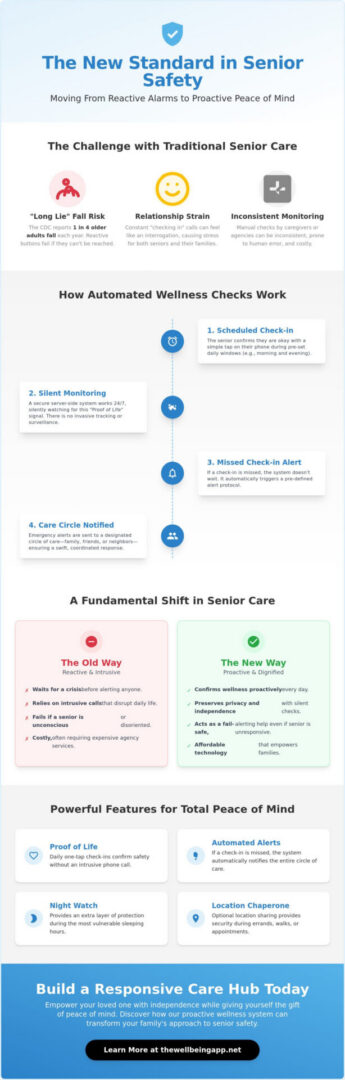
One of the most critical roles of this technology is preventing “long lie” incidents. According to the CDC, one in four older adults falls each year, and many are unable to reach a phone or press a physical emergency button after the event. A reactive system fails if the senior is unconscious or too disoriented to act. A proactive wellness check creates a vital fail-safe. If the user doesn’t acknowledge their scheduled Proof of Life indicator, the system initiates a protocol to alert their circle of care. This shift from “push for help” to “confirm you’re okay” ensures that help arrives even when a senior cannot ask for it.
The Evolution of Senior Safety Technology
Senior safety has evolved significantly from the bulky medical alert necklaces of the past. While those devices paved the way, modern solutions integrate directly into the smartphone a senior already carries. Remote patient monitoring technology has expanded to include software that handles the heavy lifting of daily check-ins. Instead of relying on manual caregiver texting, which can be inconsistent or feel like an interrogation, modern systems use automated dispatch. This ensures that a Chaperone or Night Watch protocol is followed precisely every single time, removing human error and emotional strain from the safety equation.
Who Benefits from Remote Monitoring?
This technology serves as a bridge between independence and safety. Seniors benefit most because they maintain their privacy; they don’t have to endure the “nagging” dynamic that often strains family relationships. Adult children, especially those living in different states or time zones, gain 24/7 peace of mind knowing their loved one is accounted for through a consistent system. Concerned neighbors and community members also benefit by acting as a local safety net that is only called upon when the system detects a genuine concern. It transforms safety from a source of constant anxiety into a shared, quiet confidence that empowers the entire family.
How Remote Wellness Technology Works
Modern safety relies on a predictable rhythm rather than constant surveillance. A remote wellness check for seniors functions by establishing specific check-in windows that align with a loved one’s existing daily routine. Instead of a camera following their every move, the system looks for a simple digital heartbeat at key moments, such as waking up or preparing for bed. These Proof of Life indicators provide the necessary confirmation of safety without the senior feeling like they’re being watched. It’s a method that honors their privacy while maintaining a high standard of protective vigilance.
When a senior interacts with the system, the data is processed instantly. If a scheduled check-in window closes without a response, the mechanism of automated alerts begins. The system doesn’t just send a single text and hope for the best. It follows a structured escalation protocol, notifying a pre-selected circle of care through Emergency Alerts. This ensures that the right people are informed at the right time, preventing small issues from becoming major emergencies. By automating this process, families can step away from the role of “security guard” and return to being supportive relatives.
Specific high-risk periods require more focused attention. Features like Location Sharing can be activated during errands or walks, providing real-time data only when it’s needed most. Similarly, the Night Watch feature offers protection during the most vulnerable sleeping hours. It confirms that the senior is safely settled in for the night and remains available to trigger help if something goes wrong before morning. This targeted approach ensures that the technology remains a helpful companion rather than a constant burden.
The Check-In Process: Simple and Non-Intrusive
The beauty of a modern remote wellness check for seniors lies in its simplicity. A senior only needs to provide a one-tap confirmation on their smartphone or wearable device to satisfy the check-in. This consistency builds a deep sense of trust between the user and the technology. They know exactly when the system expects to hear from them, and they appreciate the personal agency it provides. If you’re looking for a way to implement this level of harmony in your home, you can explore the Chaperone and Proof of Life features designed for intuitive daily use.
Behind the Scenes: Server-Side Vigilance
True safety happens where the user can’t see it. Modern elder care platforms utilize cloud-based monitoring to ensure that the safety net never drops. If a senior’s phone dies or loses internet connection, the system’s external servers recognize the silence as a potential risk. Server-side monitoring functions as a redundant safety layer that guarantees alert protocols execute even if a senior’s physical phone is powered off or disconnected from the internet. This 24/7 vigilance ensures that the promise of mental tranquility remains unbroken, regardless of local technical failures.
Automated vs. Human-Led Wellness Checks
Choosing the right method for a remote wellness check for seniors often comes down to a balance between logistical efficiency and emotional dignity. Human-led checks, such as virtual visits from home care agencies, are frequently marketed as a source of companionship. However, this human element comes with a high price tag and a potential loss of privacy. For many older adults, a scheduled call from a stranger can feel like a “sympathy call” that highlights their vulnerability rather than supporting their independence. Automated systems offer a different path, providing a silent layer of protection that respects the user’s space while maintaining constant vigilance.
Response time is another critical factor where automation excels. A human staff member at an agency is bound by a schedule and can only be in one place at a time. If an emergency occurs between visits, the safety net disappears. In contrast, automated protocols like Night Watch or Proof of Life operate 24/7 without fatigue or distraction. These systems provide an immediate escalation if a check-in is missed, ensuring that the circle of care is notified within minutes. While high-needs seniors may still require physical caregivers for medical tasks, a hybrid approach that uses automation for safety monitoring provides a more robust and cost-effective solution.
The Problem with “The Nagging Call”
Constant check-in calls from well-meaning family members often create an unintended “nagging” dynamic. When every conversation begins with “Are you okay?” or “Did you take your pills?”, it strains the relationship and can lead to resentment. Moving to a remote wellness check for seniors that is data-driven replaces anxiety-driven questioning with mental tranquility. Instead of calling ten times a day, family members can rely on automated indicators to confirm safety. This shift promotes senior agency, allowing them to manage their own safety through a Chaperone system rather than feeling like a burden to their loved ones.
Cost and Scalability for Families
The financial difference between these two models is stark. Home care agencies typically charge high hourly rates that can quickly become unsustainable for middle-class families. Subscription-based apps provide a scalable alternative, allowing families to protect multiple members under a single safety umbrella without the overhead of physical personnel. The long-term ROI is found in the prevention of a major medical crisis. By catching a “long lie” incident early through automated Emergency Alerts, families can avoid the devastating physical and financial costs of a prolonged recovery or a permanent move to assisted living. It’s a proactive investment in both safety and the preservation of the family’s emotional well-being.
Setting Up a Reliable Senior Safety Net
Creating a dependable remote wellness check for seniors requires careful coordination between technology and a trusted circle of care. The foundation of this safety net is selecting check-in times that mirror a senior’s Activities of Daily Living (ADLs). For many, the most critical moments are right after waking up and just before bed. By aligning Proof of Life indicators with these natural transitions, you ensure monitoring feels like a supportive rhythm rather than a chore. Integrating these checks with existing home security habits, like locking the front door at night, makes the transition to digital safety seamless and intuitive.
Choosing the right responders is just as vital as the technology itself. You should designate a primary responder who lives nearby and a secondary responder who can act if the first is unavailable. This community-based approach fosters collective responsibility and ensures that Emergency Alerts reach someone capable of taking immediate action. It’s not enough to simply add a contact to an app. You must ensure these individuals are prepared for the role, creating a sense of shared vigilance that strengthens family and neighborhood bonds.
Defining the Response Protocol
A responder’s duty begins the moment they receive an automated alert. If a Proof of Life check-in is missed, the responder should first attempt a direct phone call. If there’s no answer, they must have a clear plan for a physical wellness check. This includes having legal and logistical access to the home, such as a spare key or a smart lock code. Establishing these protocols in advance prevents panic and ensures that every second counts in a potential emergency. To begin building your own custom safety net, you can set up your circle of care with The Wellbeing App today.
Safety Beyond the Front Door
Protection shouldn’t stop at the doorstep. For active seniors who enjoy daily walks or running errands, a Virtual Chaperone provides an essential layer of security. Real-time Location Sharing during these windows allows family members to monitor progress without being intrusive. This is especially important given that the CDC reports falls as the leading cause of injury for those 65 and older. By using technology to maintain safety in the community, seniors can continue their active lifestyles with the confidence that they’re never truly alone. It turns a simple walk into a proactive exercise in safety management and community unity.
Empowering Independence with The Wellbeing App
The Wellbeing App transforms the concept of a remote wellness check for seniors into a seamless, daily experience that honors personal agency. It functions as a compassionate guardian, providing a layer of protection that adapts to the specific needs of each user. By focusing on software-based solutions rather than intrusive hardware, it allows seniors to maintain their dignity while offering families the reassurance they need. This technology doesn’t just watch over a person; it empowers them to live fully without the weight of constant worry.
The Proof of Life feature stands as the heart of this system, offering high-stakes reliability through simple check-ins. These indicators confirm well-being at critical intervals, ensuring that the circle of care is always informed. For the hours when vulnerability is highest, Night Watch provides specialized monitoring that ensures a senior is safely settled. It offers a unique level of vigilance during the quietest parts of the day, filling a gap that many traditional safety systems overlook.
Active seniors who enjoy community life find a loyal partner in the Virtual Chaperone. Whether they’re walking home from a neighbor’s house or running errands, this feature uses Location Sharing and timed check-ins to ensure they arrive safely. It provides safety beyond the front door, allowing older adults to remain mobile and engaged in their neighborhoods. This proactive approach ensures that help is already on the way if a window is missed, providing a safety net that follows the user wherever they go.
A Mission of Mental Tranquility
Our mission is rooted in the preservation of your mental state and the harmony of your family relationships. Proactive protection does more than just respond to emergencies; it actively prevents missing person incidents and reduces the friction caused by repetitive check-in calls. We invite you to join a community dedicated to collective responsibility. In this environment, safety is a shared effort that fosters trust and encourages seniors to feel empowered rather than restricted.
Getting Started with Proactive Protection
Setting up a reliable safety net shouldn’t be complicated for busy families. The Wellbeing App offers a straightforward setup process that allows individuals to invite their primary and secondary responders in minutes. Our subscription plans are designed for continuous, reliable monitoring, ensuring that your safety net remains unbroken. You can secure your peace of mind with The Wellbeing App today and take the first step toward a more tranquil and secure future for your loved ones.
Embrace a New Standard of Mental Tranquility
The landscape of senior safety has shifted from reactive panic buttons toward a proactive, dignified rhythm of life. By implementing a remote wellness check for seniors, you replace the constant anxiety of “the nagging call” with a system designed for empathetic vigilance. You’ve seen how automated server-side monitoring ensures that your safety net remains active even if a device fails. This transition honors the personal agency of your loved ones while providing the 24/7 peace of mind that every family deserves.
Modern protection means being there for the moments that matter most. Whether it’s the specialized security of Night Watch during vulnerable hours or the consistent reassurance of Proof of Life indicators throughout the day, the right technology acts as a compassionate guardian. It’s time to move beyond guesswork and embrace a strategy rooted in collective responsibility and shared vigilance. You can start your journey toward mental tranquility with The Wellbeing App and secure a safer, more independent future for your family. You’re taking a vital step toward protecting those who matter most.
Frequently Asked Questions
What is the difference between a wellness check and a medical alert system?
A medical alert system is reactive, meaning it requires the senior to press a button after an emergency occurs. In contrast, a remote wellness check for seniors is proactive. It uses Proof of Life indicators to confirm well-being at scheduled intervals, ensuring that help is dispatched even if the senior is unconscious or unable to reach a device.
Can a remote wellness check app replace a physical caregiver?
No, these digital tools are designed to enhance independence rather than provide physical assistance. They act as a sophisticated safety layer for seniors who live alone but don’t yet require the hands-on help of a professional agency. This technology allows families to delay the high cost of in-home care while maintaining a reliable safety net.
How much does a remote wellness check for seniors typically cost?
Costs vary depending on the specific features and level of monitoring your family requires. Subscription-based apps are generally more cost-efficient than hourly human-led wellness visits from home care agencies. You should review the specific subscription tiers available to find a plan that fits your budget and safety needs without the overhead of proprietary hardware.
What happens if the senior misses a check-in on the app?
If a Proof of Life window closes without a response, the system triggers an automated escalation protocol. This sends Emergency Alerts to the designated primary and secondary responders in the senior’s circle of care. Because the monitoring is server-side, these alerts go out even if the senior’s phone is dead or disconnected from the internet.
Is location sharing active all the time or only during emergencies?
Location Sharing is typically utilized during specific high-risk windows or when the Chaperone feature is activated for errands and walks. This targeted approach protects the senior’s privacy while they are at home and only provides real-time data when they are mobile in the community. It ensures safety without making the user feel like they’re under constant surveillance.
Do remote wellness checks work on any smartphone?
Most modern wellness check systems are software-based and compatible with standard smartphones and wearables. This allows a remote wellness check for seniors to function on the devices your loved one already owns and understands. It removes the learning curve associated with new, proprietary hardware and makes daily safety much more accessible.
How can I convince my parent that a safety app isn’t an invasion of privacy?
Focus the conversation on how the app preserves their dignity by reducing the need for “nagging” check-in calls. Explain that it acts as a silent guardian that only speaks up when something is actually wrong. This empowers them to maintain their independence while giving the family mental tranquility without constant, intrusive questioning.
Can I monitor more than one senior at a time with The Wellbeing App?
Yes, you can manage multiple family members within a single circle of care. Each senior can have their own customized Proof of Life windows and Night Watch protocols tailored to their specific daily routine. This collective responsibility ensures that every vulnerable member of your family is protected under one reliable safety umbrella.