
Safety Apps for Seniors: 2026 Guide to Independence
Last Tuesday, Margaret set out for her usual walk to the local market, but a sudden dizzy spell left her leaning against a brick wall, wondering if anyone would notice if she couldn’t make it home. This moment of vulnerability is one many active adults face, turning a simple errand into a source of deep-seated anxiety. Finding a reliable safety app for seniors when out alone isn’t just about having a panic button; it’s about reclaiming the right to move through the world with quiet confidence and the dignity you deserve.
We understand that you never want to be a burden or feel the guilt of “bothering” your family with constant check-in calls just to say you’re okay. It’s a delicate balance between maintaining your cherished independence and ensuring everyone’s mental tranquility. This guide explores how modern, software-only solutions like a virtual Chaperone or Proof of Life indicators provide a proactive safety net that only activates when something is actually wrong. You’ll discover how these compassionate guardians offer a watchful eye without invading your privacy, allowing you to focus on the joy of the journey rather than the risks of the road.
Key Takeaways
- Transition from reactive panic buttons to proactive monitoring that anticipates your needs before an emergency occurs.
- See why a safety app for seniors when out alone is more reliable than hardware pendants that can be easily forgotten or left out of reach.
- Learn how automated Proof of Life indicators provide a silent safety net, ensuring your family stays informed without constant, intrusive check-in calls.
- Discover the benefits of server-side safety features like Chaperone, which offer real-time protection during solo outings and errands.
- Gain the confidence to continue your daily routines knowing you have a compassionate guardian watching over your well-being 24/7.
The Evolution of Senior Safety: From Home Monitoring to Active Independence
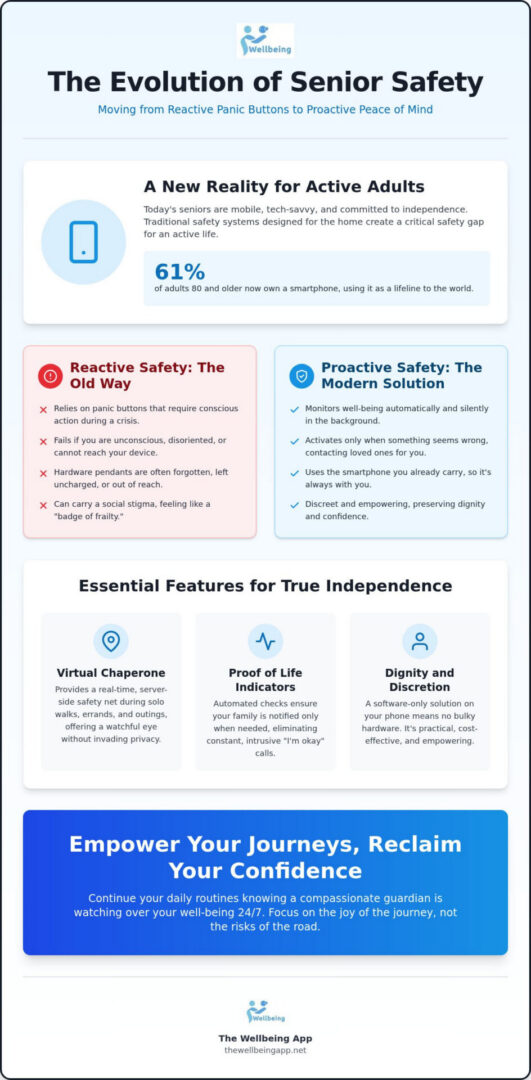
The active senior of 2026 is a far cry from the stationary portraits of the past. Today’s older adults are mobile, tech-savvy, and deeply committed to their independence. Research shows that approximately 61% of adults 80 and older now own a smartphone, using these devices as a lifeline to the world. For this demographic, solo routines like a morning walk through the park or a quick trip to the local market are more than just items on a to-do list. These activities provide vital psychological benefits, fostering a sense of agency and mental clarity that is essential for long-term well-being.
However, a critical safety gap exists when you step off your porch. Traditional safety systems were designed for a life lived within four walls, but your life happens everywhere. A modern safety app for seniors when out alone bridges this divide, acting as a mobile safety net that travels wherever you go. It ensures that your protective circle remains intact, whether you are browsing the aisles of a grocery store or enjoying a quiet afternoon on a park bench.
The Problem with “Home-Only” Safety Systems
Base stations and wall-mounted buttons are tethered to a specific location. They offer a false sense of security for anyone who enjoys community engagement. If a simple errand takes longer than expected due to traffic or a long line at the pharmacy, a home-based system remains silent. This silence can create immense anxiety for family members who don’t know if you’re just busy or in need of help. True safety requires a seamless transition from the living room to the sidewalk, ensuring that your protective circle moves with you. Without mobile monitoring, the risk of “out of sight, out of mind” becomes a daily reality for loved ones.
Why 2026 Seniors are Choosing Apps over Hardware
For many, the traditional medical alert pendant carries a heavy social stigma. It can feel like a visible badge of frailty, often leading to a loss of dignity that discourages people from wearing them. In contrast, the smartphone you already carry is a multifunctional tool that blends into your daily life. Choosing a software-based solution is both empowering and practical. Consider these advantages:
- Discretion and Dignity: No bulky, proprietary hardware to hide under a collar or wear around your wrist.
- Cost-Effectiveness: Avoid expensive equipment fees and proprietary devices that eventually become obsolete.
- Advanced Protection: Access sophisticated features like a virtual Chaperone or automated Proof of Life indicators that hardware simply cannot match.
By using the technology already in your pocket, you transform a common device into a compassionate guardian. This shift preserves your personal agency while providing the proactive safety management needed for total mental tranquility.
Why a Panic Button Isn’t Enough When You’re Out Alone
The traditional medical alert industry has long relied on the “panic button” model. While these devices have provided a certain level of comfort for decades, they possess a fundamental flaw: they require conscious action. If you experience a sudden dizzy spell that leads to a loss of consciousness, or a medical episode that impairs your motor skills, that button remains a silent, unreachable tool. True security requires a safety app for seniors when out alone that doesn’t wait for a crisis to occur but instead maintains a watchful, quiet presence in the background of your life.
Another often overlooked issue is the “reach” factor. We often assume our phone or pendant will be in our hand when we need it most. However, if you trip while reaching for a grocery item and your phone stays in your bag on the cart, the traditional system fails. You’re left in a position where you cannot call for help, and no one knows you’re in trouble. This is why the shift toward passive safety is so vital for maintaining your active lifestyle.
The Limitations of Reactive Technology
Reactive safety is a system that only responds after you ask for help. This model assumes you can always reach your device and have the presence of mind to activate it. In reality, falls are the leading cause of fatal and nonfatal injuries among older adults, often occurring in split seconds that leave no time for reaching a pendant. If your device is across the street or tucked away, the system provides no protection. This delay can be catastrophic during the “golden hour,” the critical 60-minute window after an injury where medical intervention is most effective. Disorientation or sudden medical events can also make it impossible to navigate a screen, leaving you vulnerable when you’re most in need of a compassionate guardian.
The Shift Toward Proactive Protection
Proactive safety represents a paradigm shift in how we approach mental tranquility. Instead of waiting for you to signal distress, a proactive system periodically asks, “Are you okay?” If you don’t respond within a set timeframe, the system automatically alerts your designated contacts. This creates a continuous “heartbeat” of safety that exists in the background of your daily errands. It’s a way to ensure that modern safety monitoring works for you, rather than the other way around.
Proof of Life is a server-side check that requires no manual hardware activation, ensuring your safety net remains active even if your phone battery dies or the device is damaged.
This method removes the burden of constant check-in calls to family. You can enjoy your solo walks knowing that if something actually goes wrong, the silence won’t be ignored. It’s about preserving your agency while providing a safety net that is always vigilant. This proactive approach ensures that help is on the way before a situation escalates, giving both you and your loved ones a profound sense of harmony and trust.
Proactive vs. Reactive Safety: Comparison for Active Seniors
To understand the future of independence, we must distinguish between simple tracking and true monitoring. A standard GPS tracker is essentially a digital breadcrumb trail; it tells people where you are, but it remains silent about whether you’re actually okay. In contrast, a sophisticated safety app for seniors when out alone transforms that location data into a dynamic safety net. While a tracker waits for someone to eventually notice you’re missing, a monitoring app actively watches for your success during every solo journey.
One of the most significant technical advantages of this modern approach is automated server-side monitoring. Traditional systems rely entirely on the device in your hand. If your phone battery dies or you lose signal in a “dead zone,” those systems often fail. With server-side protocols, the safety check happens in the cloud. If your expected check-in time passes and the server hasn’t received a “safe” signal from your device, it triggers an alert automatically. This means your safety isn’t dependent on your hardware remaining functional or charged; the system knows you’re out and expects to hear from you.
How Automated Check-ins Work
The logic of a proactive system is built around your personal routine. You set “Safe Windows” that align with your daily habits, such as a check-in after your morning gardening or following your afternoon errands. If a check-in is missed, the escalation process begins immediately but gently. The app first sends a private nudge to your phone. If you don’t respond, the system then alerts your designated emergency contacts. This method prioritizes your personal agency and privacy. Unlike constant live tracking, which can feel like an invasion of space, automated check-ins only share your location if you’re unable to confirm your well-being. It’s a “silent partner” approach that respects your boundaries while ensuring help is never far away.
The Virtual Chaperone: A New Standard for Walking Alone
For journeys that require a higher level of vigilance, such as walking home after a late dinner or navigating an unfamiliar area, the Chaperone feature acts as a compassionate guardian. This mode provides real-time location sharing only for the duration of a specific trip. It creates a sense of mental tranquility, making it feel as though a trusted friend is walking right beside you. By involving your personal emergency contacts rather than a distant professional dispatch center, the response is rooted in community and family. Your loved ones aren’t just receiving a generic alert; they’re empowered with the specific information they need to provide immediate, familiar support. This collective responsibility ensures that your safety is a shared effort, fostering harmony for everyone involved.
Essential Features to Look for in a Senior Safety App
Choosing a safety app for seniors when out alone requires looking beyond basic maps and panic buttons. You need a suite of tools that offer both technical robustness and human-centric design. These features shouldn’t just exist; they must work in harmony to preserve your mental state and ensure your family’s peace of mind. A truly effective safety solution acts as a compassionate guardian, providing a silent layer of protection that respects your privacy while remaining ready to act at a moment’s notice.
When evaluating your options, prioritize these four pillars of proactive safety:
- Proof of Life Indicators: These automated checks serve as the pulse of your safety net. They confirm your well-being at scheduled intervals without requiring a phone call, ensuring that help is triggered even if you cannot reach your phone.
- Night Watch Protection: Vulnerability doesn’t end when the sun goes down. This feature provides specific, heightened monitoring during evening hours, ensuring that a watchful protector is always awake when you are most at risk.
- Accurate Location Sharing: Your family needs to see where you are instantly, but only when it is necessary for your protection. Look for apps that allow you to control when and how this data is shared.
- Battery-Efficient GPS: A safety tool is useless if it drains your phone battery by noon. High-quality apps use optimized tracking protocols that preserve your device’s life during long solo outings or day trips.
User Interface and Accessibility
Independence is often tied to simplicity. A “one-tap” interface ensures that you aren’t fumbling with complex menus during a moment of disorientation or stress. Clear, audible alerts and large, high-contrast text are essential for accessibility, making the app easy to use regardless of lighting or vision changes. Equally important is the reduction of “Alert Fatigue.” If an app pesters you or your family with unnecessary notifications, everyone becomes desensitized to the alerts. The goal is a system that remains quiet and supportive until a genuine need for intervention arises.
Reliability and Server-Side Monitoring
As we discussed in previous sections, server-side monitoring is the backbone of modern reliability. If you enter a “Dead Zone” or lose cellular signal during a walk, a device-only app simply stops working. A server-side system, however, notices the loss of signal from the outside. If the server doesn’t hear back from your device within your designated safe window, it automatically treats the silence as a potential event. This built-in redundancy ensures that technical glitches or dead batteries don’t become safety gaps. You can explore our full monitoring suite to see how these automated layers create a fail-safe environment for your daily activities, fostering a sense of harmony and trust for the whole family.
Empowering Your Solo Journeys with The Wellbeing App
As we’ve explored throughout this guide, the shift from reactive buttons to proactive monitoring is the key to maintaining a vibrant, independent lifestyle in 2026. The Wellbeing App stands as the comprehensive safety solution for active seniors, acting as a compassionate guardian that lives right on the smartphone you already carry. By choosing a safety app for seniors when out alone, you’re opting for a system that values your personal agency while providing a continuous, silent safety net that never sleeps.
At the heart of this protection is our Proof of Life feature. This automated indicator works server-side to confirm your well-being throughout the day. Unlike traditional check-ins that require a phone call or a text, this system notices your presence automatically. If a scheduled indicator is missed, the server initiates a gentle nudge. This ensures that help is mobilized only when a genuine need arises, preserving the mental tranquility of both you and your loved ones without the need for intrusive, constant surveillance.
For those times when your errands take you further afield or into the evening hours, our Chaperone and Night Watch services provide specialized layers of security. Whether you’re enjoying a sunset walk or navigating a busy shopping center, the Chaperone service offers high-vigilance monitoring tailored for that specific journey. When the day ends, Night Watch takes over, providing dedicated server-side vigilance during the most vulnerable hours of the night. This level of protection is maintained through a simple subscription model, ensuring continuous monitoring for a small monthly fee that replaces the high costs of proprietary hardware.
A Compassionate Guardian for Your Family
Safety is a shared effort, and our technology is designed to foster “Community Unity.” Imagine a scenario where a sudden medical episode occurs during a solo walk. Without a proactive system, hours could pass before anyone notices. With The Wellbeing App, your inner circle is alerted within minutes of a missed check-in, preventing a potential “Missing Person” incident before it even begins. This watchful protector personality ensures that your family feels connected and reassured, knowing that their duty toward your well-being is supported by a reliable, always-on partner.
Getting Started: A Step Toward Fearless Independence
Beginning your journey toward proactive safety is a straightforward process designed for ease of use. You can set up your first check-in schedule in minutes, choosing “Safe Windows” that mirror your actual daily habits. Adding your inner circle is just as simple; you decide exactly who gets the alerts and under what conditions. By taking this small step, you transform your smartphone into a powerful instrument of empowerment and proactive safety management. Protect your independence today with The Wellbeing App and enjoy the harmony that comes from knowing you’re never truly alone.
Reclaiming Your Independence with Quiet Confidence
True independence isn’t about being alone; it’s about knowing you’re never truly on your own. We’ve explored how the shift from reactive hardware to proactive, server-side monitoring transforms the smartphone you already carry into a compassionate guardian. By choosing a sophisticated safety app for seniors when out alone, you replace the anxiety of “what if” with the harmony of mental tranquility. You no longer need to compromise your privacy for the sake of security.
With 24/7 server-side monitoring, your safety net remains intact even if your device fails or the battery dies. Automated Proof of Life alerts and Virtual Chaperone journey tracking ensure that your family is only notified when it truly matters, preserving both your personal agency and their peace of mind. This is the new standard of collective responsibility, where technology serves as a bridge to stronger family connections and shared trust.
You deserve to explore the world on your own terms, free from the weight of worry. Step out into your next adventure with the confidence that a watchful protector is always by your side. Ensure your safety on every walk—Try The Wellbeing App today.
Frequently Asked Questions
Is a safety app better than a medical alert pendant for seniors?
A safety app for seniors when out alone offers proactive protection that a traditional pendant simply cannot match. While a pendant requires you to be conscious and able to reach a button, our software uses automated indicators to check on your well-being. This removes the conscious action flaw, ensuring that if you’re unable to call for help, the system recognizes your silence and initiates a response to your designated inner circle.
What happens if I forget to check in while I am out?
If a scheduled check-in is missed, the system won’t immediately alert your family. Instead, it sends a private nudge to your phone first, giving you a chance to confirm you’re okay. If that nudge goes unanswered, the escalation process begins, and your emergency contacts are notified. This tiered approach prevents unnecessary worry while ensuring a reliable safety net is always in place during your solo errands or walks.
Does the app track my location all the time?
Privacy and personal agency are core pillars of our service. The app does not subject you to constant, intrusive surveillance. Instead, location sharing is purposeful and often tied to specific features like the Chaperone mode for active outings. You maintain control over who sees your location and when, ensuring you feel empowered rather than watched. This balance preserves your dignity while providing the mental tranquility your family needs.
What if my phone battery dies or I lose signal?
Your safety isn’t dependent on a perfect cellular signal or a full battery. Because we utilize automated server-side monitoring, the safety check happens in the cloud, not just on your device. If your phone loses power or enters a dead zone and fails to send its expected safe signal, our servers treat that silence as a potential event. This built-in redundancy ensures your protective circle remains active regardless of technical glitches.
Can my family see where I am if there is an emergency?
Yes, your designated contacts receive real-time location data if a critical safety indicator is missed. This feature ensures that your loved ones aren’t just notified that something is wrong, but are also given the specific information they need to provide immediate support. By involving your family in this non-intrusive way, the app fosters community unity and ensures that help can reach you exactly where you are during an emergency.
Do I need to buy any special equipment to use The Wellbeing App?
You don’t need to purchase any proprietary hardware or bulky wearables to use our service. The Wellbeing App is a software-only solution that works seamlessly on the smartphone you already own and carry. This approach eliminates expensive equipment fees and the social stigma often associated with traditional medical alert devices. It’s a cost-effective, discreet way to transform your existing technology into a sophisticated, always-on compassionate guardian.
How does the “Proof of Life” feature actually work?
The Proof of Life feature acts as a silent heartbeat for your safety. It uses automated server-side indicators to confirm your status at intervals you choose throughout the day. These checks don’t require you to make a call or send a text; the system simply looks for a signal from your app. If that signal isn’t received within your safe window, the system automatically escalates the situation to ensure you are safe.
Is it difficult for a non-tech-savvy senior to set up the app?
We designed the interface with one-tap simplicity to ensure it’s accessible for everyone, regardless of their comfort with technology. Choosing a safety app for seniors when out alone should feel empowering, not confusing. Setting up your first check-in schedule takes only a few minutes, and adding your inner circle is a straightforward process. With large text and clear alerts, the app provides a watchful eye without the complexity often found in modern software.