
Safety Checklist for Seniors Living Alone: 2026 Guide
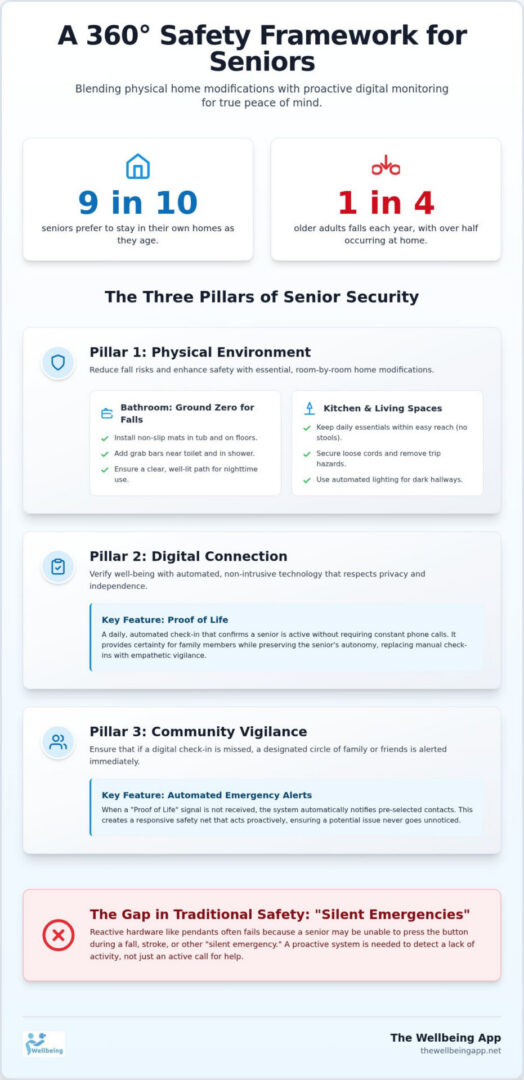
Did you know that one in four older adults in the United States falls every year, with more than half of those incidents occurring right at home? It’s a sobering reality, especially when nine out of ten seniors tell us they’d much rather stay in their own houses as they age. You want to honor that independence, but the constant worry about a missed phone call or an accidental slip can feel like a heavy weight on your shoulders. Creating a comprehensive safety checklist for seniors living alone doesn’t have to be an overwhelming list of expensive renovations that turn a cozy home into a sterile hospital ward.
We believe true safety is about more than just grab bars; it’s about the mental tranquility that comes from knowing a watchful protector is nearby. In this 2026 guide, we’ll share a 360-degree safety framework that blends essential physical home modifications with modern digital monitoring. You’ll discover how to secure the living space using available federal grants and how to implement a daily Proof of Life system to verify well-being without being intrusive. We’ll walk through everything from lighting upgrades to automated alerts, giving your family a clear plan to replace anxiety with a sense of shared security and empowerment.
Key Takeaways
- Learn how to implement a comprehensive safety checklist for seniors living alone that balances physical home modifications with proactive digital monitoring.
- Identify critical room-by-room hazards in the bathroom and kitchen to prevent common accidents before they happen.
- Understand why traditional reactive hardware like pendants often fails and how “Silent Emergencies” require a more sophisticated approach.
- Discover how the Proof of Life feature provides a reliable, non-intrusive way to verify safety daily without constant phone calls.
- Explore how automated alerts and Night Watch protection can restore mental tranquility for both seniors and their family members.
The 2026 Standard for Senior Safety: Beyond the Grab Bar
Safety in 2026 has moved past the era of simply bolting down furniture or installing a single plastic seat in the shower. While these physical adjustments remain vital, they represent only one half of a modern “Watchful Protector” model. This approach views safety as a living, breathing ecosystem rather than a static list of repairs. It prioritizes mental tranquility for the family and personal agency for the senior. We’re moving from a reactive mindset, where we wait for a crisis to happen, to a proactive framework that ensures a “silent emergency” never goes unnoticed. Developing a comprehensive safety checklist for seniors living alone is the first step in building this protective shield.
The Evolution of Aging in Place
The desire to stay home is nearly universal. Research from AARP indicates that almost nine in ten seniors prefer Aging in place over moving to assisted living. However, traditional methods of checking in often create friction. Daily phone calls can feel like an interrogation, and missed texts often trigger unnecessary panic. We need a way to verify well-being that respects a senior’s privacy while providing the family with absolute certainty. A modern safety checklist for seniors living alone must bridge this gap between independence and isolation by replacing manual check-ins with empathetic, automated vigilance.
Identifying the Three Pillars of Senior Security
To build a truly resilient safety net, we look at three distinct areas of focus. First is the Physical Environment. This involves classic modifications like non-slip surfaces and improved lighting to reduce the risk of the one in four falls that occur annually among older adults. Second is Digital Connection. This isn’t about invasive cameras; it’s about automated indicators of well-being, like the Proof of Life feature, which confirms a senior is active without requiring a manual response. Finally, we have Community Vigilance. This pillar ensures that if an indicator is missed, a designated circle of family or friends is alerted immediately through Emergency Alerts.
This integrated approach ensures that safety is always on, even during the quietest hours. By combining home modifications with smart monitoring, we create a layer of protection that doesn’t just react to a fall. It proactively manages the “what if” scenarios that keep families awake at night. When these three pillars work in harmony, they foster a sense of security that empowers seniors to live on their own terms without ever truly being alone.
Room-by-Room Home Safety Checklist for Seniors
Creating a safety checklist for seniors living alone starts with a walk-through of the most high-traffic areas. Every room presents unique risks, but they all share a common solution: intentional design. By auditing each space, you transform a potentially hazardous environment into a sanctuary of independence. This physical audit is the foundation of a proactive safety plan, ensuring that the home remains a place of comfort rather than a source of anxiety.
The Bathroom: Ground Zero for Fall Prevention
The bathroom is often the most dangerous room in the house due to slippery surfaces and tight spaces. To mitigate these risks, ensure every floor covering has a non-slip backing or is secured with double-sided tape. High-contrast tape on thresholds or steps helps those with declining depth perception navigate safely. Beyond physical bars and raised seating, consider how your environment supports your Night Watch protection. A clear, well-lit path from the bed to the bathroom ensures that nighttime movements are safe and predictable, reducing the chance of a stumble in the dark.
Kitchen and Living Space Optimization
Kitchen safety is about reducing the need for risky movements and preventing accidents before they happen. Rearrange cupboards so that daily essentials are within easy reach, effectively eliminating the need for step stools or reaching into high corners. Installing auto-shutoff appliances, particularly for kettles and stoves, provides an extra layer of protection against forgetfulness. While physical safety is paramount, don’t forget the importance of legal and financial security. Resources like the Elder Justice Initiative provide vital information on protecting seniors from fraud and exploitation, which is just as critical as preventing a fall.
Living areas should be clear of trip hazards to maintain a smooth flow through the home. Secure loose wires and cords along the perimeter of the room rather than across walkways. Implementing lighting automation in the bedroom and living room can prevent accidents during late-night transitions. For entryways, motion-sensor lighting and secure, low-profile thresholds provide an immediate sense of security when returning home. These small changes are essential components of any safety checklist for seniors living alone. When combined with a proactive digital tool like automated check-ins, they ensure that your physical home modifications are backed by a reliable digital safety net.
The Gap in Traditional Safety: Why Pendants Aren’t Enough
Many families feel a sense of relief after completing a senior home safety checklist, believing that physical modifications and a plastic pendant are enough to ensure protection. However, this creates a dangerous false sense of security. Traditional medical alert systems are reactive by design. They require the wearer to be conscious, mobile, and mentally alert enough to press a button during a moment of extreme distress. If a senior falls and loses consciousness, or if the pendant is left on the nightstand while they are in the bathroom, the entire safety net collapses. This is the “Silent Emergency” problem, a gap in care where a crisis occurs but no one is notified because the manual trigger was never activated.
When Manual Alerts Fail
In the world of emergency response, we often talk about the “Golden Hour.” This is the sixty minute window following a traumatic injury where medical intervention is most likely to prevent permanent disability or death. If a senior is unable to reach their alert button, that hour can quickly turn into a day or more of isolation. Scenarios like strokes, severe dehydration, or sudden fainting spells often render a manual pendant useless. We must move toward systems that don’t wait for a human to cry for help. Proof of Life serves as a proactive safety indicator that verifies a senior’s well-being through automated check-ins rather than relying on a manual button press. This shift ensures that help is dispatched even if the individual cannot physically ask for it.
The Psychological Barrier to Hardware
Beyond technical failures, there’s a significant human element to consider. Many seniors refuse to wear traditional pendants because they feel like a badge of frailty. This stigma leads to devices being tucked into drawers or “forgotten” on the kitchen counter. It’s a conflict between the need for safety and the desire for dignity. App-based monitoring solves this by living on a smartphone, a tool most seniors already use and carry. It transforms safety from an “old-fashioned” necklace into a sophisticated digital companion. This approach maintains personal agency while ensuring 24/7 server-side monitoring remains active in the background. By focusing on mental tranquility rather than intrusive hardware, we encourage seniors to stay connected without feeling like they’ve lost their independence. It’s about being a watchful protector that respects their lifestyle while providing the family with an automated way to verify safety every single day.
Building a Proactive Digital Safety Net
Integrating digital tools into your safety checklist for seniors living alone is about creating a seamless layer of protection that doesn’t feel like surveillance. While grab bars and improved lighting are essential physical foundations, they can’t tell you if a loved one is safe at 2:00 PM on a Tuesday. A proactive digital safety net fills this void by using indicators of well-being to provide constant, quiet reassurance. This approach moves away from the friction of daily “check-up” calls, which can often feel like a loss of independence for the senior and a source of stress for the family. We’re moving toward a model where technology acts as a watchful protector in the background.
The transition to an automated system begins with establishing a baseline for daily life. Instead of relying on memory or manual effort, we use technology to verify activity. This doesn’t require new, expensive gadgets; it leverages the devices seniors already use. By focusing on automated alerts and 24/7 server-side monitoring, we ensure that the safety net is always active, even when everyone is busy or asleep. This digital layer ensures that the physical safety checklist for seniors living alone is backed by a reliable way to verify safety in real-time.
The Power of Automated Check-ins
The Proof of Life system is designed to verify well-being without the need for intrusive interactions. You can configure a schedule that aligns perfectly with a senior’s existing daily routine, such as a morning greeting or a “goodnight” confirmation. These check-ins are brief and empowering, giving the senior a simple way to signal they’re okay. If a scheduled check-in is missed, the system doesn’t immediately panic. It follows a structured escalation process, attempting to reconnect before sending Emergency Alerts to designated contacts. This ensures that help is sent only when truly needed, preserving everyone’s mental tranquility and preventing false alarms.
Virtual Chaperones and Night-time Security
Safety also needs to follow seniors when they step outside or during high-vulnerability hours. Features like Chaperone provide a virtual companion for walks or transition periods, using Location Sharing to ensure they reach their destination safely. For those managing chronic conditions, Night Watch offers a dedicated layer of protection during the hours when help is hardest to find. These tools don’t just provide security; they provide agency. Seniors feel more confident moving through their world knowing a watchful protector is always present. To start building this layer of protection, you can set up automated safety alerts that fit your family’s unique needs. This modern approach is the most effective way to ensure a safety checklist remains robust and reliable throughout 2026.
Empowering Independence with The Wellbeing App
After auditing the physical environment and understanding the limitations of traditional hardware, the final piece of your safety checklist for seniors living alone is a reliable digital safety net. The Wellbeing App isn’t just another piece of software; it’s a compassionate guardian that lives on the senior’s smartphone. It integrates seamlessly into a daily routine, ensuring that independence isn’t sacrificed for the sake of security. By focusing on mental tranquility rather than intrusive surveillance, it allows seniors to maintain their personal agency while providing families with the automated reassurance they need.
This digital companion completes the “Watchful Protector” model we’ve discussed throughout this guide. It bridges the gap between the physical modifications in the home and the human connection of the family circle. When technology works in the background to verify well-being, the home remains a sanctuary of comfort rather than a place of constant worry. This shift in perspective is what makes the 2026 standard of care so effective for those aging in place.
A Compassionate Guardian in Your Pocket
Many monitoring tools feel like surveillance, which can lead to resistance and resentment from seniors who value their privacy. The Wellbeing App shifts the focus to supportive vigilance, where the technology stays in the background until it’s actually needed. Consider the “long-lie” scenario, a dangerous situation where a senior remains on the floor for hours because they couldn’t reach a manual button. Our Proof of Life feature prevents this by requiring a simple, scheduled check-in. If that indicator isn’t received, the system automatically triggers an escalation process to family or designated contacts. This specific feature fosters community unity and proactive protection by ensuring help is sent even if the individual cannot physically ask for it.
Beyond the home, the Chaperone and Night Watch features provide 24/7 protection that travels with the user. Whether it’s a walk to the park or navigating the house during vulnerable late-night hours, these tools offer a virtual companion. This constant presence significantly reduces family caregiver burnout. Instead of spending the day in a state of anxious alertness, family members can rely on automated monitoring to tell them when their attention is truly required. It turns safety into a shared responsibility that doesn’t feel like a burden.
Getting Started with a Safety Subscription
Choosing a proactive safety plan is a shared family decision that prioritizes mental tranquility for everyone involved. We offer various subscription options tailored to individual needs or larger family circles, all featuring 24/7 server-side monitoring. Setting up the app is a straightforward process designed for all tech levels, ensuring seniors feel comfortable from day one. Once installed, you simply set your check-in times and designate your emergency contacts. By moving from reactive hardware to this sophisticated digital framework, you complete the most effective safety checklist for seniors living alone available today.
Secure your peace of mind with The Wellbeing App today
Securing the Future of Independent Living
Aging in place is a beautiful goal that requires a thoughtful, multi-layered strategy. By combining room-by-room physical audits with a proactive digital safety net, you create an environment where independence thrives. A truly effective safety checklist for seniors living alone must address the silent emergency by ensuring help is always on the way, even when a button can’t be pressed. It’s about building a framework that respects personal agency while providing absolute certainty to loved ones.
Our empathetic Watchful Protector approach provides 24/7 automated server-side monitoring that stays in the background until it matters most. With comprehensive features like Night Watch for vulnerable hours and Chaperone for safe transitions, we help you preserve the mental tranquility of your entire family. You’ve taken the first step by learning how to secure the home. Now it’s time to ensure that safety follows your loved ones wherever they go.
Start your proactive safety journey with The Wellbeing App. You don’t have to carry the weight of worry alone when a dedicated guardian is ready to stand watch with you.
Frequently Asked Questions
What is a ‘Proof of Life’ check-in and how does it work for seniors?
A Proof of Life check-in is an automated well-being indicator that verifies a senior is safe at pre-set intervals throughout the day. Instead of intrusive phone calls, the app sends a simple notification to the senior’s phone. By responding with a quick tap, they signal their wellness to our 24/7 server-side monitoring. It’s a key part of a modern safety checklist for seniors living alone, ensuring help arrives even if they can’t physically call for it.
Is a safety app better than a medical alert necklace for seniors living alone?
A safety app offers proactive protection that traditional necklaces often lack. While pendants are reactive and require a manual button press, an app uses automated check-ins to detect “silent emergencies” where a senior might be unconscious. Many seniors prefer this approach because it lives on their existing smartphone, eliminating the stigma of wearing medical hardware. It provides a more comprehensive layer of security by integrating features like Chaperone and Night Watch into their daily lifestyle.
Can automated safety alerts work if the senior forgets their phone?
If a senior forgets their phone or leaves it in another room, the missed check-in serves as a vital safety indicator. Our system doesn’t assume everything is fine; it triggers a structured escalation process. When a scheduled Proof of Life response is absent, Emergency Alerts are sent to designated family members. This ensures that a forgotten device or a genuine crisis is addressed quickly, maintaining the mental tranquility of everyone involved in the safety plan.
How do I talk to my aging parent about using a safety monitoring app?
Start the conversation by emphasizing personal agency and the preservation of independence. Explain that this tool is a watchful protector designed to replace the friction of “check-up” calls with quiet, automated reassurance. Frame it as a way to ensure their safety checklist for seniors living alone is complete without being intrusive. By focusing on how the app empowers them to live on their own terms, you transform the discussion from one of monitoring into one of shared security.
What happens if a senior misses a scheduled safety check-in?
When a scheduled check-in is missed, the app immediately initiates an automated escalation process. The senior receives a follow-up notification to ensure they didn’t simply miss the first alert. If there’s still no response, the system sends Emergency Alerts to their designated circle of family and friends. This 24/7 server-side monitoring ensures that no one is left waiting for help during the “Golden Hour” following an incident, providing a reliable digital safety net.
Does The Wellbeing App require any special hardware or wearable devices?
No special hardware or proprietary wearable devices are required to use our services. The Wellbeing App is designed to function seamlessly on the smartphone the senior already owns and carries. This eliminates the need for expensive equipment fees or the maintenance of separate medical pendants. By utilizing existing technology, we provide sophisticated protection through features like Night Watch and Chaperone without adding the complexity or physical burden of extra hardware to their daily routine.
Is my privacy protected when using location sharing and safety monitoring?
Privacy is a central pillar of our watchful protector model. Location Sharing isn’t a tool for constant surveillance; it’s used specifically during active Chaperone sessions or when a Proof of Life check-in is missed. All data is handled with the highest security standards to ensure that personal information remains confidential. Our mission is to foster social cohesion and safety, providing a supportive safety net that respects the user’s dignity and individual privacy at all times.
Can multiple family members receive emergency alerts simultaneously?
Yes, you can configure the system to send Emergency Alerts to multiple designated contacts at the same time. This ensures that the responsibility for safety is shared across a circle of family members, friends, or neighbors. When a crisis is detected or a check-in is missed, everyone in the designated group is notified immediately. This collective vigilance creates a stronger safety net, ensuring that at least one person can respond quickly to provide help or reassurance.